News
2026-09-24
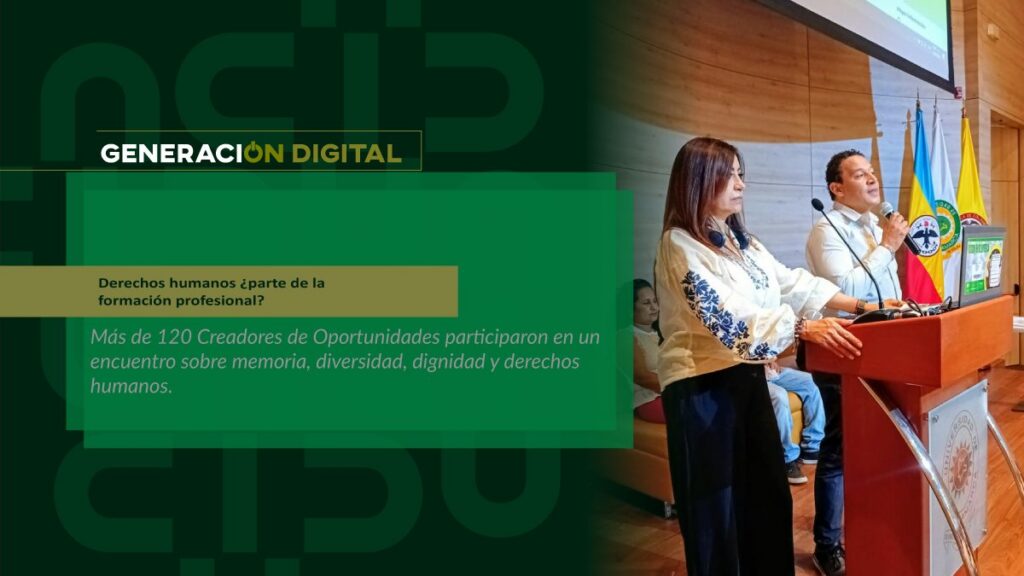
Human rights: part of professional training?
By: Alejandro García Suárez – Advisory Office of Communications


I am your virtual assistant, here to help you quickly and easily.
▲ Back to Top
-The Sports Congress linked Universities, Government and National and International organizations in mechanisms for peace.
The institution, through its Sports Science and Physical Education program, Soacha Extension, explained to the attendees the policy of coexistence for peace that, through the practice of a sport like taekwondo, has allowed victims and perpetrators to come together.
Soacha, a municipality with more than six hundred thousand displaced people and evidence of social violence, presence of former guerrillas and paramilitaries, serves as a stage for victims and perpetrators to unite in a proposal from the University of Cundinamarca for Sports for Peace.
The program brings together 76 students from this location and 19 parents, victims of the conflict, who now, thanks to this process of reconciliation and coexistence, are part of the training and competitiveness program of “Taekwondo for Peace”.
“Taekwondo, being a contact sport, develops an effect that releases energy but produces a phenomenon that fosters unimaginable connections. It has foundations of discipline and control, with time limits and rules to follow, as well as admiration for others. This is how, in the Soacha extension, we have brought together former guerrillas, former paramilitaries, and leaders of criminal gangs into a single group through the practice of this sport, which is not very popular, with excellent results in terms of coexistence,” says Harold Soto, a Sports Science student and researcher in Soacha, who leads the practice and is a black belt in taekwondo.
For his part, the director of the Sports Science program, Soacha extension, Fernando Árdila, states, “The purpose of this congress revolves around resilience, reconciliation, and how sport is a fundamental aid to recover cultural ties that have been lost due to the hatred and revenge generated by the conflict; steps towards peace, resensitizing sport towards the human being and coexistence.”.
The congress was also attended by universities such as the Pedagogical, National, Areandina, the Free University, the Open and Distance University UNAD, the Colombian Olympic Committee, Coldeportes, and the Association of Physical Education Teachers; all of which are part of the agreement for a sports policy in the Post-Conflict era.
This group of participants presented a manifesto with five main points for consideration by the government and the entities that manage peace in our country.
1. Facilitate dialogues between actors and radicalized positions.
2. Generate social sport strategies that promote coexistence and reconciliation.
3. Promote the value of sport as a mediator of conflicts for the training of conciliators at the school and community level.
4. Develop prevention strategies for the different types of violence associated with post-conflict processes.
5. To contribute to training in the development of new leadership among communities, victims and ex-combatants through academic programs at different levels of training.
It is worth highlighting the participation of international speakers and leaders who have worked with communities within the framework of post-conflict rural zones in regions such as Meta, Urabá, and Chocó.
News
News
News
News