News
2026-09-24
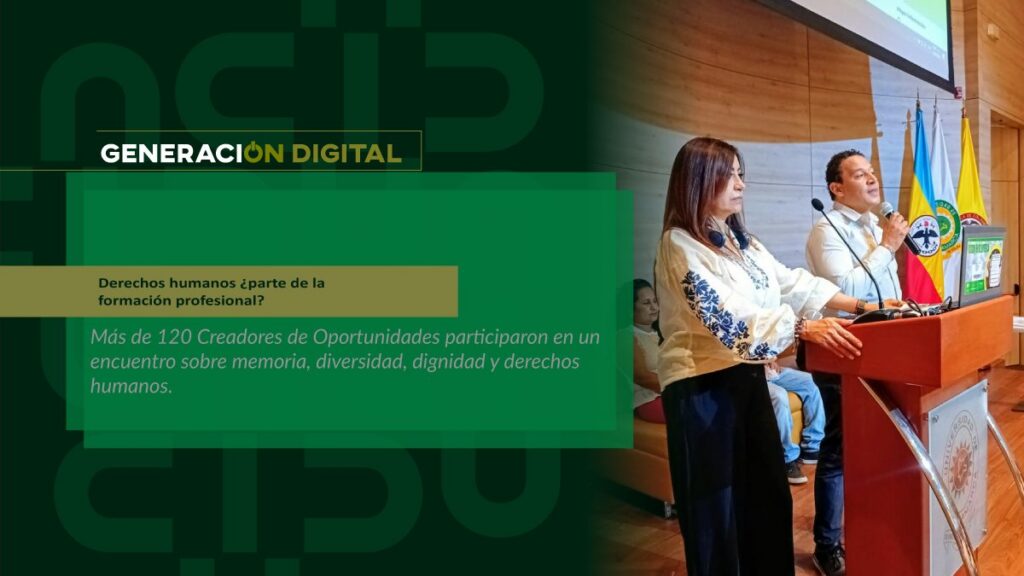
Human rights: part of professional training?
By: Alejandro García Suárez – Advisory Office of Communications


I am your virtual assistant, here to help you quickly and easily.
▲ Back to Top
By: Carolina Rojas – Communications Advisory Office
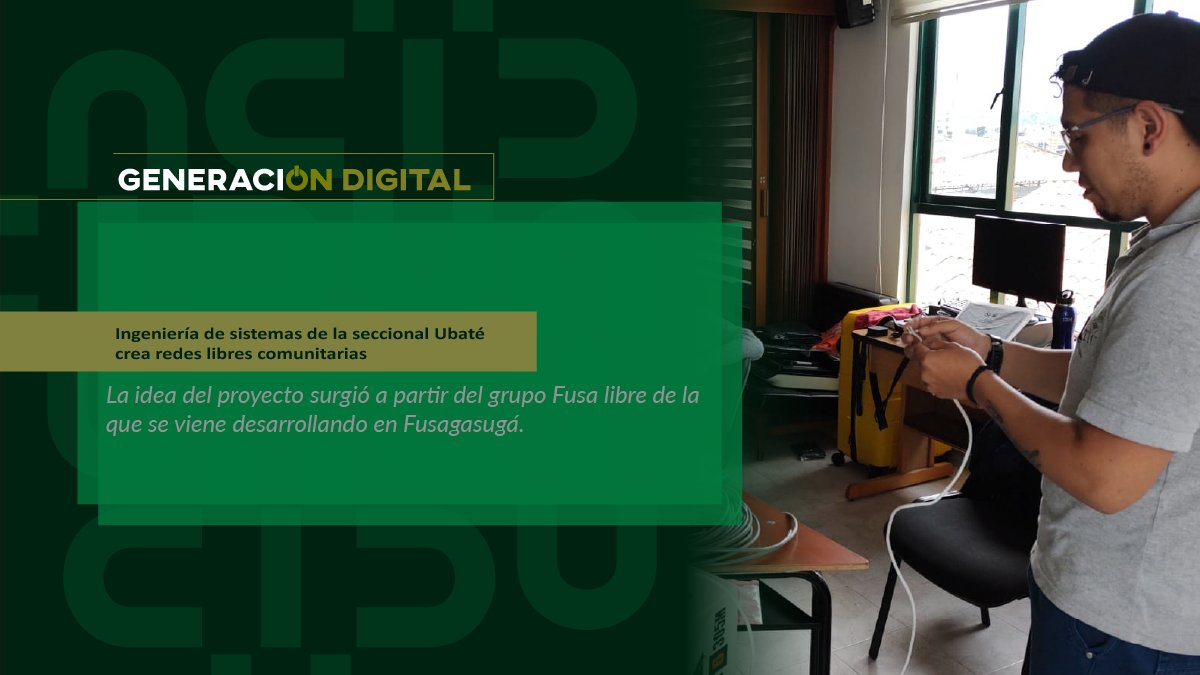
After witnessing the lack of internet service in the most remote rural areas of the province of Ubaté, Gonzalo Benavides, Knowledge and Learning Manager of the Systems and Computing Engineering program at the Ubaté branch, along with students from the program, are working on the development of the project “Free, Community and Decentralized Networks – RLCD”.
“We noticed that one of the problems in the most remote rural communities is that they lack internet access because it's not profitable for service providers. The cost of deploying this technology and the low population density make it unfeasible for them. If a provider were to bring this technology, they would have to charge a high price for the service,” Benavides explained.
The project has been developed with five Community Action Boards in the municipality of Simijaca, and after carrying out the physical and logical topology of network management, it has been established that it can be developed with low orbit satellites, an updated technology that does not require cables and antennas to reach complicated topologies.
The pilot program begins at the El Tibar Agro-environmental Unit
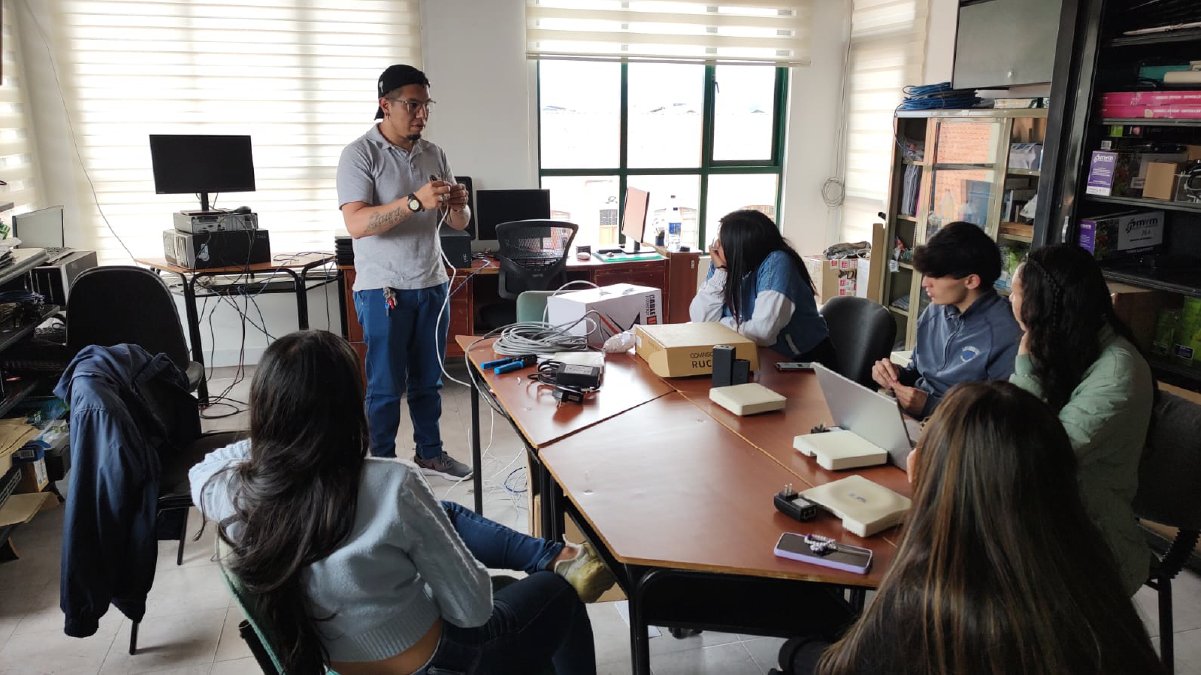
“We found that the El Tibar Agro-environmental Unit does not have Wi-Fi service; there is only wired internet. When we started investigating, we discovered that when Wi-Fi was installed at the Ubaté branch, some access points were left over that work for our connection. Therefore, the idea is to install the equipment and provide Wi-Fi service, which would require no investment from UCundinamarca,” Benavides explained.
This project is being carried out with students from the Software Engineering II course and engineer Fabián Huertas from the Systems and Technology Department at the Tibar campus. The implementation of the Wi-Fi network at the UAA El Tibar campus aims to teach students in the Systems and Computer Engineering program the knowledge of network installation and configuration. It is worth noting that students in the Animal Science program also benefit from this service, as they can access the virtual workshops held at Tibar.
“One of the key concepts of MEDIT is the ”D’ for digital, and that’s what makes it a novel model. Our goal is that, with the connectivity we achieve, students, knowledge managers, administrators, and workers can use all the virtual tools to carry out their activities,” concluded Professor Benavides.
News
News
News
News