News
2026-09-24
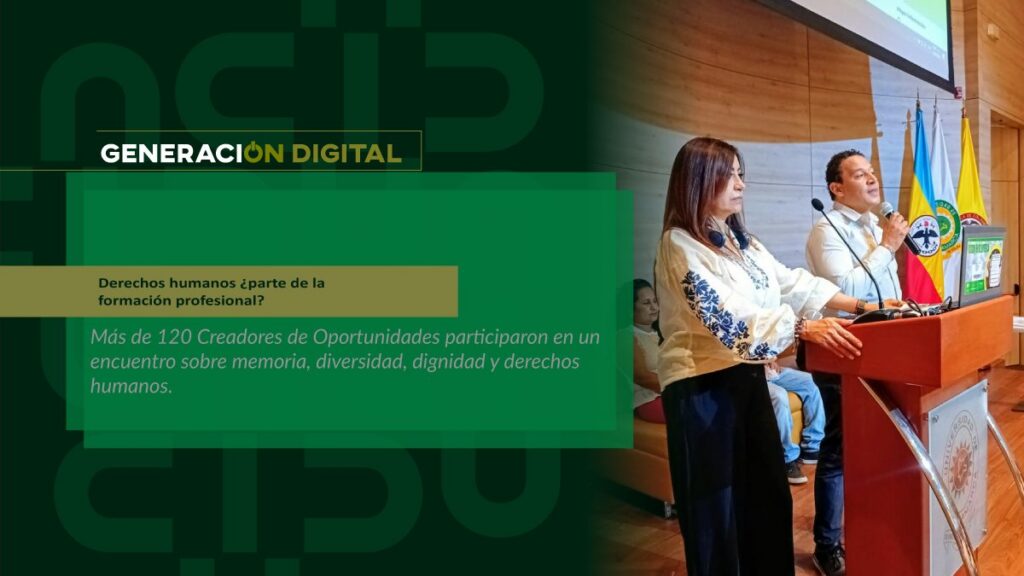
Human rights: part of professional training?
By: Alejandro García Suárez – Advisory Office of Communications



I am your virtual assistant, here to help you quickly and easily.
▲ Back to Top
By: Lorena Chacón
Advisory Office of Communications
University of Cundinamarca
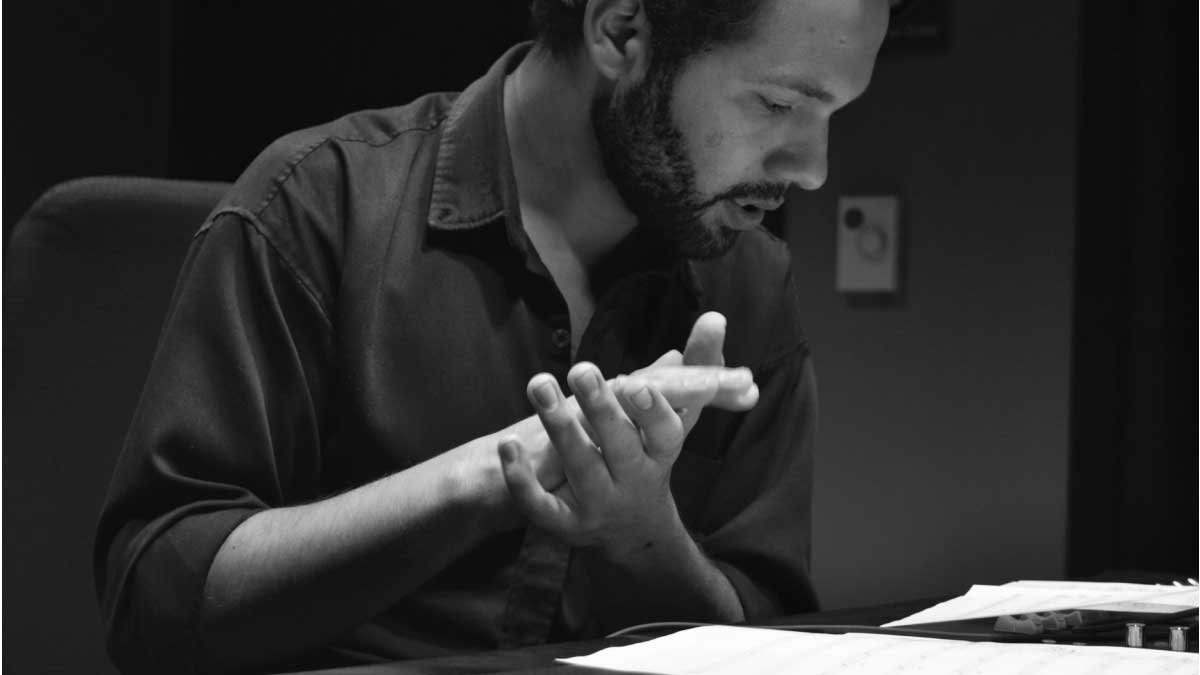
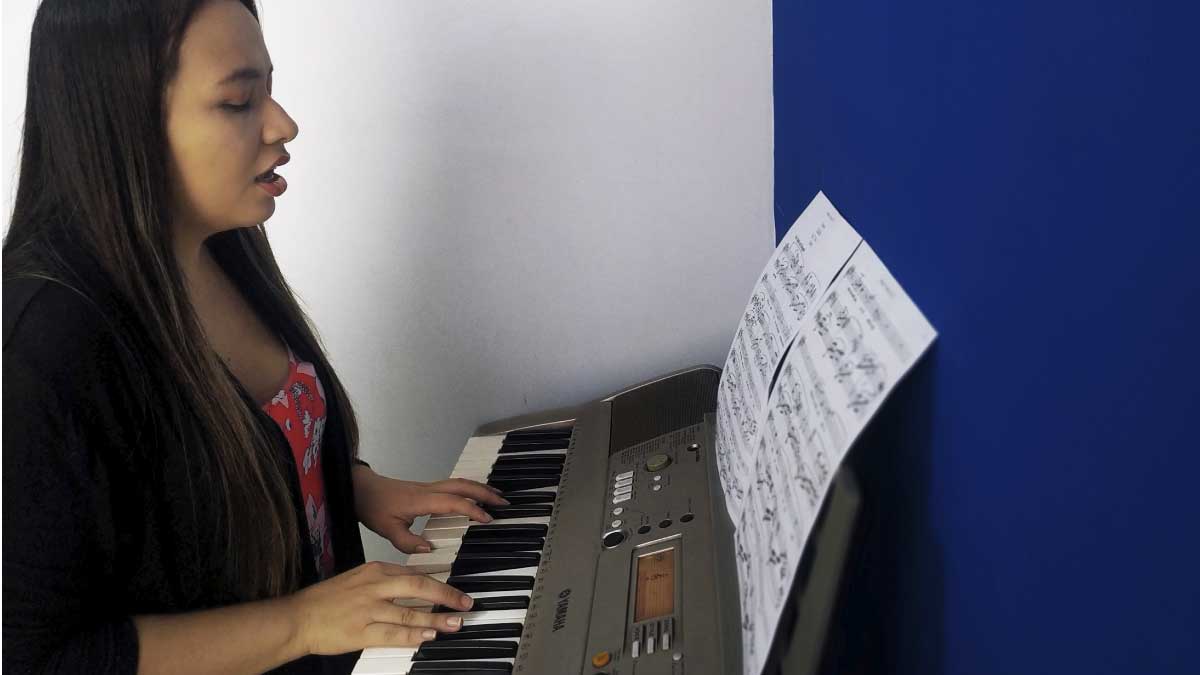
Learning to play an instrument, tuning it, reading sheet music, and acquiring all the details that make up an artist's training at the academy has not been an easy experience during this lockdown, in which the UCundinamarca Music program classes have been conducted online since March. Students and teachers share their experiences.
Professor Diego Andrés Herrera Guerra, a Master of Music graduate from UCundinamarca and Bachelor of Music Contemporary Writing & Production from Berklee College of Music in Boston (USA), who currently teaches Music Production at the institution, states: “When the goal is to learn, it doesn't matter if it's in person or virtual. Obviously, both modalities have their advantages and disadvantages, but I believe that studying music in confinement is a great opportunity for both teachers and students to take even greater advantage of the technological resources available to us, whether it's a computer, a tablet, or a cell phone.
And in the process, be surprised at how with these resources we are able to improve our musical skills and at the same time share them with other students through homemade videos.”.
For Leidy Lorena Cumbe Amézquita, a ninth-semester music student, studying for her degree during lockdown became a somewhat overwhelming experience due to the accumulated workload and the long hours spent in front of a computer. This has caused her some stress and frustration, but she has gradually adapted and learned new digital tools that have facilitated her work; however, she misses in-person classes.
Professor Diego says he has experienced a very particular situation because he only started teaching at the institution this year and only managed to have a month and a half of in-person classes because the rest of the first semester was conducted virtually.
Despite the change in format, the teacher has felt very comfortable with online classes, as they can show students more tools and resources that can be shared from their computer, something that wasn't as easy to do in face-to-face classes due to logistical and resource limitations. However, they feel that the active interaction present in face-to-face classes is missing, as it allows for closer relationships with students.
In contrast, student Lorena finds the experience somewhat complex, since she believes instrument lessons require active participation because it facilitates the lesson's development and allows for a better understanding. Lorena considers these lessons very similar to an athlete's physical training, given that they involve various activities where the body is the primary tool, and the teacher needs to be attentive to technique and its perfect execution in real time.
However, when faced with a situation that requires the use of a virtual tool, this situation can create some feelings of stress and frustration in the student, as it hinders a deep understanding of the technique and the elements involved in body expression.
Regarding the daily routine of the academic days, for the teacher the production classes last three hours, therefore, on a day like Wednesday when he teaches two classes, the day begins around nine in the morning with the Audio Theory class, at that time the students begin to connect and while that happens, Diego puts on some music to liven up the waiting time, around nine fifteen, the vast majority of students are already connected and the class begins.
Then at 10:30 a.m., the professor instructs his students to take a ten-minute break. After the break, they resume the class until noon, at which time the session ends and the professor subsequently submits the evidence report through the university platform.
Later in the afternoon, the teacher's next class is Physiology of Sound, around 1:00 PM. He uses that time to prepare lunch and rest a bit. At 1:00 PM, he follows the same format as the morning class, taking a break at 2:30 PM and finishing the class at 4:00 PM, after which he uploads the assignments.
In Lorena's case, her academic day begins some days with a Tropical Orchestra class from seven to nine in the morning, followed by an elective Tropical Singing class from nine to eleven. From eleven to one in the afternoon, she takes a break for lunch, rest, and to get ahead on assignments. From one to four in the afternoon, she participates in a Physiology of Sound class; from four to four thirty, she takes a thirty-minute break; and from four thirty until late at night, she focuses on completing pending academic tasks and activities.
Likewise, regarding the current pandemic situation, Professor Diego believes that the present circumstances have pros and cons; for example, the fact that he cannot go out freely, participate in entertainment activities and share with loved ones, has been quite difficult for him, but at the same time, it has made him value simple moments more, such as having a beer with his friends or simply going for a walk without needing to wear a mask throughout the entire walk.
Regarding the education sector, the teacher states that: “It is one of the few privileged sectors where classes can continue uninterrupted. The ease with which technology allows us to continue teaching virtually is undeniable, and although it takes time to adapt to the change in modality, I believe that the objective of continuing to train prepared professionals is still being fully met.”.
According to Lorena's perception, the pandemic and the changes it has brought have affected some students more than others. She thinks that: “The limited purchasing power of many students and teachers has not been taken into account.
Specifically in the Music program, some students do not have sufficient income to purchase an instrument; they depend entirely on their physical presence to carry out their work, assignments, practice, and other similar activities. Of course, it should be noted that they also lack the financial means to acquire a computer, and this, combined with the fact that they cannot participate in the corresponding activities, makes their learning even more difficult during the pandemic.
Lorena explains that: “Assuming the student or the teacher has these tools at hand, it is very difficult to meet the same learning expectations that one would obviously have in a face-to-face setting, since the virtual modality, although a useful resource, cannot satisfy all students to the same degree.”.
Finally, for both Diego and Lorena, music has taken on greater importance in the present. The professor believes that: “Music has unlimited healing and comforting power, even more so in situations as difficult as the one we are going through. It is for this reason that, throughout this lockdown, we have witnessed several virtual concerts where different artists come together to deliver a message of strength and hope.”.
Likewise, music helps with catharsis and emotional release, helps people feel accompanied, changes their mood, makes time seem to pass faster, and helps them relax, just to mention a few of the benefits this beautiful art form offers, which we need in this time of confusion, uncertainty, and worry.”.
Similarly, Lorena believes that: “Music plays an important role in this society, more than just as a means of entertainment, but also in the field of education. Music as a discipline is part of a cognitive and sensory process which allows children, young people and adults to maintain good mental health and make confinement a more bearable experience.”.
News
News
News
News