Fusagasugá Branch
2026-09-24
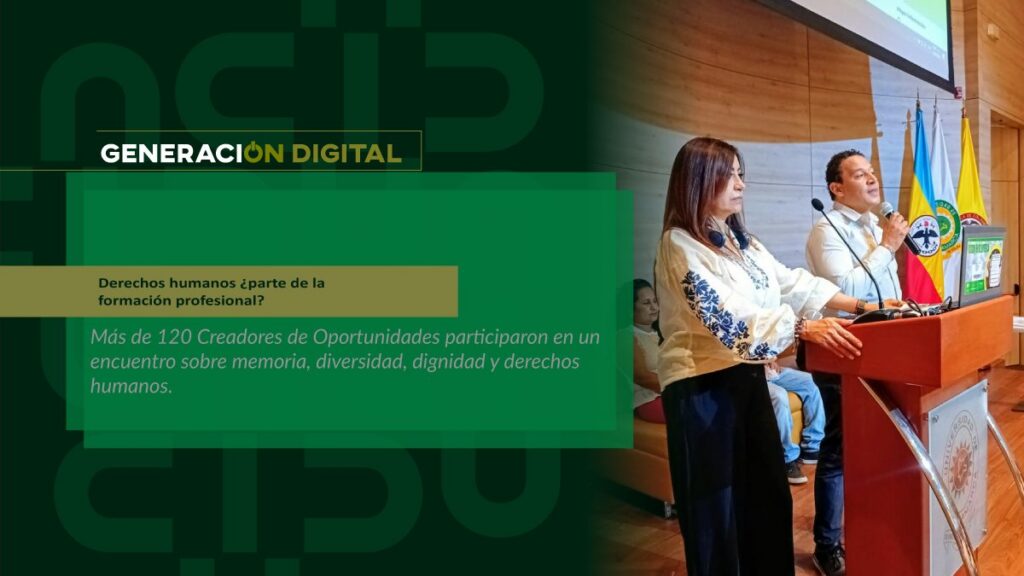
Human rights: part of professional training?
By: Alejandro García Suárez – Advisory Office of Communications



I am your virtual assistant, here to help you quickly and easily.
▲ Back to Top
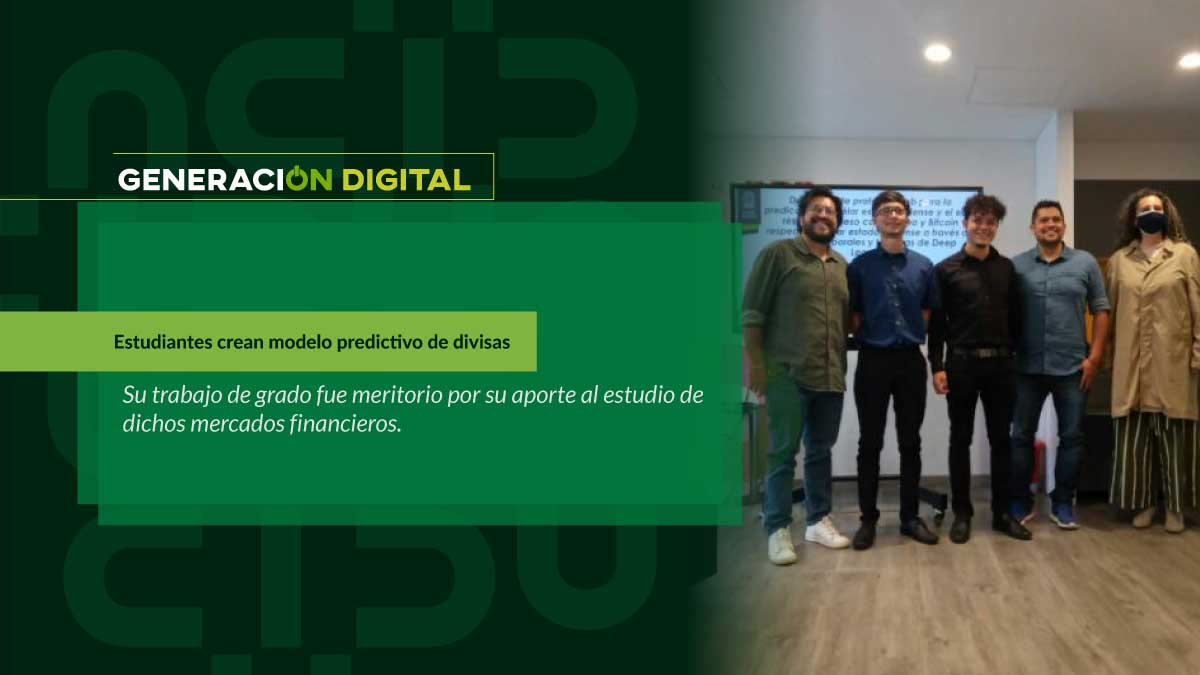
They are Carlos Eduardo Villalba and Oscar David Perilla from the Systems Engineering program in Fusagasugá, who immersed themselves in this fascinating world in which many have tried to find the philosopher's stone to get the most out of strong currencies without resounding success.
UCundinamarca News interviewed Carlos Eduardo about the scope of this research, which involved hours and hours of hard work that ultimately led them to obtain such an important distinction.
UCundinamarca News: How did this thesis idea come about?
Carlos Eduardo Villalba: We had an idea for a degree project consisting of applying data science to allow us to make predictions regarding violence against women in our municipality, but we were unable to carry it out because we did not have enough information to develop it.
So one afternoon we sat down and brainstormed, and that's when the topic of Bitcoin came up. At the time, it was trading at $18,000 and exhibiting significant volatility, according to the media. We thought, how great would it be to create a predictive model for that currency, as well as for the euro and the dollar? That's how our project, "Development of a Web Prototype for Predicting the Dollar and Euro with Respect to the Colombian Peso and Bitcoin with Respect to the Dollar through Time Series and Deep Learning Techniques," was born.
UCundinamarca News: What does this work consist of?
Carlos Eduardo Villalba: It consists of working with artificial neural networks that simulate the behavior of the human brain, where basically a series of data is entered and, depending on its type, a time series model is applied and deep learning -training a computer to perform tasks like people do- and what this artificial neural network does is predict the behavior of these coins.
We applied evaluation metrics to each model, and based on their effectiveness, we selected the most efficient model. The success rate was 96%. For Bitcoin, we used a one-hour prediction period due to its high volatility, and for the euro and dollar, we used a 24-hour period.
UCundinamarca News: What phases did this investigation have?
Carlos Eduardo Villalba: We began by taking a time series course since we lacked sufficient background knowledge in this area, which was important for our thesis. We then supplemented this with readings of theses from other universities abroad that addressed the topic, as well as other books. From there, we moved to the computer to create and test the predictive model.
UCundinamarca News: Who can benefit from this technological development?
Carlos Eduardo Villalba: This predictive model can be useful for people who like to invest in dollars, euros, or Bitcoin, as well as for those who work in the stock market. It's essentially a tool focused on making decisions about the future behavior of the economy.
UCundinamarca News: How did you feel when you were told that the work would receive meritorious recognition?
Carlos Eduardo Villalba: We feel great happiness, as we invested a lot of time in this research and had to put things aside in our lives to make this a reality, but it was worth it.
News
News
News
News