News
2026-09-24
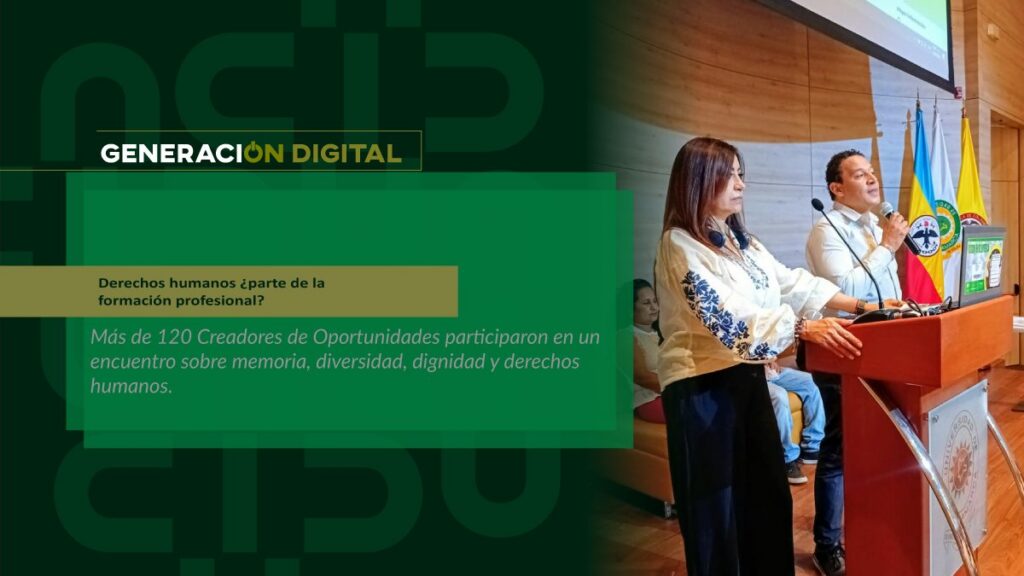
Human rights: part of professional training?
By: Alejandro García Suárez – Advisory Office of Communications


I am your virtual assistant, here to help you quickly and easily.
▲ Back to Top
The MEDIT student initiative seeks to encourage and link students to use information and communication technologies in processes of disseminating scientific knowledge in the area of psychology for the appropriation of technological tools and to strengthen training and learning.
“Regarding MEDIT and these activities proposed in the classroom, the assumptions of this model allow us to understand that technology and virtuality are a means of impact, which can be used as ways to generate knowledge; in this sense, with this type of exercise, an active student is promoted who becomes a social agent who, in addition to learning, can impart learning through their actions, where the use of technology is a tool and functions as a dialogical element in the knowledge that is guided from the classroom,” explains teacher Rafael Leonardo Cortes Lugo, manager of the initiative.
The class dissemination project was disseminated through the YouTube platform, with each video lasting 5 to 10 minutes, and was carried out by second semester students of the thematic core of morphophysiology and fourth semester students of the thematic core of adulthood and old age life cycle of the Psychology program.
The videos were created taking into account the criteria of clarity in the subject matter, content, and ease of understanding. Creativity was another important factor, as were the presentation, the resources used to explain the topic, and the effective use of communicative elements in the audiovisual production process.
We invite you to view the works at the following links:
Thematic core topic of morphophysiology
Videos about neurons (second semester of the Psychology program, thematic core: morphophysiology)
Mirror Neurons: Created by Leidy Stefania Rodríguez Gómez, Camila Andrea Sastre Romero, Alejandra González Ruiz, Edna Liliana Ayala Daza and Maira Alejandra Escobar Pulido.
Pyramidal neurons: Created by Thania Valentina González Otálora, Camilo Alberto Garavito Garzón and Sara Yesenia Cala Quiroga.
Sensory and motor neurons: made by Angie Dayanne Paramo Rojas
Types of neurons: multipolar neurons Created by Angie Katherine Morales Guerrero, Karen Viviana Serrato Contreras, Alison Sharick Caceres Rojas and Cristal Tishiane Angel Rodríguez
Bipolar Neurons: Created by Laura Paola Guarnizo, Daniel Felipe Acosta, Laura Gissell Díaz
and Daniela Alexandra Castillo
Sensory neurons: Created by Yulieth Tatiana Baquero Velásquez, Manuela Alejandra Ardila and Daniel Santiago Díaz Lara
Motor neuron: Created by Laura Valentina Mora Ordoñez
Core theme of the life cycle: adulthood and old age
Videos about the contributions of characters in adulthood (fourth semester of the Psychology program, thematic core: life cycle, adulthood and old age)
Virginia Apgar Clarke: Created by Angélica Gutiérrez Guasca
Gertrude Elion life cycle: Created by Briam Martín Domínguez Correa, Andrea Morales, Michell Tinoco, Luis Felipe Pulido, Lina María Sánchez, Karen Silva
Charles Bukowski: A Life of Poetry, created by: Valentina Buitrago, Angélica Cortés, Dairy Monroy and Karen Pinto
Nelson Mandela Life Cycle Project: Adulthood and Old Age Created by Damaris Lara Rodríguez, Danna Julieth Guasca Rincón, Kevin Andrés Barbosa Vargas
Creativity in Adults by Edward Bernays: Manuela Ledesma and Laura Skinner
News
News
News
News