News
2026-09-24
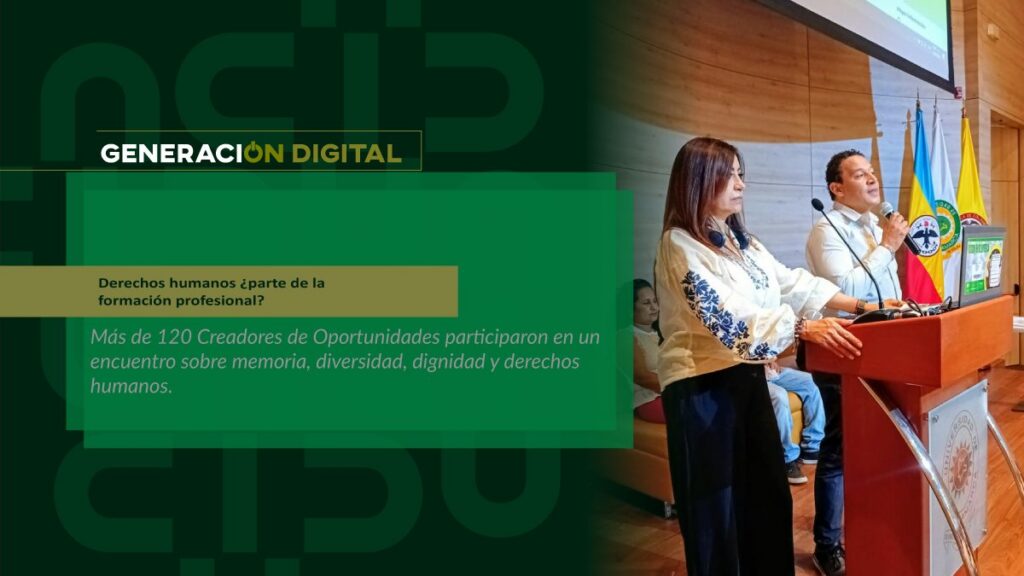
Human rights: part of professional training?
By: Alejandro García Suárez – Advisory Office of Communications



I am your virtual assistant, here to help you quickly and easily.
▲ Back to Top
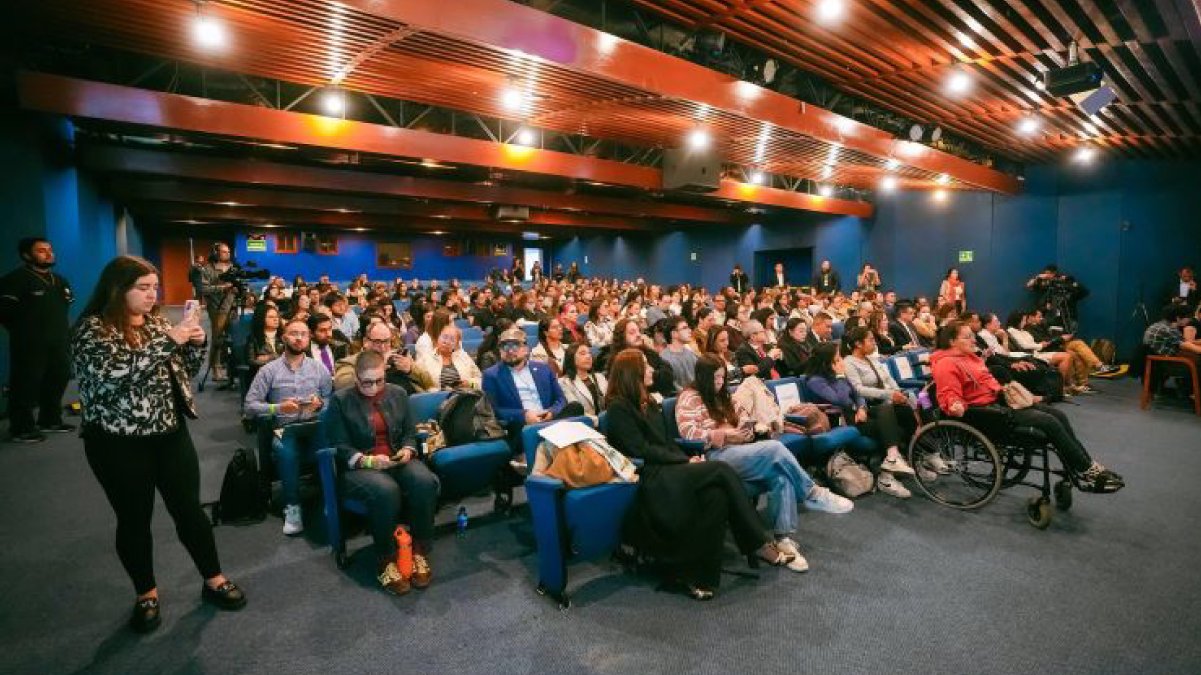
In Colombia, thousands of young people with disabilities still find the doors to higher education closed to them. Economic barriers, lack of physical and digital accessibility, absence of educational support, and difficulties in remaining in school continue to limit their right to study and graduate on equal terms.
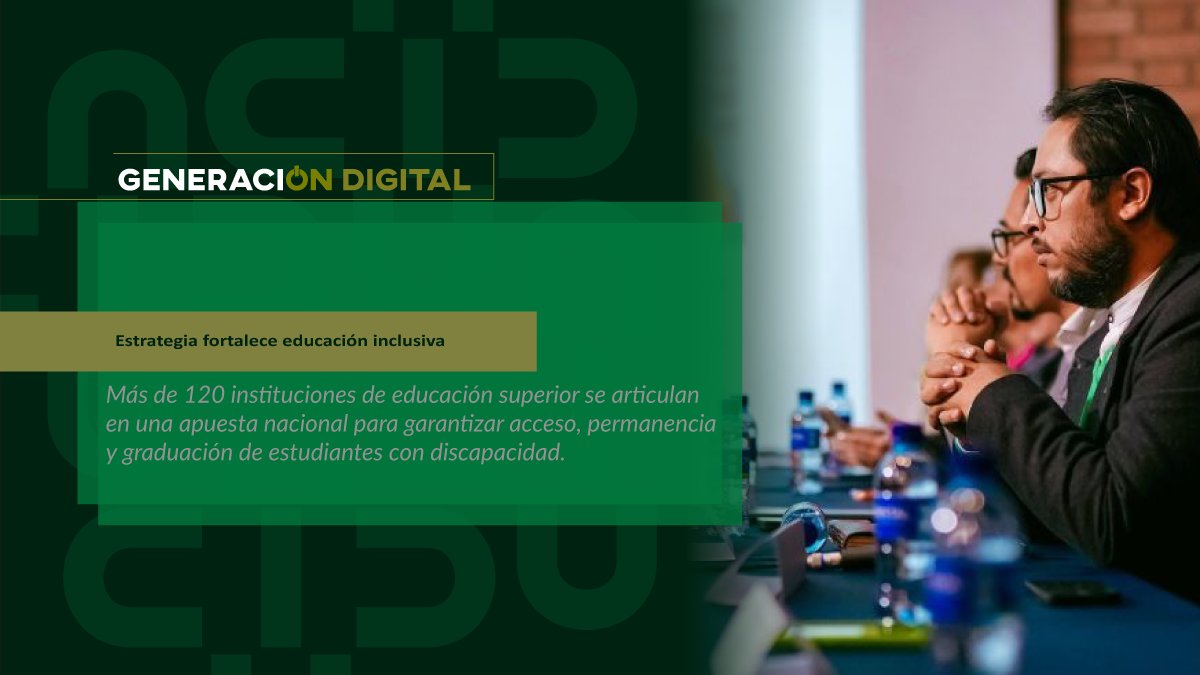
Faced with this reality, the national government supported the presentation of the National Strategy for Inclusive Higher Education, a commitment built together with Higher Education Institutions, social organizations and public entities to transform the conditions of access, retention and participation of students with disabilities in the country's higher education institutions.
The strategy was launched at the National University of Colombia and brings together more than 120 institutions linked through the Colombian Network of Higher Education Institutions for Disability (Red CIESD), organized into seven regional hubs. The initiative seeks to consolidate collaborative work among higher education institutions to advance physical and technological accessibility, teacher training, student well-being, student participation, and transition to employment.
This initiative is the culmination of over two years of collaborative work between higher education institutions, organizations for people with disabilities, and national and international entities. A key precursor was the National Meeting of Rectors and Directors for Inclusive Higher Education held in 2025, where various universities agreed that inclusion could no longer depend on isolated efforts but must become a structural component of educational quality.
During the launch, the Deputy Minister of Higher Education, Ricardo Moreno Patiño, asserted that the country has a historical responsibility to eliminate the barriers that still exclude thousands of young people from universities.
“There are people who have dedicated their entire lives to making the right to education a reality. Families, institutions, teachers. The National Government seeks to break down the barriers that impede the right to education because disability is not the limit. The limit is the barrier that we, as a State, have failed to dismantle. And that has to change. Every teacher who arrives in a community, every interpreter, every instance of free tuition or continued enrollment, are enabling conditions for making the right a reality and moving from barriers and privilege to reality,” she stated.
The process involves the participation of the Ministry of National Education, the Ministry of Equality and Equity, the Ministry of Science, Technology and Innovation, the Ministry of Information and Communication Technologies, the National Institute for the Blind (INCI), the National Institute for the Deaf (INSOR) and the Saldarriaga Concha Foundation, among other entities linked to the strengthening of educational inclusion policies.
As part of this agenda, the Ministry of Education presented the “Collaboratory,” a support strategy among universities to share experiences, methodologies, and tools related to accessibility, student participation, and inclusive education. The initiative will allow institutions with more experience to support other universities interested in strengthening their capacities.
According to the Ministry of Education, more than 2,000 university directors, teachers and leaders have already participated in training and support processes promoted within the framework of this national strategy.
For his part, José David Rivera Escobar, Deputy Director of Support for the Management of Higher Education Institutions, pointed out that one of the biggest challenges will be translating the discourse of inclusion into concrete changes within the institutions. “Inclusion cannot remain merely rhetoric. It must be reflected in pedagogical practices, infrastructure, technology, and the way in which institutions support their students,” he stated.
Kenny Tatiana Otálora Camacho, coordinator of the Team for Promoting Well-being and Retention in Higher Education, emphasized that this strategy also aims to send a message of confidence to young people with disabilities and their families. “We want young people to know that there is a place for their life projects within Colombian higher education and that higher education institutions can become increasingly accessible and humane spaces,” she stated.
The strategy is also accompanied by concrete measures of financial support and academic strengthening. Through the "Financial Support for Students with Disabilities in Higher Education" Fund, established by Agreement No. 44 of 2010 between the Ministry of National Education, Icetex, and the Saldarriaga Concha Foundation, annual calls for applications are issued that grant forgivable loans of up to 12 current monthly minimum wages per semester for tuition and living expenses.
In public higher education, the tuition-free policy benefited 1,280 students with disabilities in the second semester of 2025 alone. According to figures from the Ministry of Education, this measure represented a savings of approximately 2.148 billion pesos per semester for families in undergraduate tuition costs.
Currently, Colombia is also strengthening its academic offerings in the areas of inclusion and disability. The country has four specializations in inclusion, seven master's degrees in inclusion, eight master's degrees in education and disability, eight specializations in disability-related topics, and two undergraduate professional programs for Colombian Sign Language-Spanish interpreters.
The strategy also has the support of the UNESCO International Institute for Higher Education in Latin America and the Caribbean (IESALC), as well as national and international organizations working to strengthen educational inclusion policies in the region.
With this commitment, the national government seeks to move towards higher education institutions with fewer barriers and greater opportunities, where access to higher education ceases to depend on the physical, sensory or cognitive conditions of students and becomes an effective right for all people.
Source: Ministry of National Education
News
News
News
News