News
2026-09-24
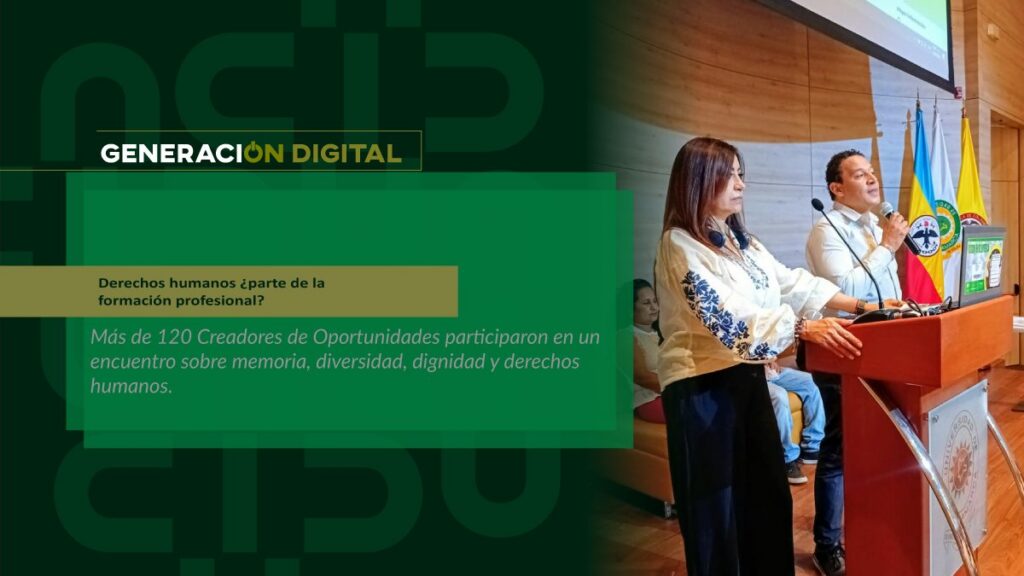
Human rights: part of professional training?
By: Alejandro García Suárez – Advisory Office of Communications



I am your virtual assistant, here to help you quickly and easily.
▲ Back to Top

The current context indicates that we are at the beginning of a post-pandemic era and the sports sector is gradually returning to its activities through training, events and league tournaments according to the possibilities and biosecurity protocols to control the spread of COVID-19.
Under this scenario, athletes return to the sports arenas eager for training after making adaptations in their homes for physical work and taking advantage of technological tools for tactical and psychological preparation.
Psychologist Estella Doris Lozano Forero, a professor in the professional program in Sports Science and Physical Education, and a Master in Sports Science and Technology and Physical Activity, tells us about the methodological strategies that are applied with students, according to their role, high-performance athletes, coaches, judges, and physical educators in the area of sports psychology to assertively manage their emotional states and negative thoughts through psychological techniques.
UCundinamarca: What is the importance of sports psychology today?
Estella Doris Lozano Forero (EDLF): In high-performance sports, psychological, physical, technical, and tactical preparation must be integrated. This preparation involves a process aimed at enhancing psychological skills such as self-confidence, motivation, concentration, anxiety and stress management, leadership, and team cohesion. It must include a training plan that encompasses the athlete's pre-competitive, competitive, and post-competitive phases.
UCundinamarca: How does sports psychology help in post-COVID-19 times?
EDLF: In the sports arena, the pandemic brought changes not only to the activities specific to athletes' disciplines, but also to their lifestyles. The interruption of training, participation in competitions, interaction with coaching staff and teammates, and the fear of possible infection led to decreased self-confidence, demotivation, negative thoughts, anxiety, stress, and even frustration among athletes, as was the case for high-performance athletes who were preparing to participate in the Tokyo Olympic Games and saw their sporting dreams dashed.
The contribution of sports psychology should be aimed at the well-being of athletes; helping them understand that COVID is worldwide, the function is to guide and support them so that they adapt to the current situation, work with the available resources, with real and measurable short and medium term objectives and aimed at maintaining their physical condition, eating habits, and physical activity.
UCundinamarca Does sports psychology contribute to emotional intelligence?
EDLF: Yes, it contributes to the development of emotional intelligence because it gives athletes the opportunity to understand themselves; to know their emotions and feelings, where they come from, how they affect their athletic performance, and how to manage them assertively. Furthermore, it enables them to self-evaluate, increase their self-confidence, and improve their relationships with themselves and others.
UCundinamarca: From the professional program of Sports Sciences, how do you help student athletes?
EDLF: In the third semester, students study the subject of Sports Psychology and Physical Education, and in the eighth semester, Psychology and Sports Performance.
These thematic units provide theoretical, methodological and practical tools from sports psychology so that students, according to their role (athletes, coaches, judges or physical educators), can understand and apply in an interdisciplinary way with other sports sciences, aspects related to the psychological processes of teaching-learning, training and competition in the areas of physical education, physical activity, initiation, technical development, training and sports performance.
Additionally, they are enabled to learn techniques, instruments, methodological and psychological strategies to diagnose and develop psychological skills, to manage emotional states and to plan, advise and develop in an interdisciplinary manner training plans that include psychological preparation of athletes at any level of sports performance.
UCUndinamarca: Share some tips for the mental strength of an athlete after confinement
EDLF:
News
News
News
News