News
2026-09-24
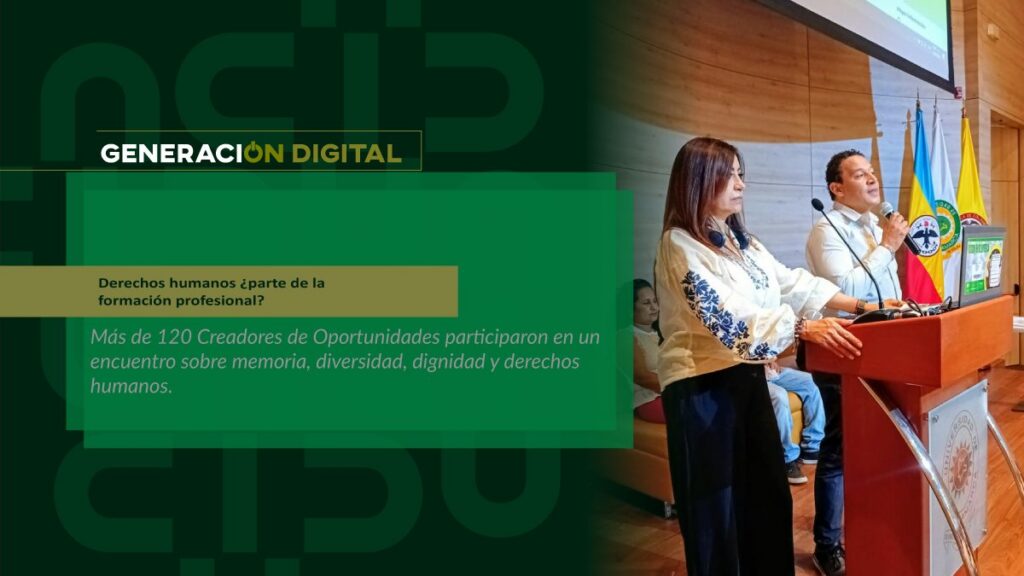
Human rights: part of professional training?
By: Alejandro García Suárez – Advisory Office of Communications



I am your virtual assistant, here to help you quickly and easily.
▲ Back to Top
The dissemination of the IDDS program facilitated engagement with research groups and projects at the University of Cundinamarca focused on the environmental context, aiming to contribute to sustainable development and improve the quality of life for local communities. Agreements were also reached to begin productive capacity-building workshops next year. It is worth noting that in Colombia, the Center for Innovation for Appropriate Technologies and Education (C-Innova) and the National University of Colombia are leading the organization of the international summit for design and development (IDDS).
“This awareness-raising of activities among researchers generates alliances in projects that later translate into mission-related solutions. This participation in international development companies, creative capacity meetings, and workshops with innovative, low-cost solutions solves real, social problems in a multidisciplinary way,” stated Dr. Jairo Alexis Rodríguez, Director of Research and Extension at the National University of Colombia, Bogotá Campus.
The “IDDS ACC Presentation Letter” describes verbatim: “The International Development Design Summit (IDDS) is an intensive design practice experience that brings together people from all over the world with a great diversity of experiences to create technologies and/or companies in order to improve people's quality of life. It is also part of the design revolution that aims to foster and promote more resources in research and technological developments that focus on the needs of vulnerable communities around the world to achieve long-term sustainable improvements in the quality of life in a community.”.
On the other hand, the IDDS program aims to share and learn about the work of other enthusiasts with the goal of establishing friendships and future collaborations.
During the socialization, the academic participants made valuable contributions, some of which stand out: Fabio Fajardo, associate professor at the National University, Electronic Engineer, Physicist with a Master's and PhD in physics, as lead instructor of the IDDS Zero Waste and IDDS Education and who has collaborated in the organization of three IDDS in Brazil, Zambia and Tanzania, expressed “this event is focused on climate change, with project options based on knowledge of the Sumapaz area and especially in the Department of Cundinamarca; climate change and natural disasters that hit vulnerable people the hardest, with this exploratory meeting we can develop topics for 2018.
Later, Dr. Alexander Freese, an industrial designer, leading organizer of the IDDS Zero Waste Program and IDDS in Education, and director of C-Innova, which focuses on technologies appropriate for education, stated: “Developing projects in Colombia with low-cost technologies and social development fosters collaboration between citizens and designers. Today, C-Innova offers workshops and a mobile app, covering entrepreneurship, electronics, climate change, and sustainable development, among other topics.”.
Finally, it is worth highlighting that Dr. Farly Andrea León Maz, coordinator of the framework agreement signed between the two institutions, the National University of Colombia, Bogotá Campus, and the University of Cundinamarca, led the tour of the Fusagasugá Campus and the Girardot Branch, accompanied by the Director of Research and Extension of the National University of Colombia, Bogotá Campus, Dr. Jairo Alexis Rodríguez; Fabio Fajardo Tolosa, physics professor, and Alexander Freese Bello, industrial designer, Director of C-Innova.
And from the University of Cundinamarca, the Academic Vice-Rector, Orlando Blanco Zúñiga; the Director of University Research, José Zacarías Mayorga Sánchez; deans and research professors from the different Faculties, who in an interdisciplinary manner contributed with their projects to generate environmental, educational and social impact in the community.
These academic and research activities serve the purpose of contributing to the institutional strengthening of the University of Cundinamarca and sharing the objective of cooperation with the National University of Colombia on climate change, environment and water.
The University of Cundinamarca's research community is invited to actively participate in these collaborative events, which focus on the importance of environmental development and its various impacts. "This is a space that offers opportunities and allows us to share, not only with other universities but also with ourselves, the valuable work that the University of Cundinamarca's research professors carry out with the community, generating social, environmental, and educational impact in rural areas," concluded the agreement coordinator, Farly Andrea León Maz.
More news about the UCundinamarca – UNAL Agreement at the News Agency
News
News
News
News