News
2026-09-24
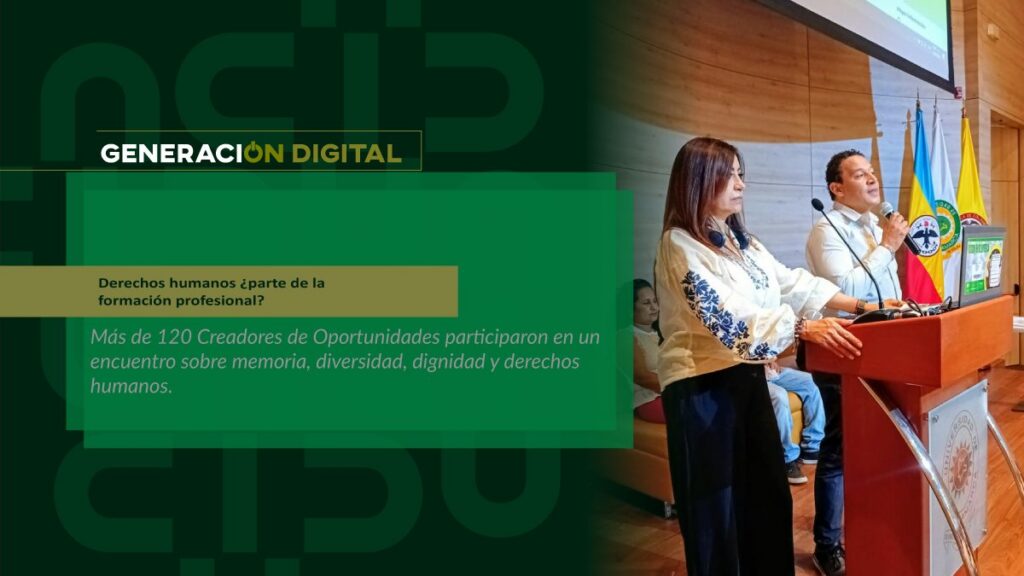
Human rights: part of professional training?
By: Alejandro García Suárez – Advisory Office of Communications



I am your virtual assistant, here to help you quickly and easily.
▲ Back to Top
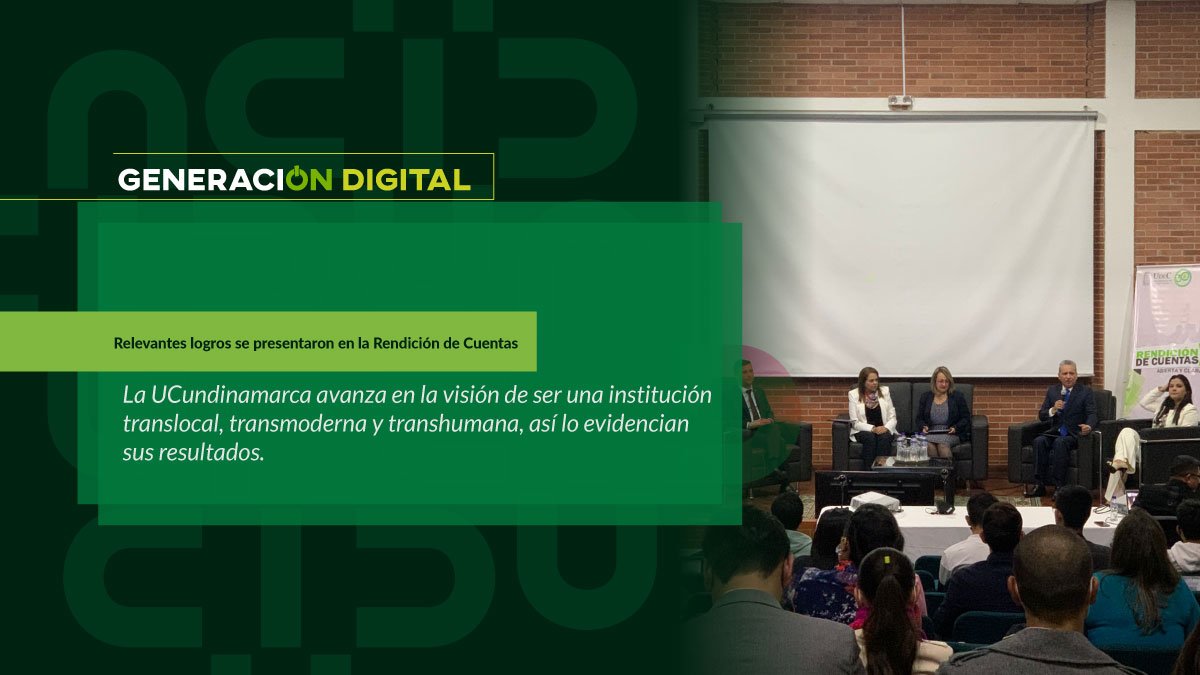
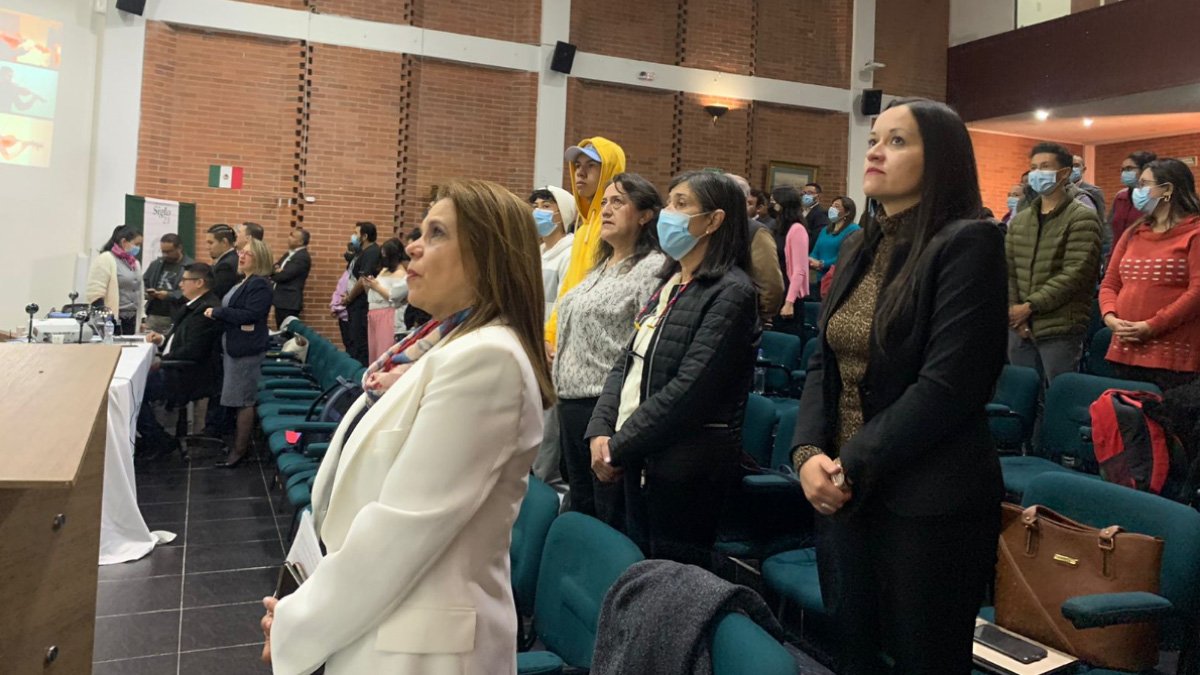
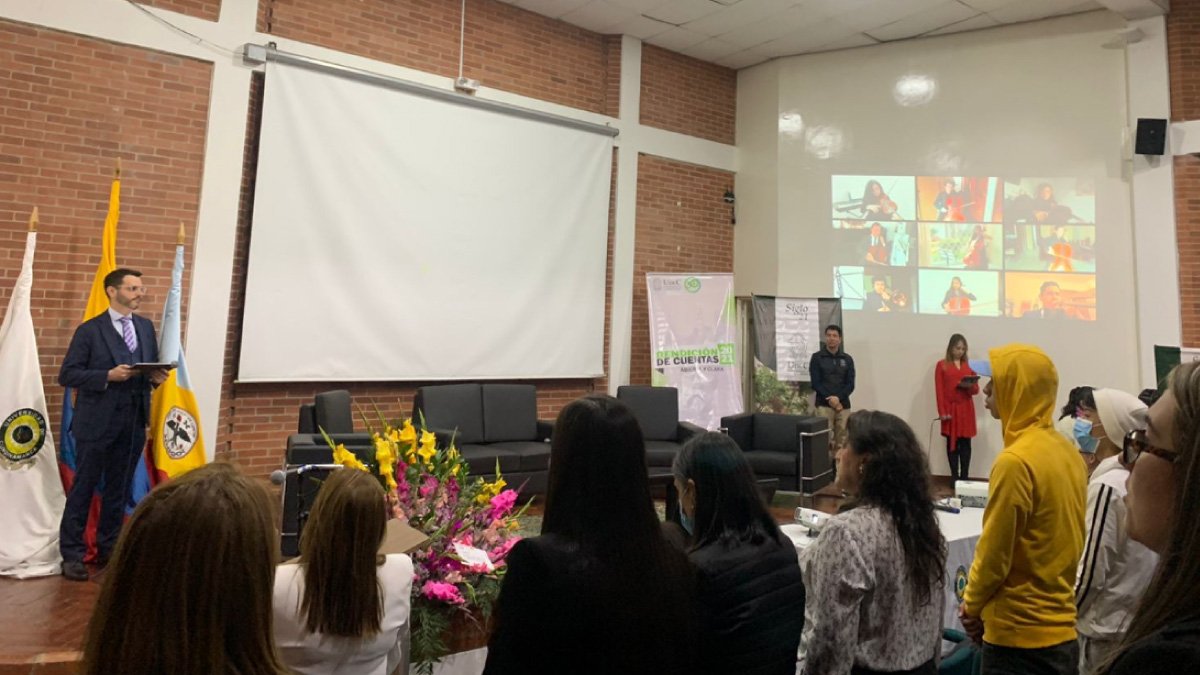
The event, which took place today in the auditorium of the Ubaté branch and was broadcast via Facebook Live in a panel format, was attended by the Senior Management who interacted with important contributions and the educational community.
In his speech, he highlighted that this “year we occupy the first place in the institutional performance index with a 98% among the universities that are regional such as: Valle or Antioquia, Magdalena and Quindío, among others.
He also highlighted the approval of the initial conditions for the seven campuses. “With this work, the institution can submit its qualified registrations for the different programs to the Ministry of National Education in an efficient manner.”.
He also highlighted the free tuition achieved during the height of the pandemic. “We were the first to join this policy by requesting the departmental and national governments to make it a reality, and today it is a right.”.
Regarding the value-added model that the institution provides to students, the rector commented that “the university has been able to measure these impacts and at the same time determine the role it is playing. This is how the university's performance on the Saber tests taken by students resulted in an added value of 46%.”.
In the learning fields that are the setting for training for life, values and civility, he highlighted "that there are 267 experiences on this topic and in the cultural learning fields there are 18. This last aspect is key since it has an impact on cultural transformation.".
Regarding research, which is one of the pillars of any university, the rector commented that in 2021 thirty-nine research groups were consolidated and seventy-four professors were categorized by Colciencias. “At the beginning of my term, there were only fifteen, and that demonstrates significant progress.”.
Regarding the 21st Century Training and Learning School, he noted that, “work has been done on the learning pathway so that teachers can complete three specializations. One is called knowledge management of learning, another is entrepreneurship and innovation, and a third is learning and research, which can be complemented with a master's degree in knowledge management and education.”.
Similarly, he commented on the topic of self-evaluation, which is important for program accreditation processes, stating that "this has been an instrument that has yielded many achievements, which is why we are working on improvement plans for each program and monitoring their progress. Therefore, I want to emphasize that thanks to the faculty, we achieved 841% of our target, which is an excellent result.".
She also highlighted the library's transformation, which has adapted to the demands of the information and communication technology revolution. “We've gone from a traditional library to a knowledge management and learning center. We've supported this change by advising and assisting students and faculty in their research processes, in the repositories of editorial resources, and by personalizing this process. This has yielded results such as 10,086 consultations and the provision of 56,186 electronic resources to users last year.”.
Regarding the faculty, which is one of the fundamental pillars of any institution striving for excellence, the rector stated, “This year we will have 17 tenured professors, and next year there will be 20. I also want to emphasize that the Academic Council decided to prioritize hiring professors on 11-month contracts to support the institution's mission in science, technology, and research. This measure has resulted in 53 research project proposals being submitted in the third call for proposals, which is very positive.”.
And as part of diversifying the academic offerings, he noted that, “creating the Postgraduate Institute means specializing all the programs and giving students the opportunity to pursue one or more. Ultimately, we hope to have thirty specializations and seven master's degrees in the future.”.
It is gratifying to know that during the two years of the pandemic caused by COVID-19, the University of Cundinamarca had an effectiveness of 95% in the use of technological tools to advance the teaching-learning process, said Dr. Víctor Hugo Londoño, Academic Vice-Rector.
Here you can see the analytics of the data during the pandemic: https://www.ucundinamarca.edu.co/index.php/medit-a-un-clic-apoyo-academico
The event was attended by Dr. Aida Lucía Toro, Director of Institutional Planning, Dr. Víctor Hugo Londoño, Academic Vice-Rector, Dr. Carolina Gómez, Director of Internal Control, Dr. Myriam Lucía Sánchez, Administrative and Financial Vice-Rector, and Dr. Isabel Quintero, General Secretary.
Finally, it is important to highlight the participation of the educational community, who asked about the management of public resources, the decisions made and the management carried out, as part of the transparency process that the Constitution and the law require of all public servants.
It is worth noting that each of the questions received through social media during the Accountability process will be answered and published on the website. www.ucundinamarca.edu.co as soon as possible.
Relive the 2021 Open and Clear Accountability Day here
News
News
News
News