News
2026-09-24
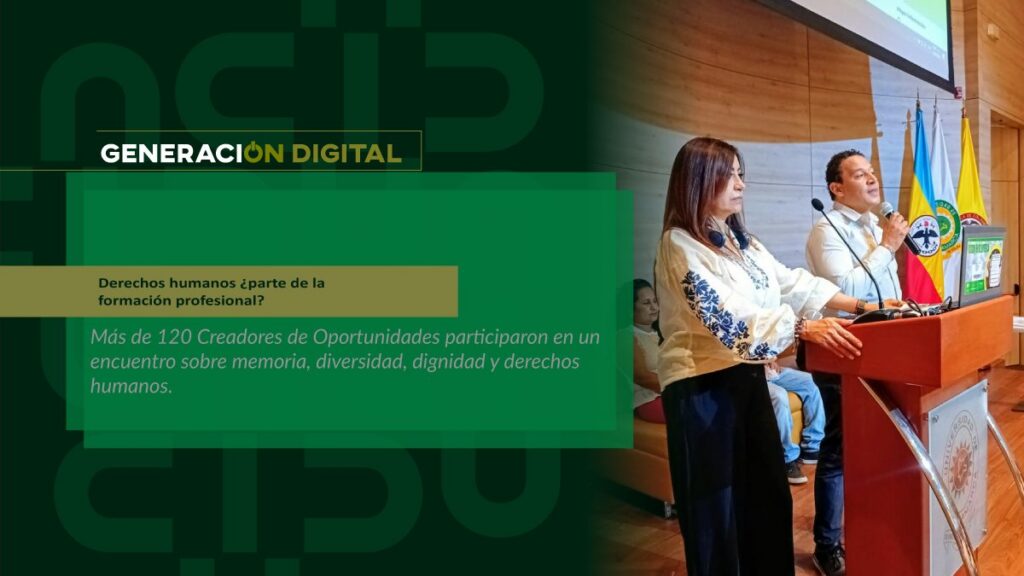
Human rights: part of professional training?
By: Alejandro García Suárez – Advisory Office of Communications



I am your virtual assistant, here to help you quickly and easily.
▲ Back to Top
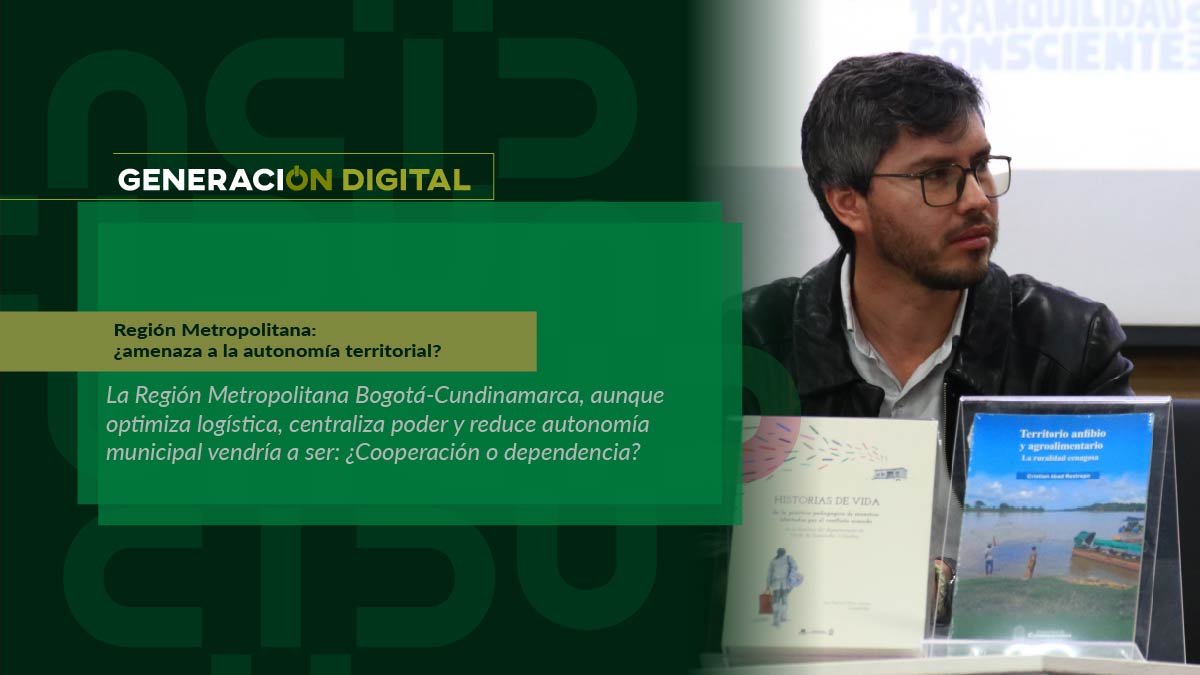

By: Cristian Abad Restrepo – Political Scientist, Master in Habitat and Territorial Studies, PhD in Geography.
Urban hierarchies in Colombia are the result of various historical and spatial processes, culminating in large urban agglomerations. Colonization, urban industrialization, armed conflict, forced displacement, urban population growth, voluntary and economic migration, and, of course, the functional and locational relationship of economic and political decisions have all been determining factors in making urban centers fundamental to shaping national life. This, of course, reflects a global trend.
Ultimately, this has resulted in an unequal landscape and urban imbalance in Colombia, where four metropolitan centers with national and regional influence—namely, Bogotá, Medellín, Cali, and Barranquilla—determine the nation's future. Of course, other cities stand out at the subregional level, such as Cartagena, Santa Marta, Pasto, Neiva, and Bucaramanga, among others.
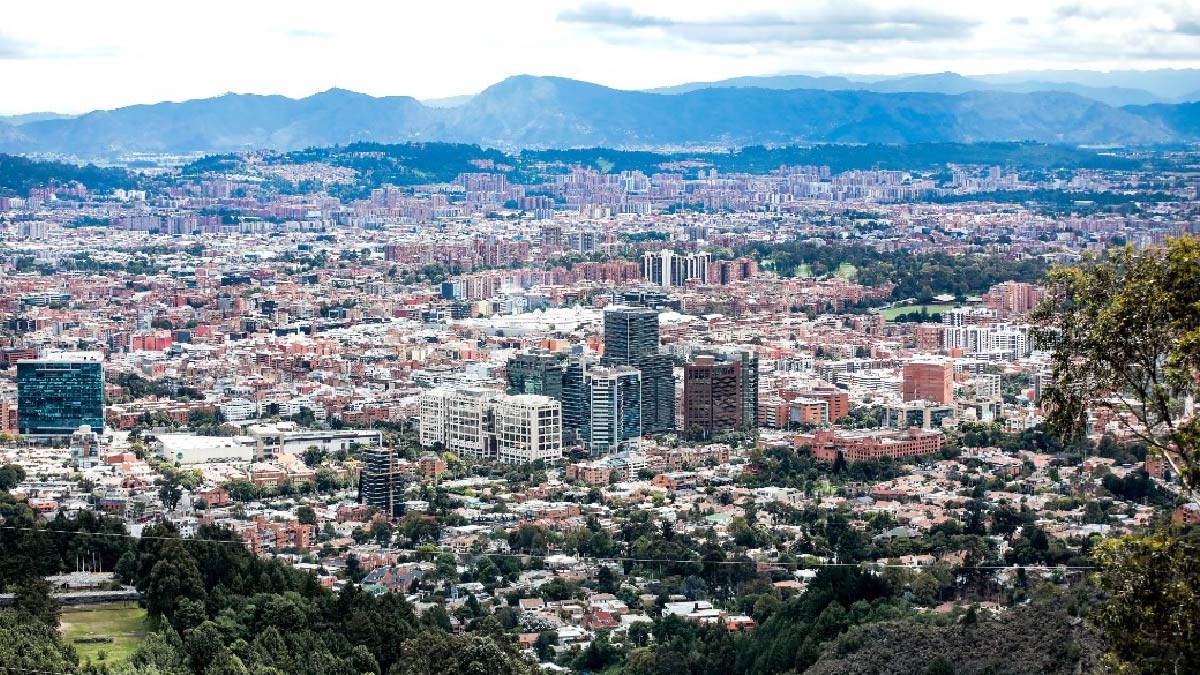
Below the aforementioned metropolitan centers are the supporting cities located in their surrounding areas. In the case of Bogotá, Soacha, Fusagasugá, Chía, Zipaquirá, Madrid, Funza, and Mosquera, among others, stand out. These supporting or satellite cities provide specific services to the large urban center, which requires resources, energy, and a decentralization of investment from different economic sectors to expand its reach. It is worth noting that this is known as Bogotá-Cundinamarca Metropolitan Region to a partnership scheme between Bogotá, Cundinamarca and its municipalities in order to create strategic projects and improve the quality of life of its inhabitants
However, to guarantee water and food for Bogotá's 7,412,566 inhabitants (DANE, 2018), the "spatial capture" of multiple territories is required through special administrative mechanisms that define the planning and occupation of land in different municipalities. An example of this is the expansion of Bogotá's aqueduct into neighboring municipalities. It is in this context that the legal framework of the Bogotá-Cundinamarca Metropolitan Region becomes relevant to addressing this challenge.
Ensuring food for all inhabitants, at least three times a day; providing water for the daily bathing of millions of people; and finding places to dispose of their waste, implies having a regional and logistical perspective that allows these urban macro-processes to be managed efficiently.
On the other hand, having a metropolitan region is fundamental for participating in the phenomenon of “global cities,” which underpin the new dominant socioeconomic structures of the world order (Sassen, 1999). It is worth noting that, in this scenario of urban globalization, many of these cities and metropolitan regions have greater control and decision-making power over natural resources, the workforce, and tax mechanisms than central governments themselves; in fact, they are even above them.
However, given this seemingly inevitable reality, it cannot be ignored that the expansion of this phenomenon generates unequal development, regional imbalances, and a loss of territorial autonomy, which should be a cause for concern for everyone.
Es paradójico que mientras se demande más descentralización política y administrativa, más haya concentración de poder en los centros urbanos metropolitanos. La explicación consiste en que se asiste a una “dictadura urbana” que comanda los modelos de ocupación territorial para sostener el gran desarrollo metropolitano. Es generalidad que los políticos de las ciudades de apoyo, municipios menores, concuerdan que hay que supeditarse a la inevitabilidad del fenómeno que, para el caso colombiano, puede ser un riesgo por la pérdida de la descentralización de los territorios y poner en jaque las democracias locales.
No se trata de no hacer nada ante el discurso instituido de lo inevitable o simplemente ceder por conveniencia política como actualmente sucede. De lo que se trata es saber negociar los “procesos de integración, sin supeditación”. Lo que está sucediendo en la región metropolitana Bogotá-Cundinamarca es precisamente todo lo contrario: la configuración de una autoridad externa, esto es, un artefacto de poder regional (Haesbaert, 2019) sobre el desarrollo local de los municipios.
Political and administrative decentralization of municipalities is under threat
Colombia needs legal frameworks that foster territorial integration based on respect for and strengthening of administrative and political decentralization. This means that municipalities, through internal democratic processes, should define their territorial organization according to their specific characteristics in order to address needs and guarantee human rights. This struggle for decentralization is not new: it was already present before the 1991 Constitution, which proclaimed a decentralized state as a way to improve the relationship between the state and its citizens.
In this context, the local political process must guarantee that the inhabitants themselves decide on their territory, their future, and their specialization. Democratic theory affirms that deepening democracy leads to social well-being, since communities are the ones who best perceive social contradictions (Sartori, 2003). Therefore, the election of mayors and council members is an expression of this theory, institutionally embodied in decentralization.
However, from a political realist perspective, it is recognized that once sworn in, many local representatives believe they embody democracy itself. This view leads them to make decisions based on political expediency rather than ideological consistency. For example, when a mayor and a city council decide to hand over control of the territory to a supra-municipal entity, without it being part of their governing plan, it constitutes political irresponsibility. That decision should fall to the next elected officials, if they include it in their proposals.
Similarly, it is irresponsible to commit the municipality's and its residents' long-term resources in the pursuit of immediate funding for a development plan. This implies burdening the population with new taxes and accepting a territorial organization imposed from the outside. This is how spatial imbalances, driven by political expediency, are created.
The regional imbalance stems not only from the capitalist economic model, but also from the alienation of territory by local elites seeking to climb the political ladder or gain access to supra-municipal bureaucratic spaces.
La Ley Orgánica 2199 de 2022, que desarrolla el artículo 325 de la Constitución Política, establece el régimen especial de la Región Metropolitana Bogotá–Cundinamarca. Su artículo 14 señala que los lineamientos regionales para la ocupación del territorio tienen jerarquía superior en dicha jurisdicción. Los municipios que decidan asociarse deben ajustar sus planes de ordenamiento territorial (POT) a estos lineamientos.
Esto les resta autonomía y contraviene la Ley 388 de 1997, especialmente en sus artículos 4 y 22, que reconocen la participación ciudadana como base para el desarrollo local. Además, los municipios deben adecuar sus planes de desarrollo a lo que disponga la región metropolitana, en temas como el acceso al agua (art. 16), banco de tierras (art. 10) y servicios públicos (art. 21).
Prior to Law 2199, Article 325 already empowered Bogotá to form metropolitan areas or regions with neighboring territorial entities. However, Law 1625 of 2013 required a public referendum to establish metropolitan areas. With Legislative Act 02 of 2020, this requirement was eliminated by replacing the term "metropolitan area" with "region," weakening citizen participation.
Today, although an open town hall meeting is required for a territorial entity to join the region, this does not guarantee that the municipal council will listen to the community. The political arrangement is usually already decided. Therefore, this form of association lacks democratic legitimacy, since the decision should arise from a popular vote and not from the interests of a few, and it should be based on a serious technical, social, cultural, and environmental debate.
In that sense, it is essential that the association with a metropolitan region be a structural issue, the product of consensus among diverse actors, in order to achieve a well-founded and rigorous governance.
While it's understandable that leaders seek resources to implement their development plans, this shouldn't be done at the expense of territorial autonomy or the will of the inhabitants. It's common for higher levels of government to pressure local authorities to accept certain provisions in exchange for resources. Many succumb to this pressure, justifying it with the supposed inevitability of Bogotá's growth and the scarcity of their own resources.
Spatial capture of territories
Bogotá needs goods and services to sustain itself as a metropolitan center. To obtain them, it resorts to the “spatial capture” of territories outside its jurisdiction. Global cities have what is called a “geographic footprint” (Rodríguez, 2013), from which they extract natural and human resources. This footprint underpins their growth, accumulation of matter and energy, attraction of transnational capital, logistical services, and regulatory flexibility. Bogotá cannot achieve this independently; it needs Cundinamarca, where its power is most pronounced.
The Metropolitan Region thus emerges as a logistical necessity, but without mechanisms for direct democracy. In this model, representative democracy becomes functional to flexible structures that delegate decisions to a director without territorial continuity, diluting representation and weakening citizen participation.
This metropolitan region could be a valid tool in critical democracies, but it must include mechanisms for direct participation, as established by the law on metropolitan areas.
Therefore, leaders who manage local budgets must address the concerns of provincial communities. We are facing a territorial restructuring that, instead of deepening decentralized democracy, reinforces a delegated democracy with centralized power. We cannot advocate for the election of mayors and councilors while they cede territorial power to a traditional urban hierarchy through a flexible regional model.
Ultimately, this is inconsistent with democratic ethics. While inconsistencies are part of exercising power, as evidenced in town hall meetings and political decisions, it is necessary to acknowledge and discuss them.
Spatial capture occurs when a territorial entity—a municipality—in its efforts to form associations, relinquishes its authority over certain responsibilities, such as housing management, local transportation, land use, and food systems. While it should be noted that municipalities have rarely engaged in this practice, a supra-municipal organization is even less likely to do so. The reality is that the only entity that will gain resources, and that needs them, is the metropolitan region when it begins capturing urban development taxes, controlling multimodal transport hubs, and appropriating land value increases.
Ultimately, Colombia remains trapped in the paradox between decentralization and the concentration of power. But with an aggravating factor: authorities are elected without genuine decision-making power over their territories. It is urgent to open the debate and provide tools so that society can decide whether or not it wants to belong to this type of supra-municipal organization. We need more direct and participatory democracy to fulfill the Social Rule of Law enshrined in the 1991 Constitution. If the people make a mistake, let them be the ones to assume the risk and overcome it creatively.
News
News
News
News