News
2026-09-24
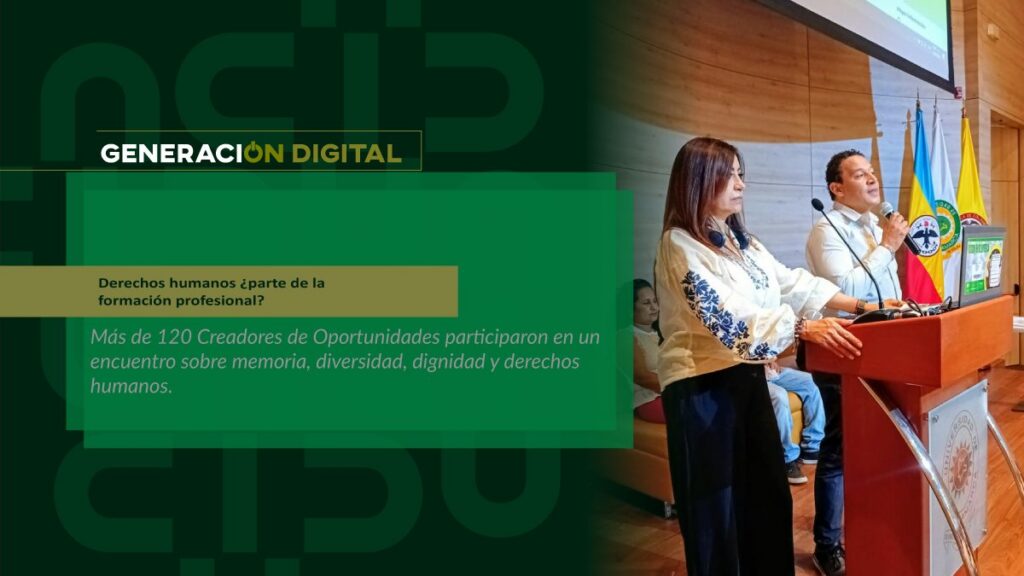
Human rights: part of professional training?
By: Alejandro García Suárez – Advisory Office of Communications



I am your virtual assistant, here to help you quickly and easily.
▲ Back to Top
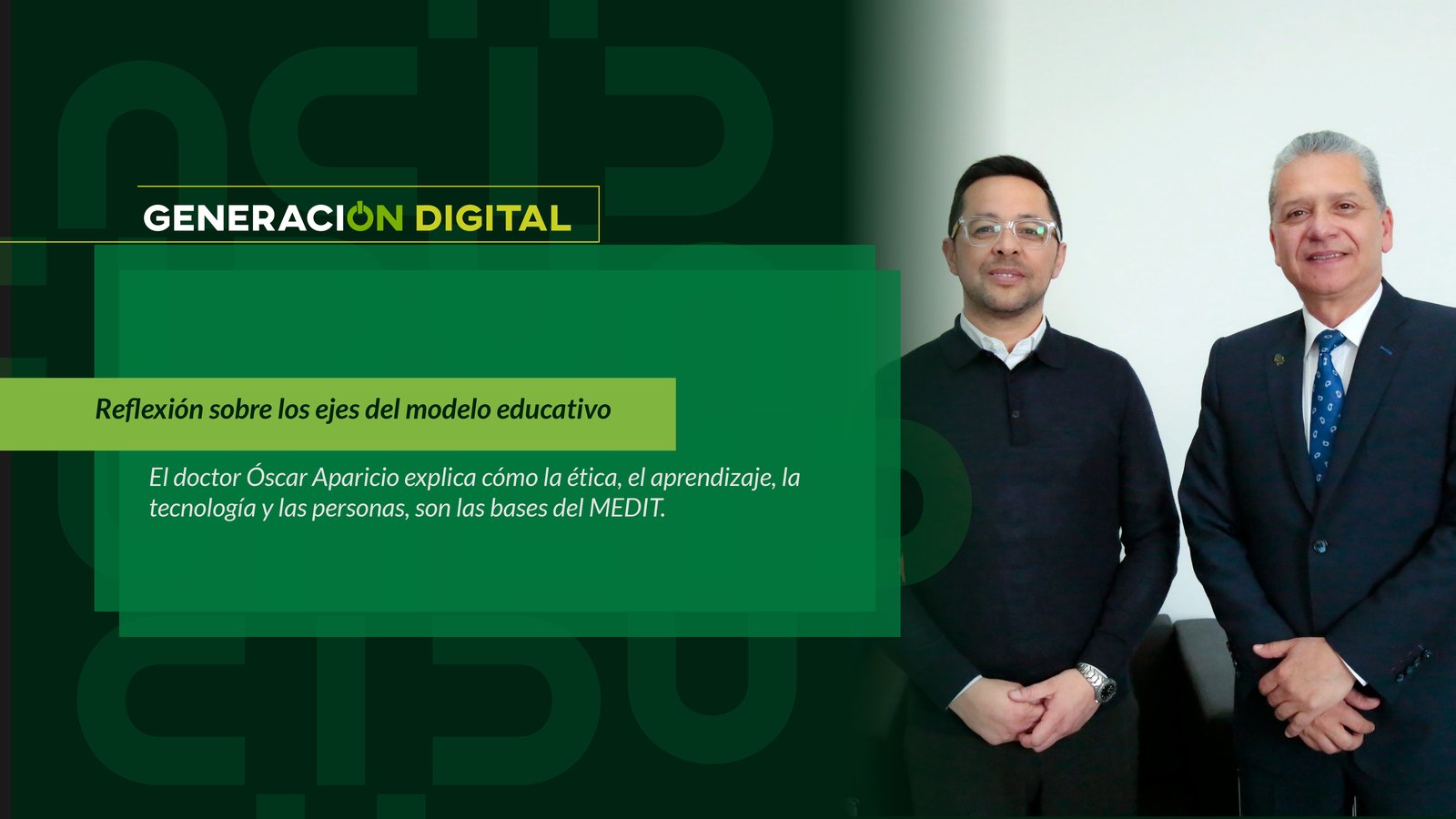
While MEDIT has been socialized at the University of Cundinamarca to the point where professors and students easily use it as a basis for proposing research and social interaction projects, its theoretical basis, what has given it structure, is something worth discussing and revisiting with the academic community.
Therefore, the University of Cundinamarca News Agency (ANUC) spoke with Óscar Aparicio, PhD in Education and in Philosophy, Politics, and Ethics from the University of Barcelona, who has been observing the Model at the Institution. He points out that ethics, learning, and technology underpin it and gives examples of how each of these aspects manifests itself in the lives of professors and students.
UCundinamarca News Agency: What do we mean when we talk about the structural axes of MEDIT?
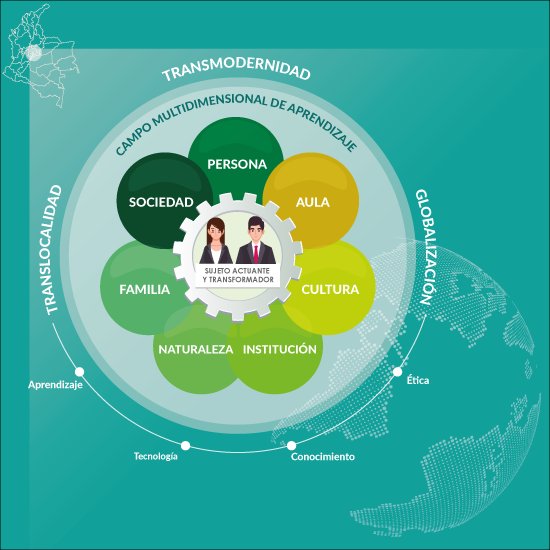
Dr. Oscar AparicioIn any construction, what is required is a firm structure, deep piles that can provide support. In the case of MEDIT, four structural axes, four pillars, have been chosen, and from these a discourse is built and, above all, it gives way to practice in terms of transforming people's reality, as well as their social and cultural reality.
UCundinamarca News Agency: What are these pillars that support MEDIT?
Dr. Oscar AparicioWe talked about four: ethics, learning, technology, and knowledge. I'm excited that ethics was chosen because at MEDIT we talk about ethics in terms of having enough tools to question what we habitually do, why we do what we do, why we focus on perpetuating certain customs, or why we can question them. Ethics provides us with the elements of judgment based on the fact that we are rational beings.
UCundinamarca News Agency: The next focus is learning; are we talking about learning that is neither traditional nor hierarchical?
Dr. Oscar AparicioYes, at MEDIT we see learning as something that makes us all students. Learning is something we experience throughout our lives; education allows us to recognize ourselves through our long-term projects and enables us to learn every day and understand ourselves through reason. In the planning of a project, everyone learns because the group contributes to the individual's self-recognition. These knowledge networks allow us to learn and see a diverse reality. Therefore, at MEDIT, the transfer and management of knowledge is fundamental for the academic community, extending beyond teaching and the student.
UCundinamarca News Agency: Finally, the technology axis is the last foundation of MEDIT, what is the reason for this decision?
Dr. Oscar AparicioTechnology is a means to learning; we learn with technology by considering it a cognitive tool—a tool that allows us to learn, connect with others, and improve our lives and the lives of others. But, I insist, technology is a means that facilitates the advancement of people; we must keep in mind that people are the end, and everything else, including technology and models, is a means to an end.
UCundinamarca News Agency: Do the structural axes of MEDIT focus on promoting people?
Dr. Oscar AparicioOkay, promoting people means recognizing that they are important. And what makes us rich is precisely that we are all different and that we can strengthen bonds, weave networks of knowledge, but also networks where we all feel part of building a fairer, more open society that recognizes difference as a factor. Recognizing people makes us reflect on access to resources, processes, and means, something that should be equal for everyone.
News
News
News
News