Fusagasugá Branch
2026-09-24
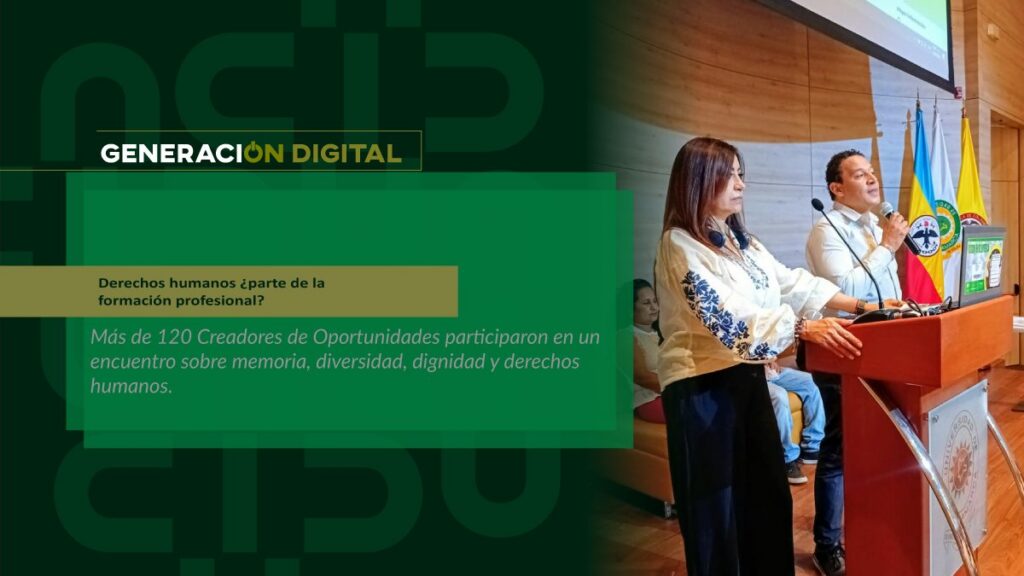
Human rights: part of professional training?
By: Alejandro García Suárez – Advisory Office of Communications



I am your virtual assistant, here to help you quickly and easily.
▲ Back to Top
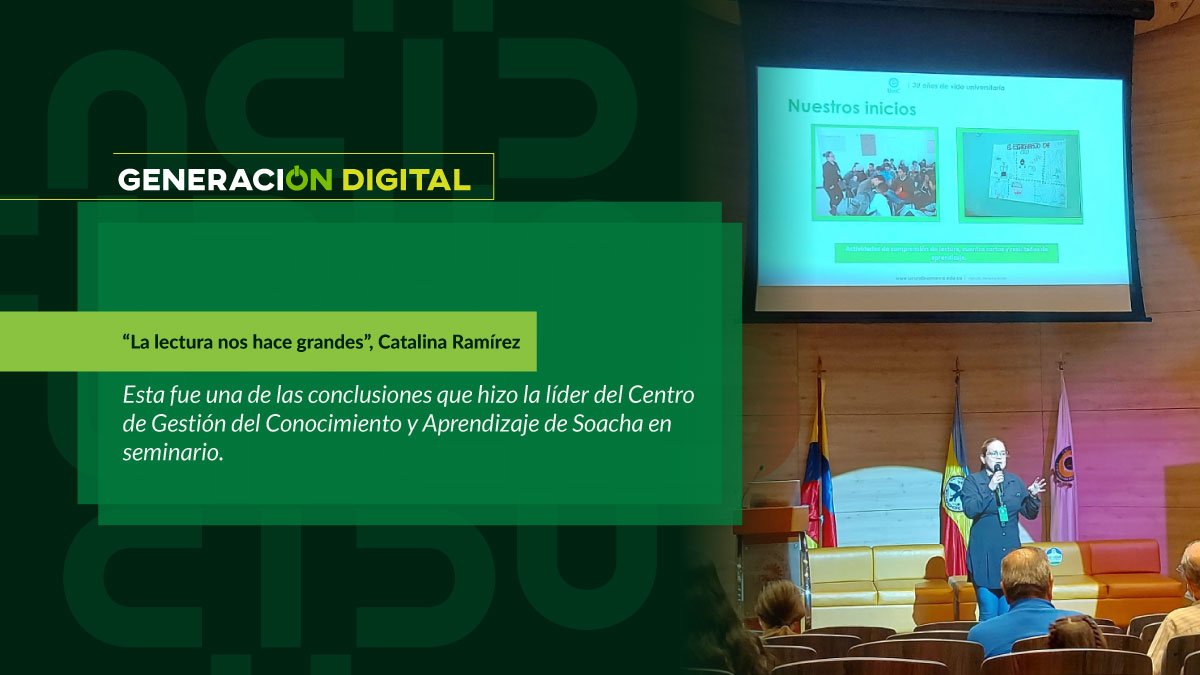
The academic event, "Training of Reading and Oral Communication Mediators," took place on April 21st and 22nd in the auditorium of the Fusagasugá campus library. There, the expert spoke about the university's process of promoting reading at the Soacha campus and the various strategies implemented to immerse young people in the fascinating world of books.
According to data from the Millennium Education Report, in Colombia there is a 15.51% functional illiteracy rate, meaning that women and men have difficulty understanding ideas and concepts written by others and communicating their own writing in a structured way.
In that context, the work that Catalina Ramírez does takes on special importance, which is why Noticias UCundinamarca interviewed her.
UCundinamarca News. What did the presentation consist of?
Catalina Ramírez (CR). My presentation, titled "Promoting Reading at UCundinamarca," addressed two fundamental aspects of how this process unfolds virtually and how people have been motivated to participate. We also discussed the creation of our Reading Club and the Literary Corner, the latter being an in-person space that is also broadcast via Teams to the campuses and extensions on Fridays from 3:00 pm to 4:00 pm. All of this is framed within the Transmodern Digital Educational Model (MEDIT).
UCundinamarca News. What kind of questions did the young people ask after the presentation?
CR: They told us they would like this experience to be implemented in person at the other locations. They also urged us to continue training our staff in each of the regional units so that this process can be much more widespread. They added that they felt it was very important for the institution to implement this promotional experience, given that students often lack this habit. Finally, they congratulated us.
UCundinamarca News. What has been the process you've implemented to get young people interested in reading?
CR: Given that kids today are very visual, there are resources that have helped us, such as graphic novels or comics. We also ask them what topics they like, and from there we look for related books that aren't too long. Once they've read them, through open dialogue, we determine if the student has a high level of reading comprehension, and then we move on to more complex texts.
However, if you prefer not to use visual methods, you can turn to audiobooks, where we provide students with tools and strategies for this engaging practice. Ultimately, we want them to understand that reading enriches us, and we hope they will immerse themselves in new literary worlds, experiencing a wealth of moments and sensations.
Finally, it is worth highlighting that these types of processes carried out by UCundinamarca seek to improve the reading comprehension skills of its students, thereby guaranteeing better academic and professional performance.
News
News
News
News