News
2026-09-24
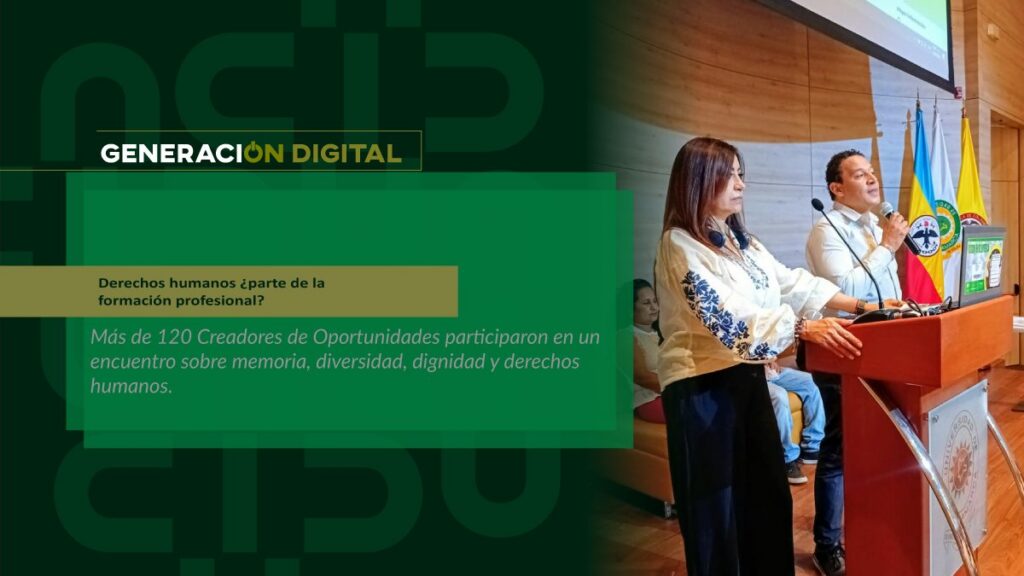
Human rights: part of professional training?
By: Alejandro García Suárez – Advisory Office of Communications



I am your virtual assistant, here to help you quickly and easily.
▲ Back to Top
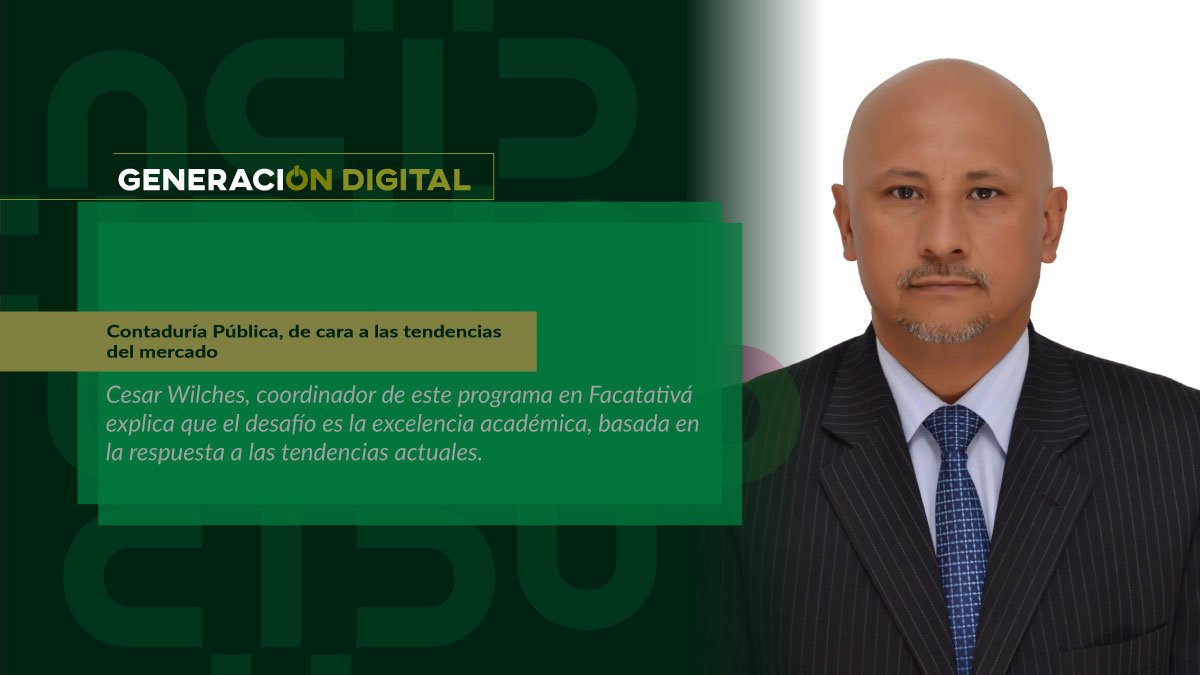
Currently, the program has around 700 students in Facatativá, followed by Chía with 450 and Ubaté with 420. In the regional units, the qualified registration was renewed, and with regard to the curricular redefinition, it is underway in accordance with the guidelines of the Transmodern Digital Educational Model, MEDIT.
UCundinamarca News: How was the process of renewing the qualified registration and the curricular redesign of the Accounting program?
César Alberto Wilches Martínez: We have been working on this since the second academic period of 2019. From that date, efforts were focused on renewing the qualified registration and redesigning the curriculum – modifying the study plan. For this purpose, we had to compile and structure the information and results.
It was then presented to the Academic Council, which approved it, and the final document was submitted so that the self-evaluation and accreditation department could begin uploading the documents, indicating that two specific applications were being submitted to the Ministry of National Education. Later, in June, we had a visit from academic peers to the campuses in Chía, Ubaté, and Facatativá. Subsequently, on October 3rd, resolution number 018295 was issued, notifying us of the renewal of our qualified registration for seven years, as well as the modification of the curriculum through its redefinition.
UCundinamarca News: With the program's redefinition process, what will it look like?
César Alberto Wilches Martínez: The academic program remains at nine semesters, with a reduction from 155 credits to 150, and the addition of two specialization tracks. These are the most significant changes. It is important to note that throughout this process, a projection is being made of the transition plan, which is primarily focused on students currently in their first, second, and third semesters. This means that by 2024, we will have four semesters underway on the new learning pathway, including incoming first-semester students.
Those first four semesters will be from the 2024 learning path, while from the 2008 curriculum, we will find students located from the fifth to the ninth semester.
UCundinamarca News: With the approval of the redefinition, when will the new learning path come into effect?
César Alberto Wilches Martínez: This will take place in 2024, in accordance with institutional guidelines. This implies a commitment to modernizing and updating our academic program to reflect current trends and needs in the environment, the profession, the business sector, and other areas.
UCundinamarca News: Regarding internationalization, what has been achieved?
César Alberto Wilches Martínez: We have already had exchange semesters for our students in Mexico, Cuba, and Argentina; two full-time knowledge managers (researchers) have also participated in the faculty ambassador program. One of them was at the Lázaro Cárdenas Institute in Mexico, and the other was at the Mariscal José Ballivián Technical University of Beni in Bolivia. For 2024, we plan to send thirteen students and one faculty member. We are making a strong commitment to the internationalization of our academic program and curriculum, which is one of our key promises.
UCundinamarca News: In terms of research and university social interaction, what has been done?
César Alberto Wilches Martínez: We participated in the sixth call for research projects issued by the Research Directorate. We submitted five projects, all of which have been approved in the first phase. We will be awaiting the results of the external peer review in the coming days. Regarding university community engagement, we submitted two projects, both of which were approved.
UCundinamarca News: With the rise of information and communication technologies, how do you see the accounting landscape?
César Alberto Wilches Martínez: Given this reality, we must be highly resilient, receptive, and fully prepared to learn, adapt, and contribute, from our profession, to the development of the profession, the economy, culture, society, and the environment, because these are the trends. While some may see this as a threat, I see it more as an opportunity for us to utilize all these developments, advancements, tools, and other resources to facilitate and update the activities carried out by public accounting professionals.
News
News
News
News