News
2026-09-24
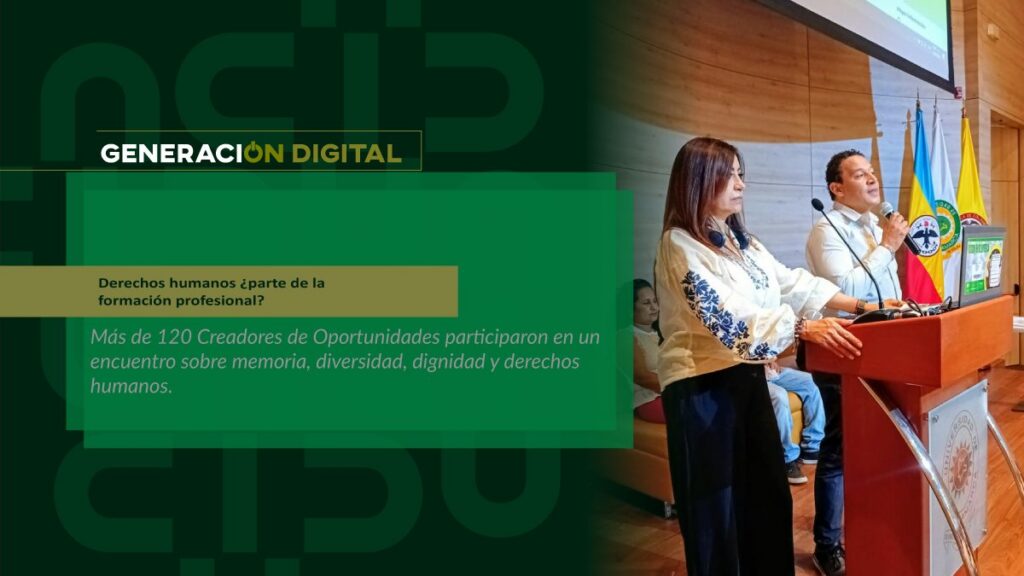
Human rights: part of professional training?
By: Alejandro García Suárez – Advisory Office of Communications



I am your virtual assistant, here to help you quickly and easily.
▲ Back to Top


By: Alejandro García Suárez – Advisory Office of Communications
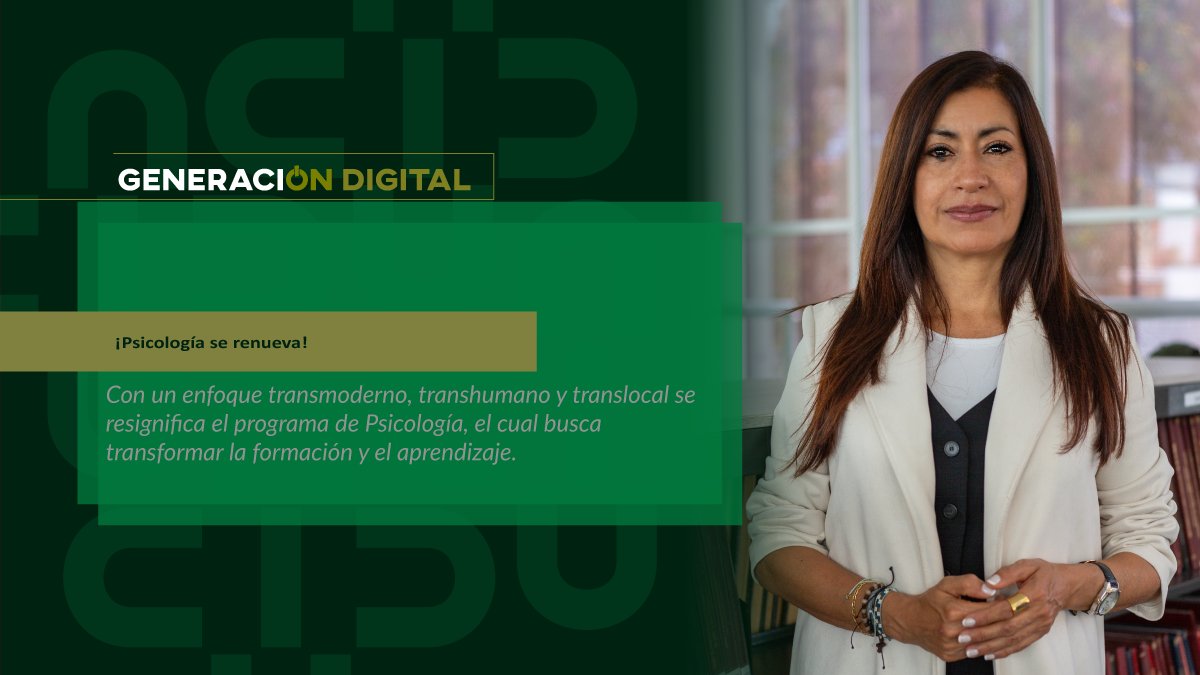
The University of Cundinamarca, through its Academic Council, has approved the redesign of its Psychology program. This process aims to adapt and update the program's specific knowledge and techniques to meet contemporary social demands. Key aspects of this renewal include valuing practical experience, improving educational quality, and promoting a more inclusive and diverse education, thereby expanding learning opportunities for students.
Dr. María Nancy Garzón Soche, Dean of the Faculty of Health Sciences, reported that an extraordinary Academic Council meeting was held on August 13, 2024, where the master document for the Psychology program was presented. This document is intended for the renewal of the program's accreditation. This renewal included the redefinition of the program within the context of the Transmodern Digital Educational Model (MEDIT). “It was unanimously approved by all members of the Academic Council, which allows us to move forward with the process before the Ministry of National Education for the renewal of the accreditation, including the expansion of the program's location to the Zipaquirá extension.”.
The dean explained that the process of redefining the program is motivated by several factors. “First, we needed to align the program with the Transmodern Digital Educational Model (MEDIT). Second, Law 1090 of 2006 establishes that Psychology programs, especially those in the Faculty of Health Sciences, must include a practical component. This requirement is mandatory for all Psychology programs in the country, regardless of their specialization.”.
The academic also explained that this approach required additional time to find practical placements for students within the service-learning framework, which slowed down the process. However, they have worked tirelessly in this direction.
The reinterpretation considers, above all, that the MEDIT structure incorporates the integral development of the person and advocates for transhumanism and transdisciplinarity. “This allows us to generate a program centered on a multidimensional field of learning through innovative methodologies. Thus, the program moves away from the traditional university to function as a space that promotes democratic values, civility, and freedom.”.
Dr. Garzón Soche also highlighted that the programs at the Faculty of Health Sciences have been redefined. Specifically, the Nursing program began implementing its new curriculum in early 2024, while the Psychology program will begin the approval process with the Ministry of Education. At the institutional level, the dean noted that 98% programs have been redefined, with only the Music program remaining to be updated.
The significance of this process of redefinition lies in the need to develop an educational program that completely transforms the perception of training and learning. “This implies a change in the role of the teacher, who becomes a knowledge manager, and in the role of the student, who becomes a creator of opportunities. Furthermore, learning spaces expand to include the local and translocal, generating a positive impact on the community.”.
The academic also emphasized the methodological shift, noting that “we have moved beyond the traditional approach of knowledge units. Now, the curriculum structure is developed within a multidimensional learning framework that, as its name suggests, is not limited to the classroom, but integrates technology and clinical settings to comply with the regulations of the psychological field.”.
Listen to our Podcast:
News
News
News
News