News
2026-09-24
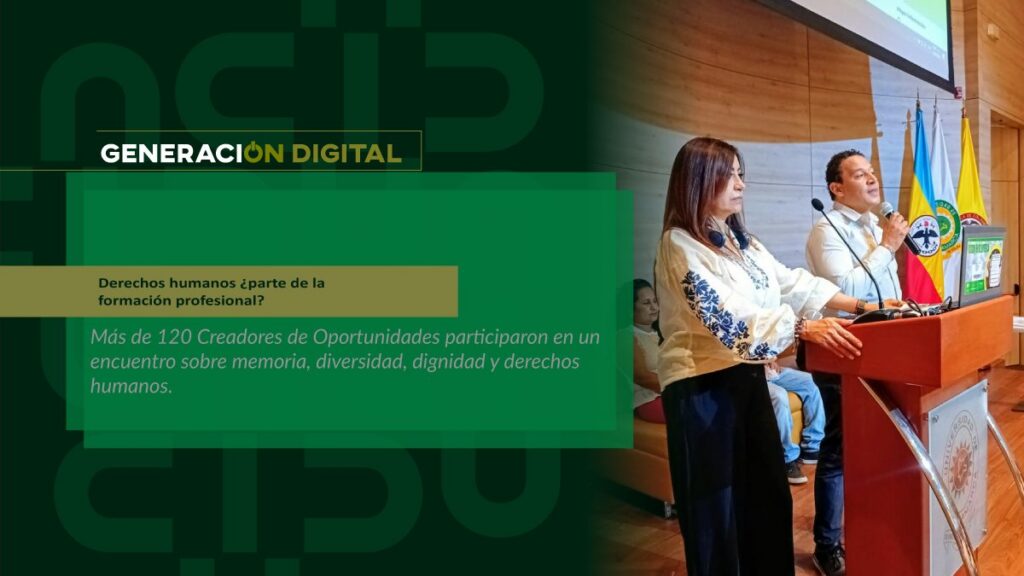
Human rights: part of professional training?
By: Alejandro García Suárez – Advisory Office of Communications


I am your virtual assistant, here to help you quickly and easily.
▲ Back to Top
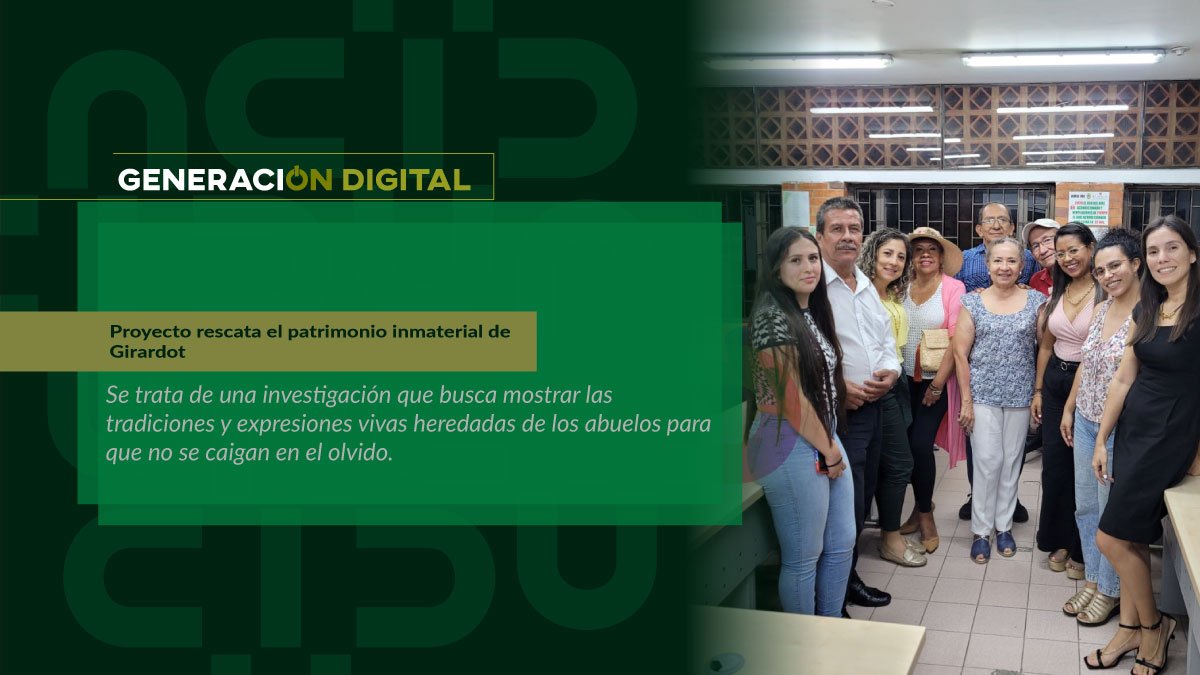
UCundinamarca, as a territorial and translocal institution, is grounded in traditions, culture, identity, memory, and ancestral and territorial knowledge, in accordance with the Transmodern Digital Educational Model (MEDIT), which prioritizes being over doing. This principle motivated the teachers at the Girardot campus to reclaim the heritage that resides in the mind and heart.
Adriana Rocío Rodríguez, coordinator of the Tourism and Hotel Management program, Ángela María Ricaurte, Lina María Sánchez, also from that program, along with their colleague Anyi Katherine Becerra from Environmental Engineering, decided to work on this topic. “We found that the city's tourism heritage inventory contained nothing about intangible heritage. This motivated us to submit our project, 'Rescuing the Intangible Heritage of Girardot,' to last year's call for proposals, and it was approved. The goal is to reveal the true identity of the people of Girardot through this research, which will serve as a contribution to current and future generations,” Ángela María explains.
To that end, the students in the program were fundamental. “We relied on them. We told them to video interview their grandparents about what they know how to do, from the perspective of what has been lost in traditions as a consequence of the technological advance of society. To that work, we added some interviews that we conducted with that population.”.
The result was surprising, because several living traditions that had been hidden were rediscovered. “For example, we learned how basket weaving was done in Tocaima, and in gastronomy, the preparation of a fish stew that is made on the riverbank and must be cooked underground with embers and its respective seasonings. Others contributed home remedies, and we found a factory whose owner is eighty years old and makes artisanal tiles, that is, handmade,” says Ángela María.
Essentially, it's about returning to ancestral traditions through a transmodern approach. "That's why the contribution of these elders was fundamental, as they are the living memory of a Colombia with an important legacy. It's work that aligns very well with our MEDIT program, and they have expressed their willingness to teach it at the university so that the tradition is not lost.".
Therefore, these two researchers believe it's possible that continuing education programs could offer courses in the future that showcase this intangible heritage. "It's something we're just starting to consider. That would be interesting, and we'd also like to see it developed at other locations.".
They are currently in the fieldwork phase. “We still need to sit down and organize all the information to write it up and also record it on video as a record. We also hope to publish it in two indexed tourism industry journals.”.
But the impact of this research, which will be delivered in November of this year, doesn't end there. "We hope it will help boost both domestic and international tourism. We want people to come and learn about all these ancestral traditions and enjoy them through memorable experiences.".
For student Verónica Alexandra Rodríguez, this research project provided valuable lessons and contributed significantly to her education. “I really enjoyed listening to the older adults and learning about different traditions that are hardly used anymore. It was also valuable because I internalized the concept of intangible heritage and how crucial it is for it not to be lost and to be passed down from generation to generation.”.
In this way, the university reaffirms its mission to be a democratic, autonomous, educational, and transmodern social organization of knowledge for the benefit of a society that seeks to preserve its traditions amidst the impact of information and communication technologies.
News
News
News
News