News
2026-09-24
Human rights: part of professional training?
By: Alejandro García Suárez – Advisory Office of Communications



I am your virtual assistant, here to help you quickly and easily.
▲ Back to Top
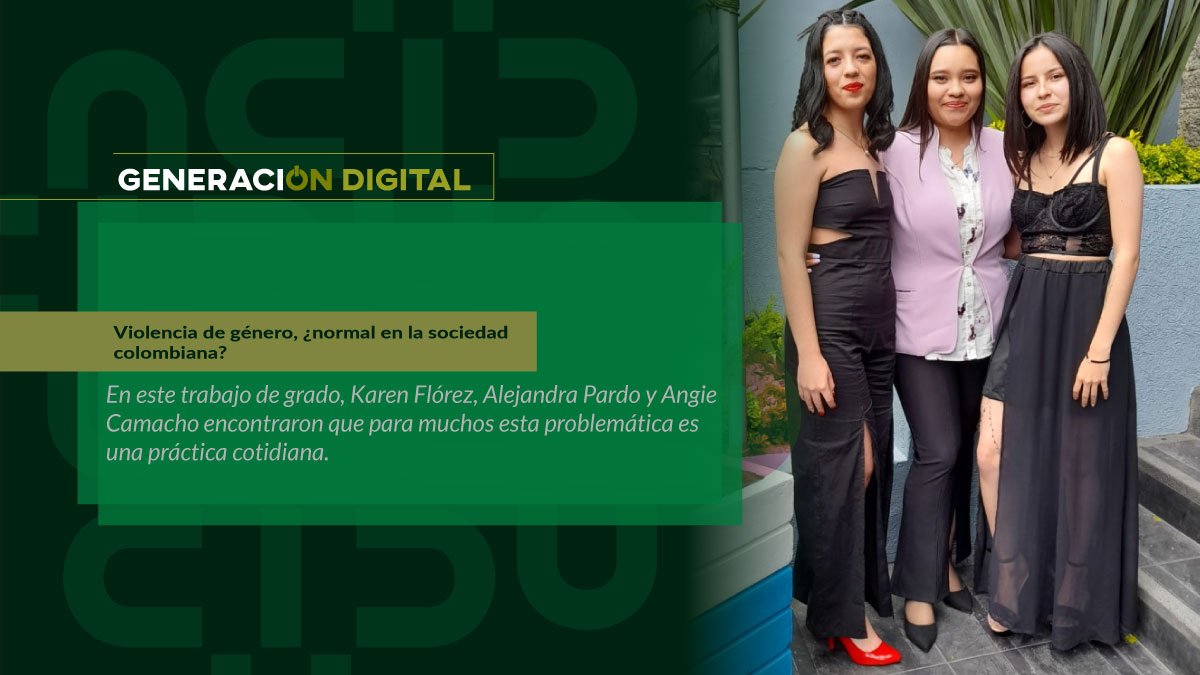
These three students from the Psychology program, based on their own experiences and those of acquaintances, undertook their degree research on this problem, which they realized has become a normal topic for both victims and perpetrators, so it could be thought that indifference in society is on the rise.
Hence, the education provided at the University of Cundinamarca, beyond training professionals, is to contribute to the formation of free and active beings who defend values, because Colombia does not need a society of indifferent professionals –harming others–, but rather people capable of living well with the ability to contribute to others through knowledge or expertise.
In 2022, the Ombudsman's Office assisted in 5,022 such cases, and so far in 2023, there have already been 2,000—a reality these three young women have witnessed in the media. Adding to these circumstances, these three young women participated in an elective course in their sixth semester, where they explored and solved problems through interaction with the teacher, focusing on social representations.
“This term refers to the instruments or tools that individuals use to interpret reality as members of a group and a culture. This made us reflect on working with this methodology on the idea of gender violence, since the three of us have lived through some unpleasant experiences, such as street harassment, and several members of our families have suffered from it,” says Karen Dayanna.
That's why, from that time on, they decided to delve into that reality to do their thesis, which they titled: Social Representations of the Ecological Origin of Gender Violence Against Women in the Suba District. “For the research, we conducted semi-structured interviews in both face-to-face and virtual formats due to the pandemic.
Thus, we started from five aspects: upbringing; the patriarchal context; Colombia's history as a violent country; the fact that both victim and perpetrator had lived in a hostile environment; and finally, the culture in Colombia, which goes hand in hand with machismo and views women as submissive. The study lasted a year and a half.”.
The data from the research was interesting. “One of our premises was that people construct their social representation based on their own experiences. This was evident in the research, as we had participants from different professions.
When asked who the main victims of gender violence were, while they stated it was women, they also confirmed that children suffer this type of abuse at the hands of men. Thus, we recognized that 501% of the participants—men and women aged 18 to 52—emphasized that the blame could lie with the woman. Another point to highlight is that, for 601% of those interviewed, given their upbringing, this was normal. That was shocking to us.”.
Finally, for this young woman, who has already graduated, the project also highlighted the significant gaps in Colombian society regarding overcoming this reality. “It became clear to us that the laws exist, but unfortunately, the State does not enforce them through efficient support systems. Adding to this problem is the fact that this issue is not addressed properly from early childhood. All of these circumstances often lead to women suffering from anxiety, depression, and post-traumatic stress,” Karen Dayanna concluded.
With this example, UCundinamarca once again assumes its reason for being with knowledge, culture, the individual and society, in such a way that from the point of view of knowledge it is concerned with its generation, transmission, application, appropriation and dissemination, through research processes such as the one developed by these three students.
News
News
News
News