
Fusagasugá Branch
2026-09-24
Human rights: part of professional training?
By: Alejandro García Suárez – Advisory Office of Communications



I am your virtual assistant, here to help you quickly and easily.
▲ Back to Top
By: Martha Liliana García Alonso | UCundinamarca News Agency
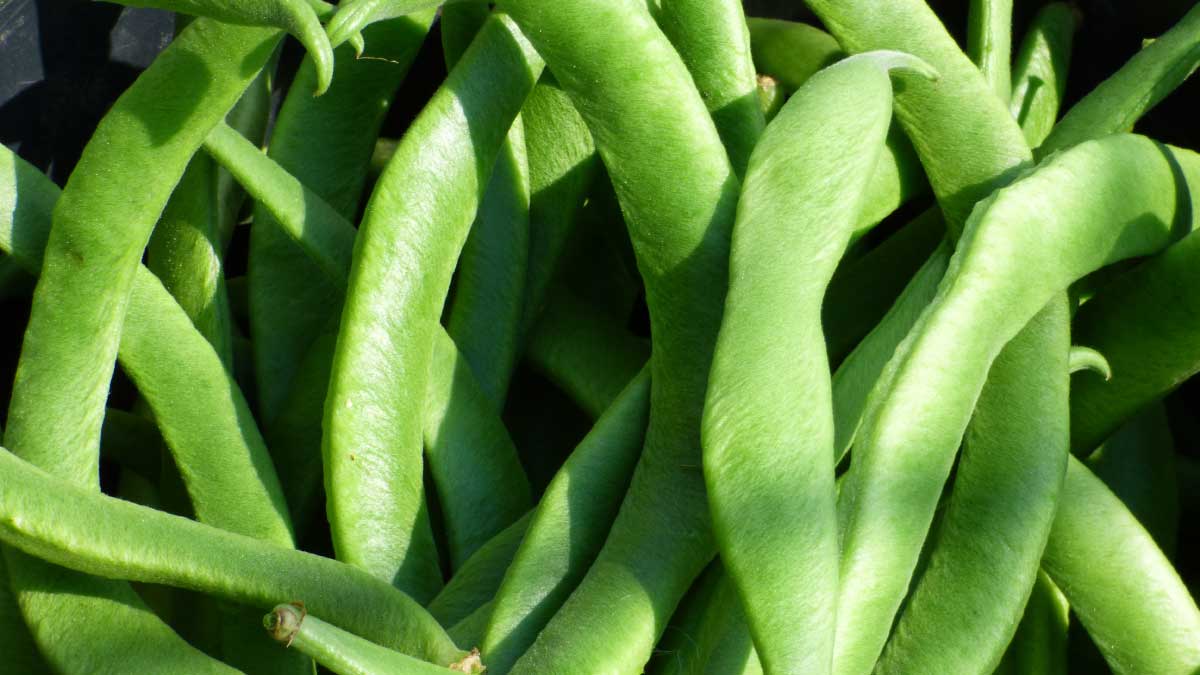
In the field of research, few universities in Colombia hold patents for plant varieties, and perhaps the only one researching different types of beans is the University of Cundinamarca, which has become a national leader in the field. The institution has showcased its research in more than fifteen locations through field days and participatory breeding programs, thereby involving bean farmers in the university's research process.
The genotypes developed by the University of Cundinamarca are more tolerant to diseases, insects and pests, such as the whitefly. Trialeurodes vaporariorum, This results in a decrease in the application of agrochemicals and consequently a 25 % reduction in production costs.
The common bean (Phaseolus vulgaris L.), also known as bean, The bean, also known as poroto, alubia, and caraota, among other names, was cultivated independently in two regions: the Andes, in what is now Peru and Ecuador; and Mexico and Central America. Its varieties share a common ancestor in Mesoamerica, according to scientists.
Currently in Colombia, 90 % of bean planting is of the climbing type, in which Blue Lake or Lago Azul stands out; and in 2016, the Statistical Yearbook of the Agricultural Sector of the Ministry of Agriculture and Rural Development announced a total production of 57,421 tons of harvests in 6,825 hectares of planted area.
In Cundinamarca, the cultivation of the Blue Lake variety beans for their excellent pod quality, and currently it is the department with the highest national production with 28,716 tons, followed by Valle del Cauca, Santander, Huila and Tolima.
It is worth noting that the green revolution in the 20th century marked the abundant use of agrochemicals that had negative effects on the ecosystem and on the culture, which is why farmers now have to make more than 15 applications of agrochemicals to control insects, pests and diseases in said crop.
Agronomic innovation and plant improvement
After eight years and several cycles of selection and planting in the municipalities of Pasca, Arbeláez, Silvania, San Bernardo and Fusagasugá, and in the La Esperanza Agro-environmental Unit of the University of Cundinamarca, two genotypes called LE 138 and LE 140 were selected from lines originating in the International Center for Tropical Agriculture (CIAT), with excellent adaptation in terms of vegetative period, green pod yield and tolerance to diseases.
“Our varieties are distinguished by their tolerance to diseases, since they do not present problems of anthracnose (Colletotrichum falcatum”And also because they are more tolerant to insects and pests. In contrast, the commercial variety has a high load of agrochemical applications because it presents quite a few phytosanitary problems, while the new varieties do not,” highlights Álvaro Celis Forero, a research professor at UCundinamarca.
The two new varieties exhibit characteristics such as flowers with a green standard (due to chlorophyll content), white wings and keels, 1.5 cm long; a campanulate calyx, 2 to 3 mm long; a broad, flat standard, 1 cm long, puberulent on the outside, and a spiraled keel; a flat, falcate-oblong fruit, slightly turgid around the seeds, 3-8 x 1-2 cm, glabrous; and 2-4 kidney-shaped, compressed, white seeds. The number of seeds per pod ranges from 5 to 10. The pod length is between 14.5 and 19.2 cm, depending on agronomic management and the agroecological zone where it is planted.
“Among the main results, it can be mentioned that the evaluated genotypes have a longer vegetative period during flowering and harvest than the Blue Lake control. The differences in days to flowering and days to harvest were two days, which do not affect any harvesting or market strategy. The experimental green pod yield of the LE 140 and LE 138 genotypes significantly exceeded that of the Blue Lake control, with values of 21,556 kg*ha-1 and 18,583 kg*ha-1, respectively, compared to 15,148 kg*ha-1.”.
“The response to pests and diseases in the three locations confirmed that the new genotypes are more tolerant to different pathogens compared to the commercial control in the study areas. Thus, the quality of the new genotypes is considered good,” explains Laura Fonseca Hernández, a research professor on the project.
The Blue Lake bean variety It needs 15 applications of agrochemicals during the crop cycle to control insects, pests and diseases, while new varieties are very tolerant and can be managed with about five applications of products that are harmless to the environment.
Another noteworthy aspect of the agronomic innovation of these two bean varieties is their commitment to organic farming practices. Researchers are developing a protocol for organic cultivation, direct marketing, and the elimination of intermediaries in the bean production chain.
It is worth noting that the Colombian Agricultural Institute (ICA) granted the certificates for the two patents of the new bean varieties to the University of Cundinamarca, which were registered as LE-140 (Udec-Sumapaz) and LE-138 (Udec-Esperanza), and the University Research Directorate has been carrying out the processes and requirements that allow it to obtain approval from the entity and thus be able to manage the registration as a seed producer entity.
News
News
News
News