News
2026-09-24
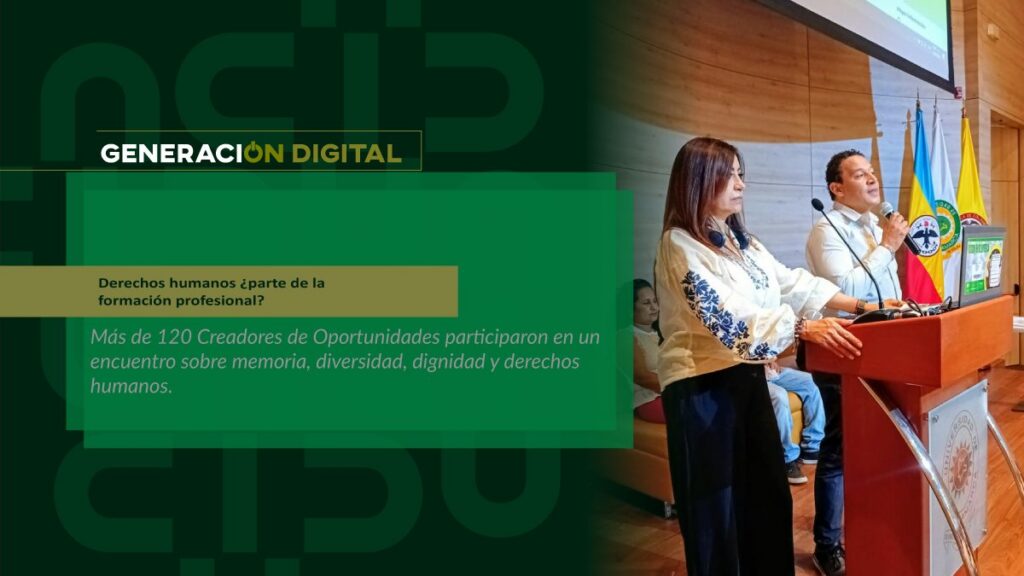
Human rights: part of professional training?
By: Alejandro García Suárez – Advisory Office of Communications


I am your virtual assistant, here to help you quickly and easily.
▲ Back to Top
By: Alejandro García Suárez – Advisory Office of Communications
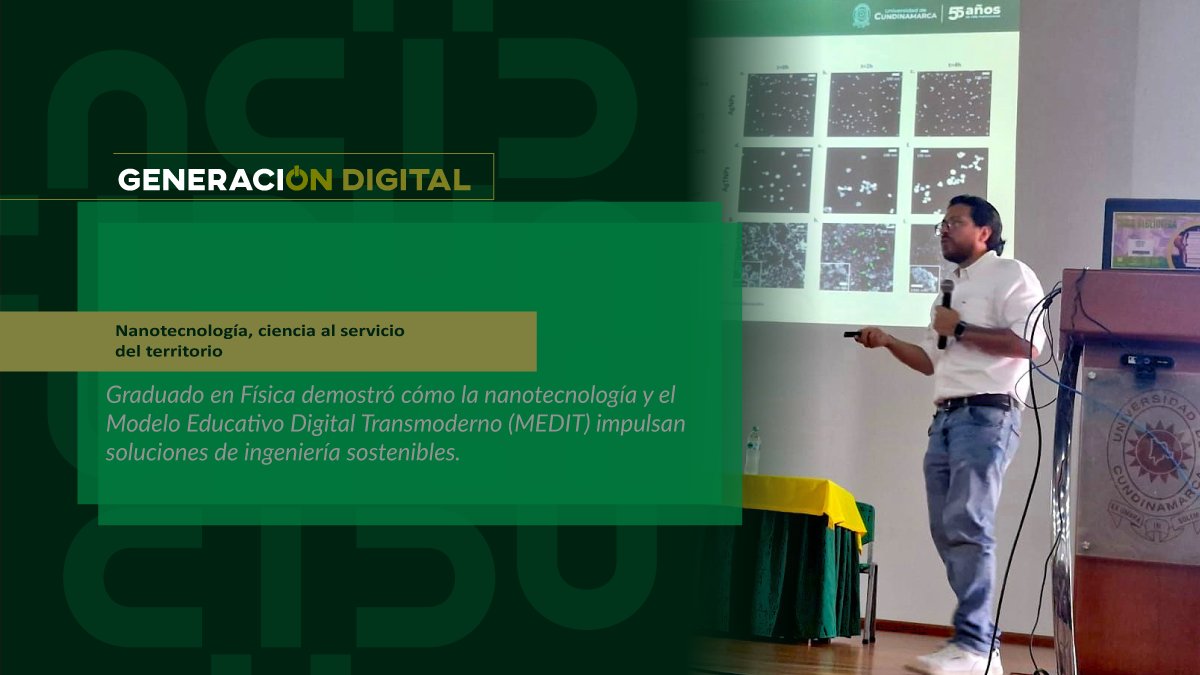
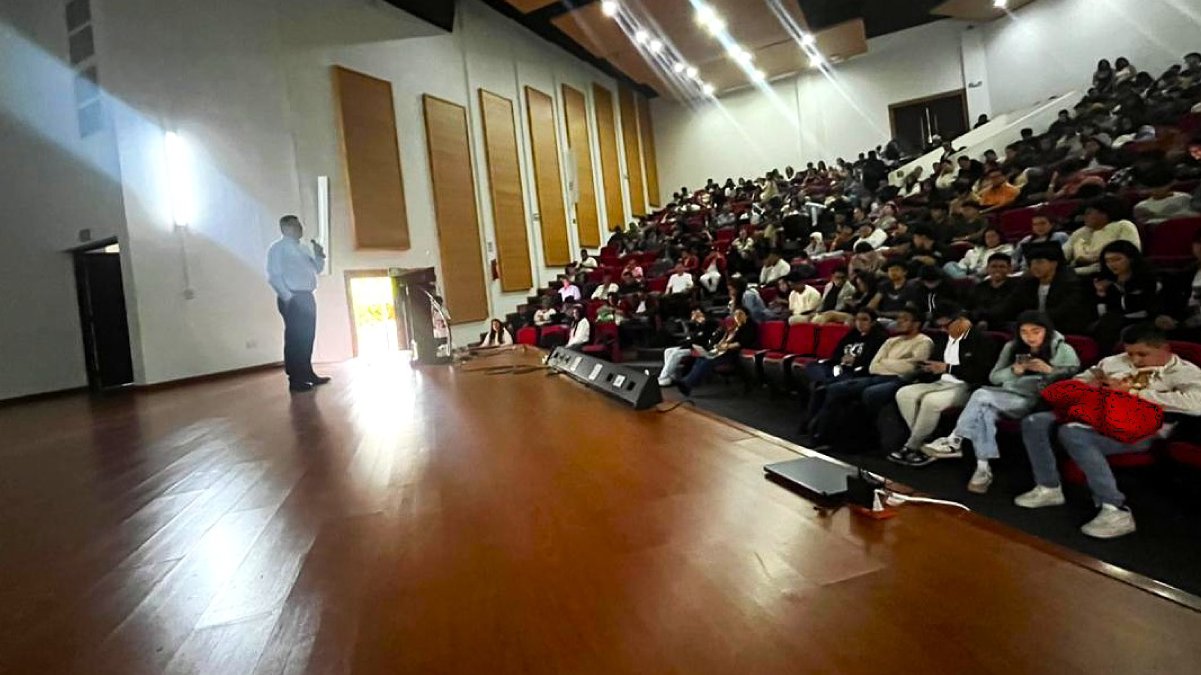
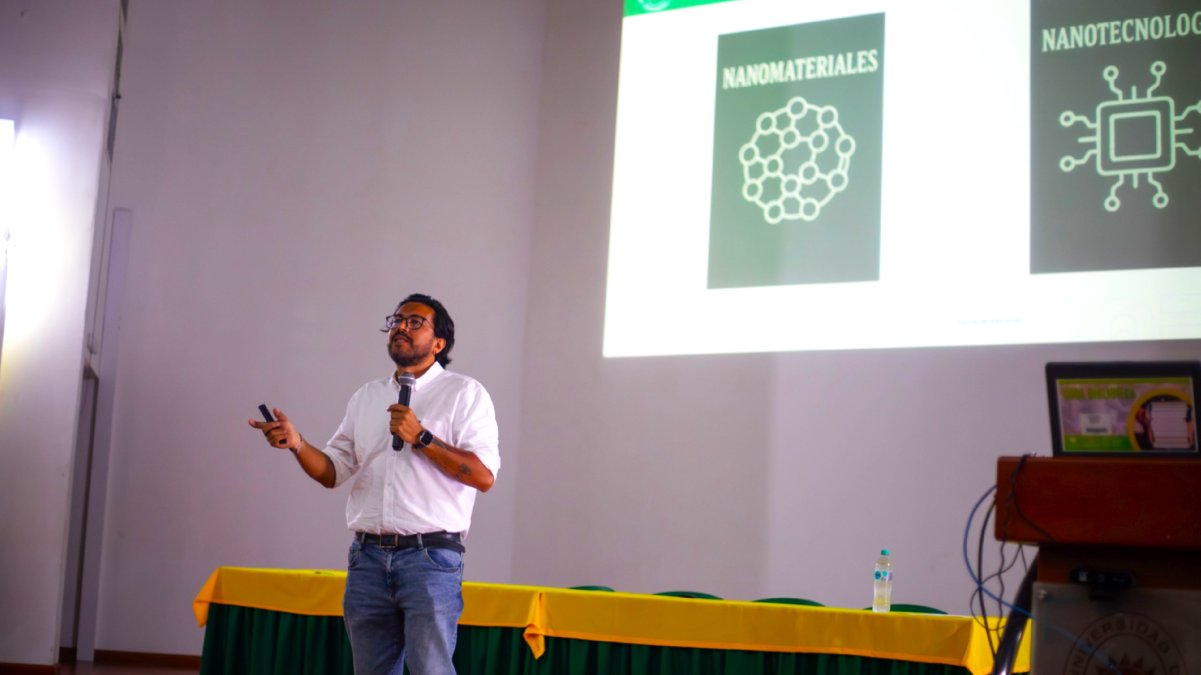
The Fusagasugá venue was the setting for the X International Congress of Engineering, where Gustavo Adolfo Lanza Bayona, a 2006 graduate in Physics and coordinator of Basic Sciences at the Faculty of Engineering, presented the keynote lecture “Nanotechnology for the territory: an approach from multidisciplinary engineering”.
In an interview with the UCundinamarca News Agency, Lanza Bayona shared how nanotechnology can be a key ally in facing environmental and productive challenges from a humanistic and territorial vision, in accordance with the Transmodern Digital Educational Model (MEDIT).
News Agency (AN): How do nanotechnology and engineering work together to offer innovative solutions to the problems of the territory, in accordance with the principles of the Transmodern Digital Educational Model (MEDIT)?
Gustavo Adolfo Lanza Bayona (GALB): LNanotechnology and engineering are integrated as a tool to understand the real needs of our region and translate that understanding into concrete applications that allow us to improve life, in this case, the lives of the people in our region. Specifically, at MEDIT, we understand that knowledge should be useful for transforming people's lives and not just remain within the academic spaces of our university. That's why we work on nanotechnology projects where we can promote processes in our region such as agriculture, water treatment, and energy management.
AN: How does nanotechnology contribute to strengthening the food industry, improving the quality, safety, and sustainability of regional production processes?
GALBNanotechnology can support us; we will use it as a tool in two areas: first, to improve food quality and enhance its nutrients, and second, in food packaging. Packaging can have certain properties, such as radiation filters or sensors that allow us to determine the actual quality and condition of the food.
AN: What contributions can nanotechnology make to achieving the Sustainable Development Goals (SDGs) at the local level, for example, in access to drinking water, energy efficiency, or responsible production?
GALBNanotechnology would indeed support and strengthen all the Sustainable Development Goals (SDGs), but specifically regarding Goal 6, which relates to clean water. With nanotechnology, we can create nanostructured filtration systems that allow us to filter elements such as heavy metals that affect human health. Regarding food security, which is related to SDG 12, we can develop sensors to monitor food quality throughout the supply chain. And also regarding SDG 7, which is related to energy, these materials with new properties allow us to improve the efficiency of solar cells and achieve better energy management.
AN: What are the most effective mechanisms for transferring nanotechnology knowledge and innovations from the University of Cundinamarca to the productive sector and small and medium-sized enterprises in the region?
GALB: Aquí es donde seguimos el MEDIT, no sólo nos quedamos en el conocimiento que producimos desde la academia con la publicación de los artículos, sino también generamos herramientas tangibles para los usuarios. Por ejemplo, en el caso alimentario generamos sensores de fácil uso, en los cuales por un cambio de las propiedades de la nanopartícula cambia de color y nos da información acerca del estado del alimento.
También generamos aplicaciones móviles que puedan leer la información suministrada por esos sensores y lo cual nos permite generar una relación con el sector productivo. Actualmente vamos a iniciar un proyecto en el cual utilizamos nanopartículas de zinc y magnesio para fertilizantes agropecuarios que nos permitan disminuir el crecimiento de hongos en los cultivos de la región.
AN: How are the principles of MEDIT integrated into the teaching and learning of nanotechnology, to train engineers capable of responding to global challenges from a humanistic, ethical and territorial perspective?
GALBI consider three fundamental points, first is that we work with real problems of the territory, we generate temperature sensors to solve problems related to the transport of the strawberry that is grown in the municipality of Sibaté, Cundinamarca, also another aspect related to MEDIT, is to promote collaborative learning and generate research from networks of researchers from our University and with external universities and generate research with social responsibility.
I believe that these aspects correlate the integration of MEDIT with the training of an engineer supported by nanotechnology.
AN: How can nanotechnology enhance transdisciplinary innovation within the Faculty of Engineering, promoting projects that link science, technology, and social sustainability?
GALBThe window of opportunity for nanotechnology, and its development, hinges on utilizing different engineering disciplines toward a common goal. We, along with electronic engineers, handle all the production and characterization of nanoparticles. Systems engineers, using Artificial Intelligence, help us develop tools and applications for sensor readings. Industrial engineers analyze the food supply chain, and this collaborative work allows us to generate knowledge that extends beyond our faculty and university to the entire department.
AN: What role does formative research and active learning, typical of MEDIT, play in the development of skills for the practical application of nanotechnology in real contexts of the Cundinamarca territory?
GALBThis allows our students not only to learn the theoretical knowledge of science and engineering, but also, by fostering and supporting MEDIT, to learn by doing when interacting with both the users in whom the nanotechnological solutions will be applied and with the researchers and the entire environment, the entire ecosystem of science, technology and innovation that is fostered by the application of nanotechnology.
With initiatives like this, the Faculty of Engineering at UCundinamarca consolidates its commitment to research and the generation of useful knowledge, demonstrating that transmodern engineering can be a real tool for change for the sustainable development of the territory.
Listen to our Podcast:
News
News
News
News