News
2026-09-24
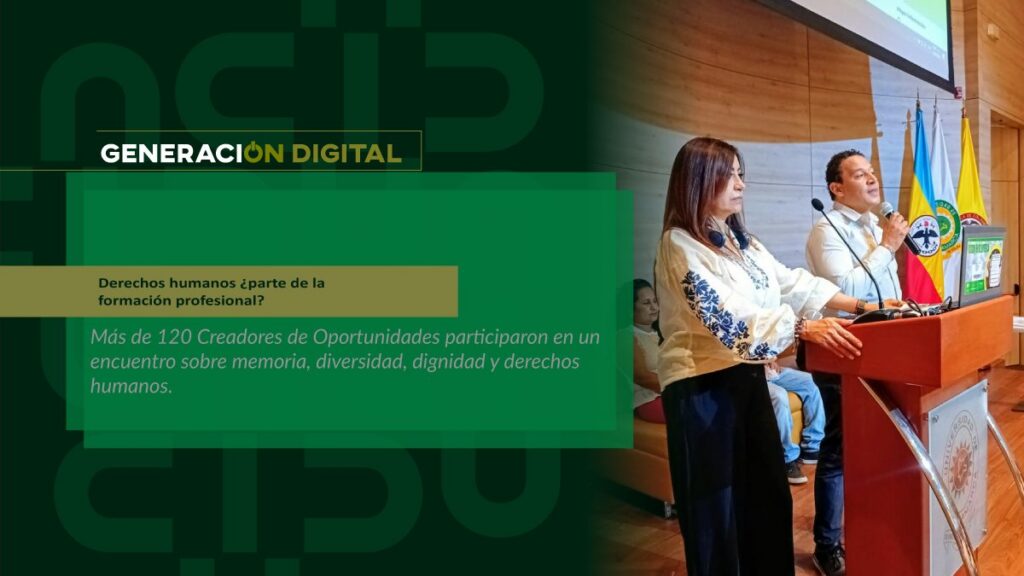
Human rights: part of professional training?
By: Alejandro García Suárez – Advisory Office of Communications



I am your virtual assistant, here to help you quickly and easily.
▲ Back to Top


Recently, in a conversation with students of plucked string instruments to promote a course with the option of a diploma that the Music program will offer next year, Maestro Martínez announced the project "music by colors".
Roberto Martínez Torres began playing guitar at the age of six. He is a guitarist, composer, and music researcher, passionate about world folk music and the tools that facilitate music study.
In 1979, with the support of the Bogotá Philharmonic Orchestra, he traveled to Porto Alegre (Brazil) where he studied with the teachers Alirio Díaz, Álvaro Pierri, Abel Carlevaro and Jorge Martínez Zarate.
In later years he studied jazz with masters Joe Madrid, Armando Velázquez, and Hernando Becerra. He also studied Baroque music with Rafael Puyana, and flamenco with masters Diego Herrera, Manuel Soto, Manolo Iglesias, and Manolo Sanlúcar.
Among the maestro's notable achievements are first place in the national classical guitar competition in the 90s, organized by Colsubsidio, and first place in the national classical guitar competition organized by the Mayor's Office of Bogotá.
UCundinamarca: What was your contribution to this academic event?
Roberto Martínez Torres: The contribution was to create in the students a thirst for research and investigation, enabling them to solve difficulties inherent to the profession in real life, and also to encourage them to develop their musical ear.
UCundinamarca: What is the "Music by Colors" project about?
Roberto Martínez Torres: Music by Colors is a scale reading system embodied in a dictionary book that contains all possible scales derived from the division of the octave into twelve equal parts, using only three colors, which facilitates the search, memorization and analysis of each scale and its relationship with its family or harmonic context.
This dictionary comes with a small pocket-sized tuning fork that allows you to easily see the fingerings for all scales, chords, arpeggios, and harmonic series in any harmonic arrangement. This system is applicable to any instrument, but especially to stringed instruments.
UCundinamarca: What is the importance of this "music by colors" project for the academy, for musical learning?
Roberto Martínez TorresThe importance of this system is reflected in the ease of understanding harmonic theory, and the simple application, memorization, and analysis of all existing harmonic material. Today, the Dictionary of Scales and Harmonic Motions is the most comprehensive book on scales available.
News
News
News
News