News
2026-09-24
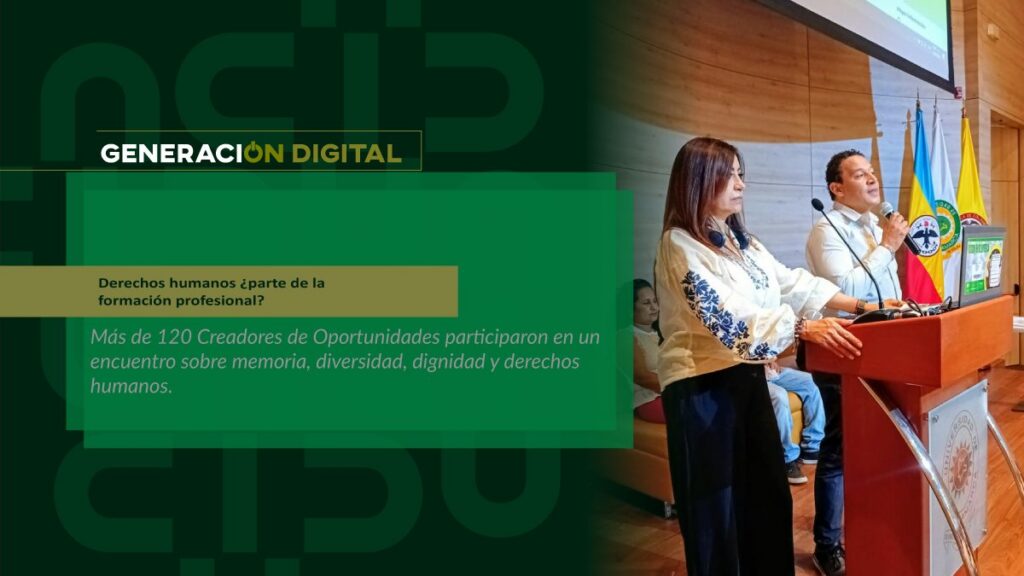
Human rights: part of professional training?
By: Alejandro García Suárez – Advisory Office of Communications



I am your virtual assistant, here to help you quickly and easily.
▲ Back to Top


By: Alejandro García Suárez – Advisory Office for Communications.
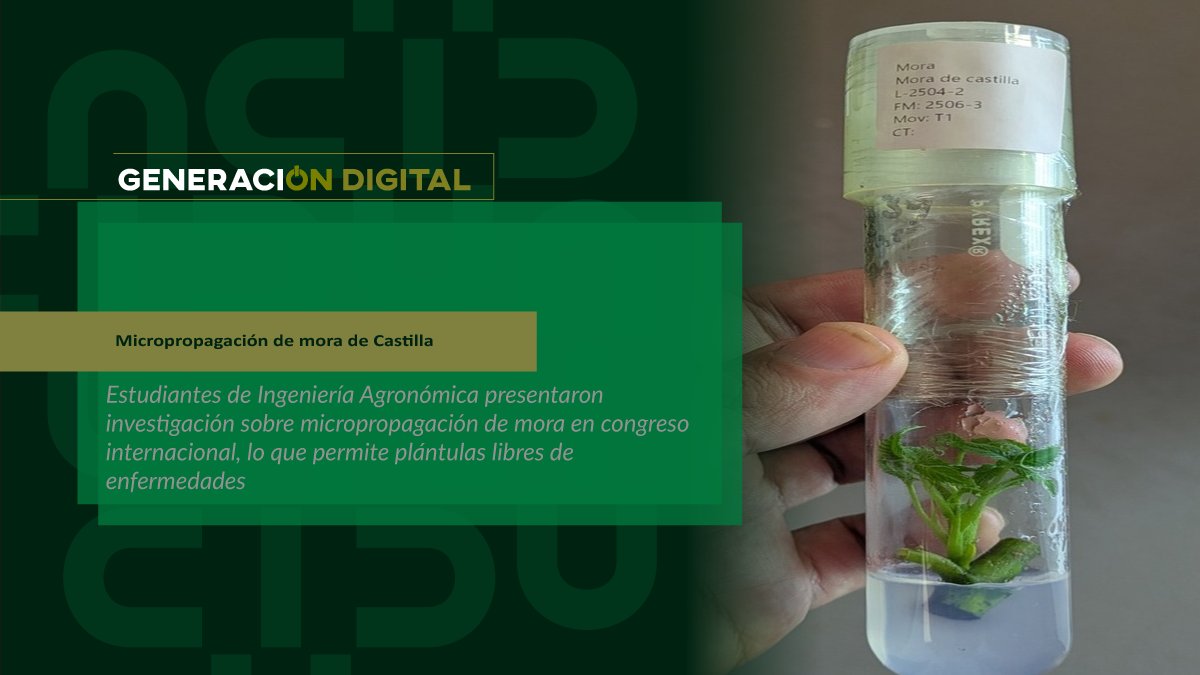
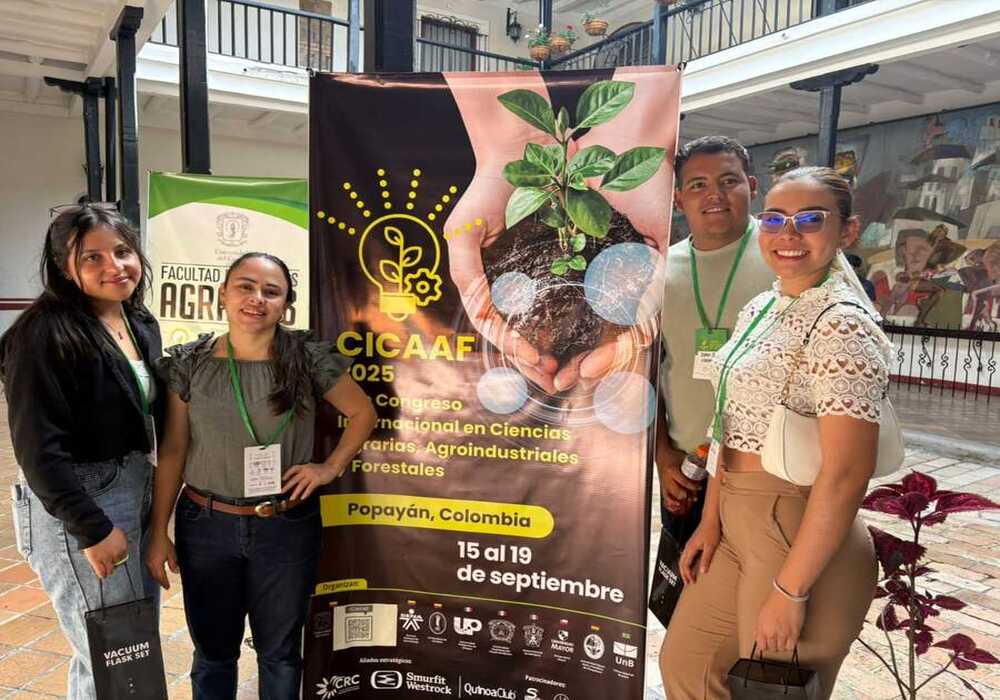
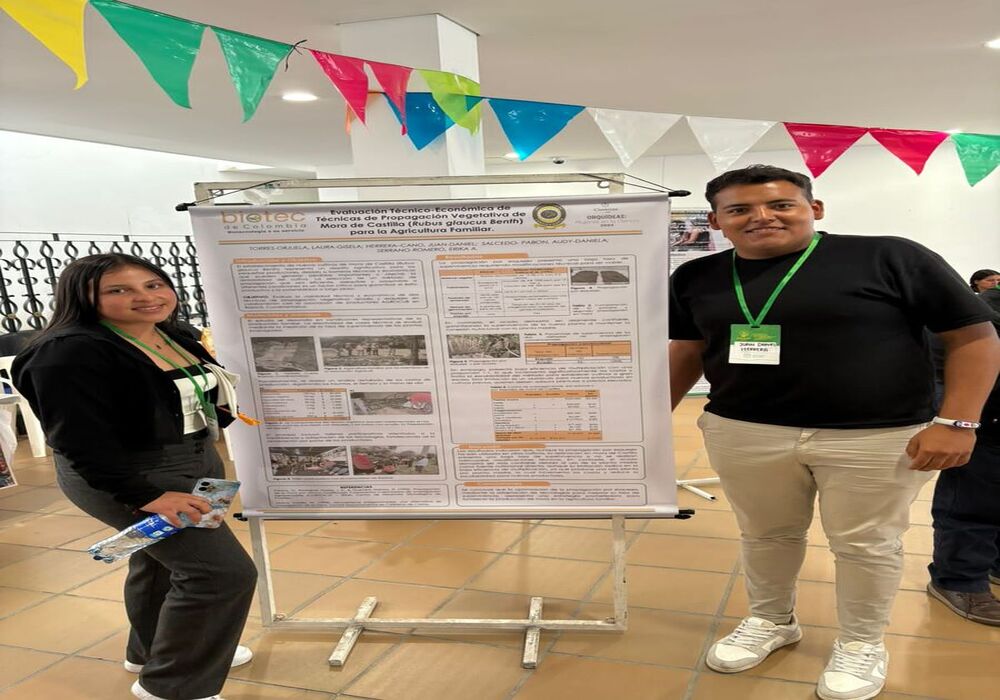
The institution participated in the Second International Congress of Agricultural, Agro-industrial, and Forestry Sciences, held between September 11 and 15 in the city of Popayán, Cauca, with two students presenting their research. At the event, Laura Torres and Daniel Herrera, students of Agronomic Engineering at the Facatativá campus, presented progress on their thesis project on the micropropagation of Andean blackberry, a project developed in partnership with the company Biotec and the Bojacá small producers' association (AgroCup).
The research, led by Dr. Érika Serra, aims to compare the productivity and health of conventionally propagated plants with those obtained through micropropagation, in order to strengthen family farming and contribute to the region's sustainable development. "This experience has been very enriching because it allowed us to connect with producers and international researchers and learn new techniques that we can apply to our crops," said student Laura Torres.
For his part, Daniel Herrera, a student involved in the project, highlighted the academic and personal impact of the Congress: “We met researchers from countries like Mexico, Chile, Bolivia, and Spain, which motivates us to continue on the path of research and open doors for future collaborations.” The Knowledge and Learning Manager, Daniel Cubillos Pedraza, coordinator of the Disciplinary Learning Field (CADI) of Agricultural Microbiology, emphasized that these types of initiatives demonstrate the university's commitment to applied research and to strengthening the relationship between the university, industry, and the community.
Participation in this Congress reflects how the University of Cundinamarca, through its Transmodern Digital Educational Model MEDIT, integrates academic practice, scientific research and technological innovation, training professionals capable of transforming the territory and responding to the challenges of the agricultural sector.
What is micropropagation?
It is an in vitro biotechnological cultivation technique that allows for the rapid and massive asexual propagation of plants from a small tissue fragment (explant) of a selected mother plant, obtaining genetically identical clones and healthy, disease-free plants. It is used to produce large quantities of high-quality plants in less time and space, and is relevant to modern agriculture and species conservation.
Listen to our Podcast:
News
News
News
News