News
2026-09-24
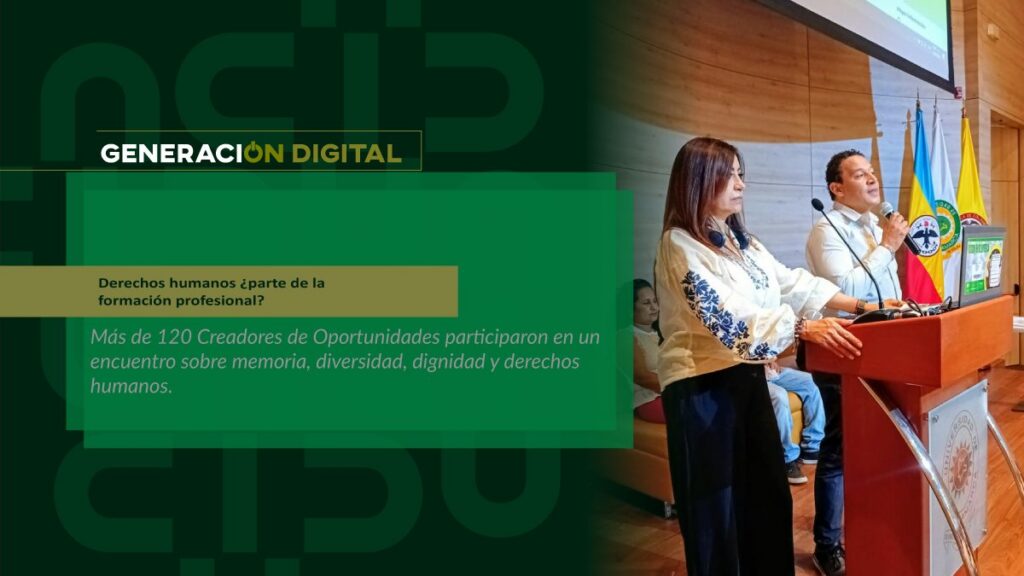
Human rights: part of professional training?
By: Alejandro García Suárez – Advisory Office of Communications


I am your virtual assistant, here to help you quickly and easily.
▲ Back to Top
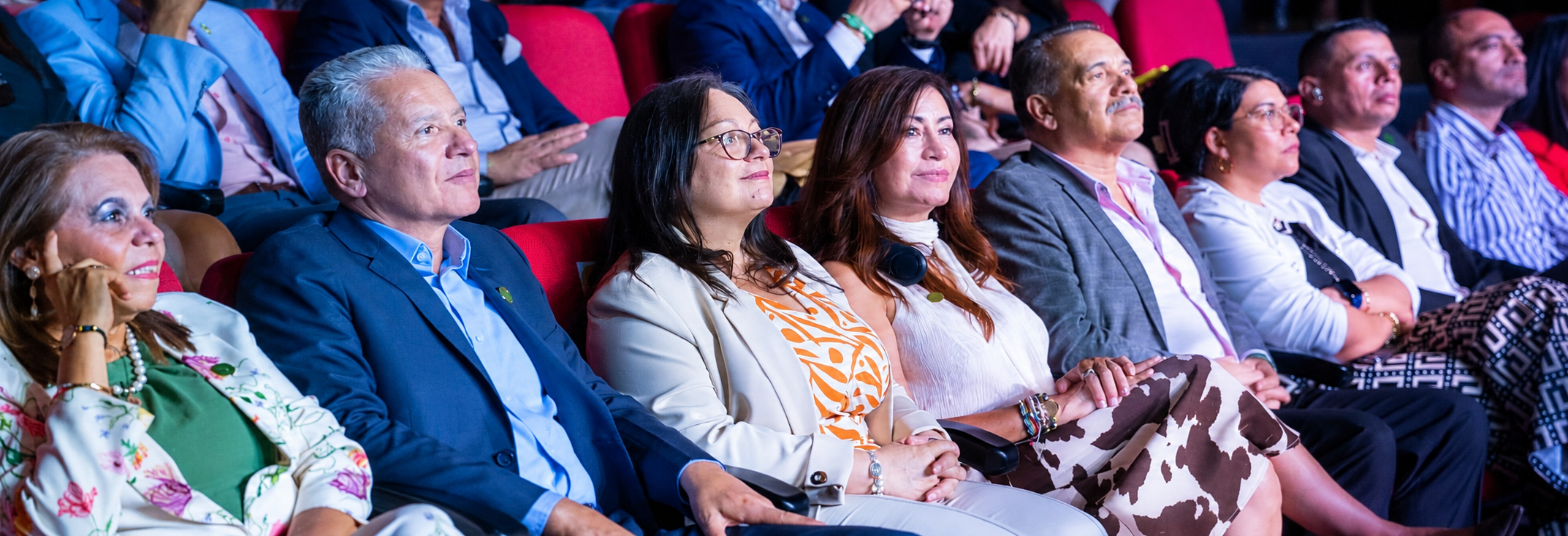
On August 18th, the University of Cundinamarca hosted the event: “Birth of the Transmodern Digital Educational Model MEDIT,” presided over by the rector of UCundinamarca, Adriano Muñoz Barrera, the senior management, the deans of the different faculties, and the participation of Rosa María Rodríguez, a Spanish philosopher, who presents Transmodernity as a dialectical triad between Modernity-Postmodernity-Transmodernity, the latter being a surpassing of Postmodernity.
“Today we are witnessing a new moment, which allows us to reflect from another perspective, to point out that it is necessary to set aside and transcend paradigms that are not sufficient to understand our realities and explain what is happening in the 21st century, such as globalization, technology, digitalization and all the complex phenomena that are currently occurring,” the rector of the institution pointed out.
The conception of the model began when the rector became acquainted with the transmodern paradigm while pursuing his doctoral studies. He used some of its references for the development of his thesis, but also found an opportunity to apply it to an educational model that would allow the University of Cundinamarca to conceive of learning as a multidimensional field, moving beyond professionalizing models that transmit knowledge and information, and thus focusing on forming a transhuman person for life, democratic values, civility, and freedom.
The MEDIT Transmodern Digital Educational Model has four structural axes: ethics, learning, knowledge, and technology. From an institutional perspective, the learning axis is conceived as a multidimensional field comprised of three areas: institutional, disciplinary, and cultural. This multidimensional field, in turn, is composed of seven dimensions: person, classroom, culture, family, nature, institution, and society. These dimensions interrelate to achieve holistic development, where the goal is for the individual to reach their full potential and become a transformative agent who contributes significantly to their environment, society, and nature.
Phases of MEDIT
With reference to the past of MEDIT, the rector highlighted the discussions that took place during 2015 with 2,335 students and 658 teachers at each of the UCundinamarca campuses and extensions, an exercise that allowed: “Conceiving the educational model as a cry for freedom, as a manifesto, a call from the University of Cundinamarca to the department and Latin America, which intends through this, to create a roadmap to move forward.”.
In this way, MEDIT focused on being an educational model and not a pedagogical model, since it does not intend to enter into theoretical discussions about pedagogy and didactics, but establishes a university educational ideal in accordance with the current moment, that is, in a specific socio-historical and cultural context that allows the training of professionals who defend life, freedom and democratic values.
Subsequently, the MEDIT was validated through a visit by 16 academic peers from the National Intersectoral Commission for Quality Assurance in Higher Education (Conaces) and seven friendly peers. This process allowed for the curricular redefinition of the programs evaluated by the Ministry of National Education. The result was the recognition of the model's value and significant contribution, as it addresses the needs of today's universities.
In this sense, at present, MEDIT is aligned with the institution's Strategic Plan: "Designing the University we want 2016-2026", which is the guiding document that the institution follows in conjunction with the 2019-2023 Rectoral Plan "Translocal Transmodern University of Cundinamarca", which is conceived according to the following fronts: 1. Multidimensional field of learning, 2. Transcendent mission, 3. Translocal and transmodern culture, 4. University well-being constitutive of life and freedom, 5. Cross-border dialogue and 6. Intelligent university organization with soul and heart.
Regarding the vision for the future, the University will continue its path focused on the transmodern paradigm that will allow it to continue training leading, innovative, competent professionals and, most importantly, happy and productive human beings who promote the construction of a better society, said the rector of UCundinamarca.
News
News
News
News