News
2026-09-24
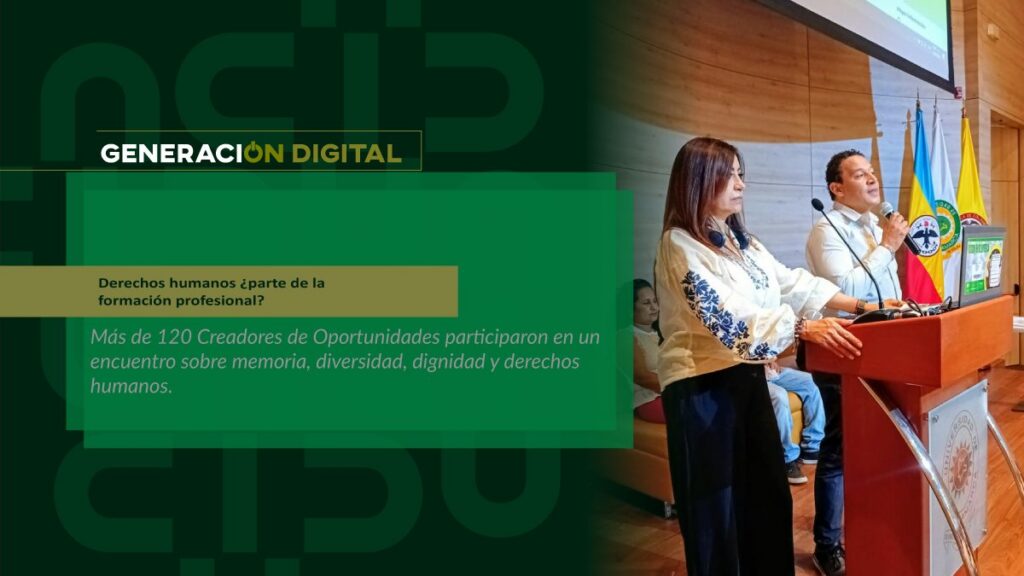
Human rights: part of professional training?
By: Alejandro García Suárez – Advisory Office of Communications


I am your virtual assistant, here to help you quickly and easily.
▲ Back to Top
By: Darwin Andrés Díaz Gómez1
The purpose of this article is to highlight the importance of learning in the Transmodern Digital Educational Model, the meaning and significance of education for life, and some characteristics of transmodernity.
Characteristics of learning in lifelong learning
Within the framework of MEDIT (2019), learning is conceived as an improved action capable of achieving a transformation of reality, whether social, personal, disciplinary, familial, cultural, academic, or for the benefit of nature. A primary characteristic we can refer to is based on the understanding of Multidimensional Learning Field understood as a scenario in which the different dimensions (classroom, family, culture, society, nature, institution, person) of the human being are interrelated and whose purpose is the improvement and “defense for life, democratic values, civility and freedom” (Muñoz, 2019, sp).
However, it is worth highlighting that while learning requires improved actions and, consequently, transformations of various kinds, these actions can be conceived from the senses and meanings that people attribute to their learning (Coll, 2013).
The first learning characteristic relates to understanding the meaning and significance of learning within the MEDIT framework. On the one hand, I refer to meaning as the lived experience of what is learned. This involves attributing meaning to the actions and experiences of the learner. In this sense, MEDIT defines the meaning of learning based on "lived experiences, problem-solving, and people's behaviors" (Muñoz, 2019, n.p.). Of course, this meaning of learning must be understood in light of the activities proposed to achieve the expected results.
Therefore, the perspective of attributing meaning to learning implies that the individual lives, experiences, and internalizes the learning experience both incidentally (non-schooled) and intentionally (schooled, formalized). This affirms the importance of lifelong learning, not just learning for specific aspects of life.
MEDIT allows learners to do so not out of submission or arbitrariness, but rather in pursuit of transforming a local and regional reality in order to contribute translocal solutions.
Furthermore, I want to address the meaning of learning within the framework of dialogical and formative construction. Learning is always linked to the meaning the learner attributes to it. Learning is not always accompanied by a complete understanding of what it can be. Generally, in a school setting, partial meanings are attributed to what is learned. Perhaps this partiality of learning reflects its confinement to the established and physical conditions of the institutions.
In this sense, I believe that MEDIT allows for the establishment of substantive, dynamic, multidimensional, and non-arbitrary relationships of meaning. Therefore, the learning derived from the institutional model could be situated within three concrete characteristics applicable across the various fields of knowledge that comprise the University of Concepción (UdeC). These are: logical meaningfulness; psychological meaningfulness; and, finally, a favorable attitude (Coll, 1988) in defense of life, liberty, and civility.
Logical meaningfulness is understood as the rejection of the arbitrary nature of following pre-established rules; rather, it is understood through the organization and structuring of activities, experiences, and problem-solving. Psychological meaningfulness, on the other hand, is understood through the personal capacity to interrelate previously constructed networks of meaning with new ones, thereby expanding the sense and significance of life's reality.
Finally, a positive attitude is considered a lifelong learning perspective. It's an attitude that fosters advocacy for life, good values, respect for diversity, and decisive action for the benefit of oneself and others.
The second characteristic of learning relates to Expected Learning Outcomes (hereinafter OER). Due to the nature of MEDIT, learning outcomes are not based on the rote memorization of content, nor on using the classroom as the primary learning environment, and even less on a power struggle between teaching and learning or between student and teacher protagonism. OER are statements of what the learner expects. These statements are based on specific moments, pathways, experiences, and solutions to an identified problem or a concrete need.
Therefore, it is essential to mention the roles of both the teacher and the learner. In MEDIT, the focus of learning is the individual who acts upon and transforms reality. Consequently, the teacher's role is transformed and conceived as that of a facilitator and mediator who interacts and engages with the student and the various contexts of participation. This is done with the sole aim of achieving OERs that respond to the transformation and evolution from the local to the translocal and from the global to the transmodern.
The third feature underlying MEDIT has to do with evaluation. This is conceived as an analytical process that allows the identification of categories of analysis with the purpose of “demonstrating the transformation, improvement and achievement of the results of the participants in the field of learning”. (Muñoz, 2019, sp).
Given the importance of assessment in the learning process, it is necessary to reflect on its nature. First, assessment does not segment learning but rather integrates dimensions that are part of the multidimensional field of learning. Second, assessment allows us to identify essential points for generating processes of science, technology, and innovation. In this sense, assessment is not conceived as a finished act but as a process and an opportunity to foster research processes.
Third, evaluation is understood as a systematized process mediated by information and communication technologies. In this respect, the organization of knowledge and the achievement of results mediated by these technologies become extremely important. Fourth, evaluation ceases to be a scenario of momentary application and becomes an opportunity for continuous improvement.
Some characteristics of transmodernity at UdeC
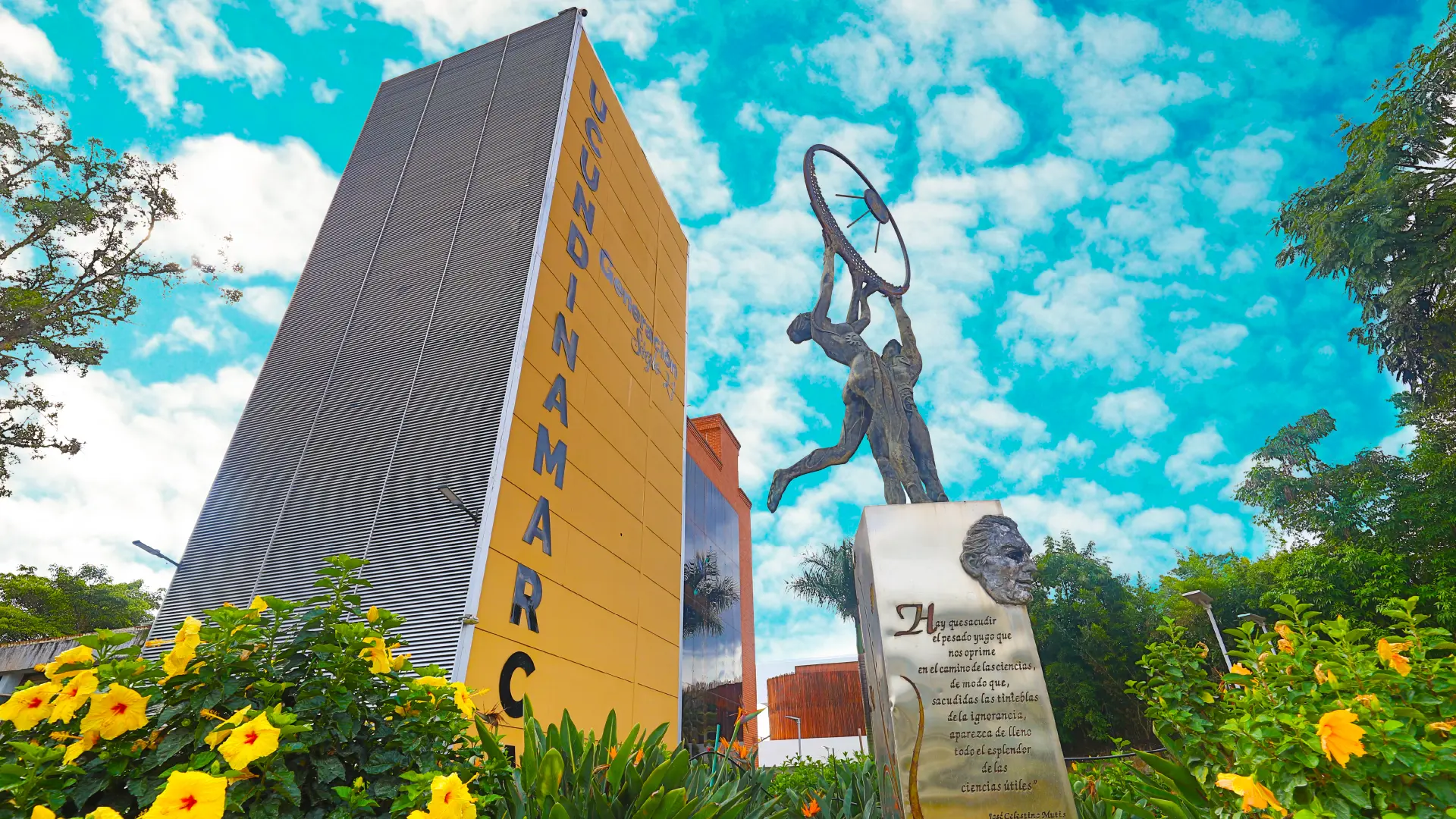
The University of Cundinamarca (UdeC) declares itself as a transmodern and translocal social organization of knowledge and learning (Muñoz, 2019). Within this perspective of its mission and institutional worldview, I consider it extremely important to mention some characteristics that allow us to understand the institution's purpose: to educate for life, democratic values, civility, and freedom (Muñoz, 2019, n.p.).
First, MEDIT emphasizes the construction of knowledge in a dialogical and formative way. This means that knowledge is not built using a single scientific paradigm, but rather allows for a dialogue between different forms of knowledge. In this view, transmodernity “interprets the world through intersubjective consensus […] with a focus on the participatory construction of projects” (Hidalgo-Capitán, Cubillo-Guevara, 2016, p. 46).
Having said that, one of the greatest strengths of MEDIT lies not only in its dialogical and formative construction but also in the construction of knowledge itself. It is clear, then, that the dialogue of knowledges is conducive to the construction and production of knowledge. The egocentric nature of the sciences is insufficient to produce knowledge; recognition of the other is required. This is evident in Dussel and in philosophical phenomenology. For Dussel (1995), “alterity is knowing how to think about the world from the alterative exteriority of the other” (cited by Córdoba & Vélez-De la Calle, 2016, p. 1003), and for phenomenology, intersubjectivity is a distinctive feature of humanity (Maturo, 2007).
Secondly, transmodernity at the University of Colima is not understood as a rejection of persistent worldviews; rather, it reacts to and integrates these worldviews. The meaning of transmodernity emerges as an evolving alterity (Hidalgo-Capitán, Cubillo-Guevara, 2016).
Third, both MEDIT and the transmodern worldview emphasize the importance of action within society and in relation to nature. Regarding society, time and space are valued as means of acting upon and transforming reality. Global action is achieved through local action, thanks to technology. Human action transcends the local to permeate the global. In this sense, MEDIT works on local solutions with the aim of transcending to the global and becoming part of solutions that are not only local, but also translocal and transmodern.
Fourth, transmodernity transcends purely disciplinary boundaries and is embedded in a transdisciplinary vision of science, technology, and innovation. Here, knowledge is only helpful when it permeates habits (Bruner, 1999), ways of thinking and acting within a field of learning.
Fifth, it is worth remembering that solidarity is the predominant social value of transmodernity.
In this respect, solidarity at the UdeC should be viewed from the perspective of: a) respect for all living beings; b) respect for difference and the value of individuality in family, social, cultural, academic, economic, and political spheres; c) the capacity to understand freedom as a right, but also as a social commitment to recognizing others; d) the recognition of rights, as well as respect for duties; e) the recognition of being before the implementation of doing; f) participation in scenarios of social, cultural, and personal recognition; and, g) equity.
In a concluding statement, I believe that MEDIT prioritizes meaning and significance based on BEING and allows people to build their learning in the encounter with the OTHER.
References
Bruner, J. (1999). Education, the gateway to culture. Learning Viewer. Vol. CXXV of the Learning Collection. Second edition.
Coll, C. (2013). The school curriculum within the framework of the new ecology of learning. Classroom for Educational Innovation.
Coll, C. (2013). Formal education in the new ecology of learning: trends, challenges and research agenda. In book: Learning and education in the digital society. Publisher: Universitat de Barcelona, Editors: JL Rodríguez Illera, pp.156-170
Coll, C. Meaning and sense in school learning. Reflections on the concept of meaningful learning. In: Childhood and Adolescence, 41, 131-142
Córdoba, ME & Vélez‒De La Calle, C. (2016). Otherness from the perspective of Enrique Dussel's transmodernity. Latin American Journal of Social Sciences, Childhood and Youth, 14 (2), pp. 1001-1015.
Hidalgo-Capitán, A., Cubillo-Guevara, A. (2016). Transmodernity and transdevelopment. Degrowth and buen vivir as two analogous versions of a transmodern transdevelopment. First edition. Ed. Bonanza, Spain.
Maturo, G. (2007). Phenomenology and hermeneutics: from Latin American transmodernity. Utopia and Latin American Praxis, 12 (37), 35-50. Retrieved from http://www.redalyc.org/articulo.oa?id=27903703
Muñoz, A. (2019). Education for life, democratic values, civility and freedom. [Date of consultation: March 20, 2019] Available in: https://www.ucundinamarca.edu.co/index.php/modelo-educativo-digital-transmoderno
1 University of Cundinamarca. Dean (EF) Faculty of Social Sciences, Humanities and Political Science. April 2019. Fusagasugá, Colombia.
News
News
News
News