News
2026-09-24
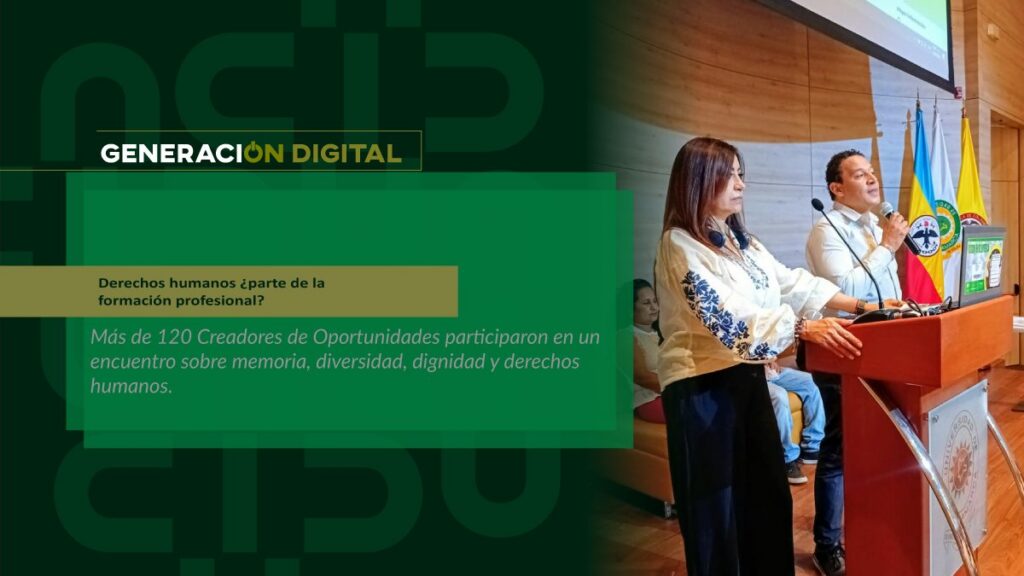
Human rights: part of professional training?
By: Alejandro García Suárez – Advisory Office of Communications



I am your virtual assistant, here to help you quickly and easily.
▲ Back to Top
By: Carolina Rojas – Communications Advisory Office
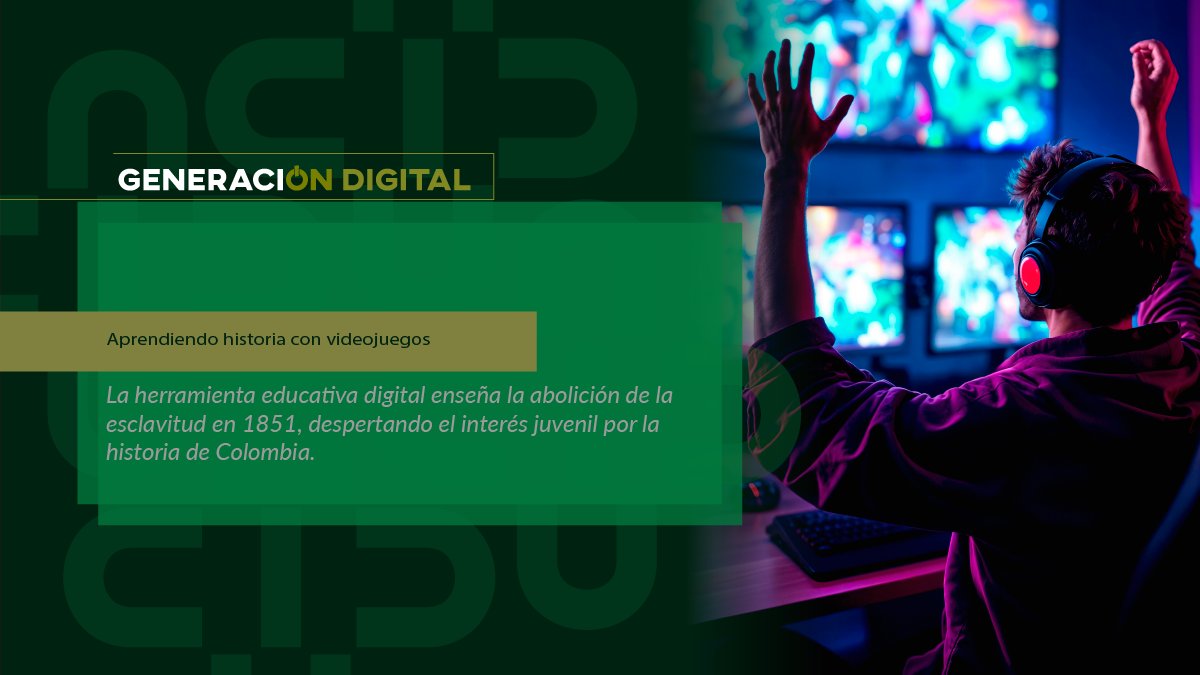
Students from the Ubaté branch have developed an innovative educational tool: a 3D video game that recreates the historical events surrounding the abolition of slavery in Colombia. The goal is to transform the way young people learn history.
The project is led by Jhon Sebastián Pacalagua Alarcón and Nicolás Jiménez Ramírez, and directed by the Knowledge and Learning Manager Rafael Ortega Ortega; it is titled “Development of an Educational Video Game Focused on the History of Colombia – Abolition of Slavery”. Set in Cartagena in 1851, the video game presents an adventure starring a robot that must correct history, facing challenges and puzzles that lead him to the fulfillment of the abolition decree.
The initiative arose in response to young people's lack of interest in national history, a problem linked to the use of traditional methodologies focused on memorization. "We seek to connect with new generations through interactive and meaningful tools," its creators state.
Designed for young people between the ages of 16 and 22, but with an aim of reaching elementary and middle school students, the video game seeks to foster a critical understanding of Colombia's past, while also promoting cultural identity and empathy towards social problems such as racism and exclusion.
The video game was developed at the CREINNG incubator., through a process of exhaustive research and rigorous selection of historical facts. For its construction, open-source tools such as GIMP, Krita, Blender, and Unreal Engine 5 were used, where the 2D pieces, 3D models, and all the interactive logic were integrated through visual programming with Blueprints.
One of the team's biggest challenges was finding a methodology adapted to video game development, ultimately implementing the SUM methodology, a variant of Scrum focused on this type of project. They also faced technical difficulties in implementing mechanics and programming within the game engine.
This project aligns with the Transmodern Digital Educational Model (MEDIT) by promoting autonomous, critical and contextualized learning, with a focus on transforming the environment through technology.
In addition to representing an innovative pedagogical tool, this video game reflects the potential of digital education as a vehicle for historical memory, inclusion, and social transformation.
News
News
News
News