News
2026-09-24
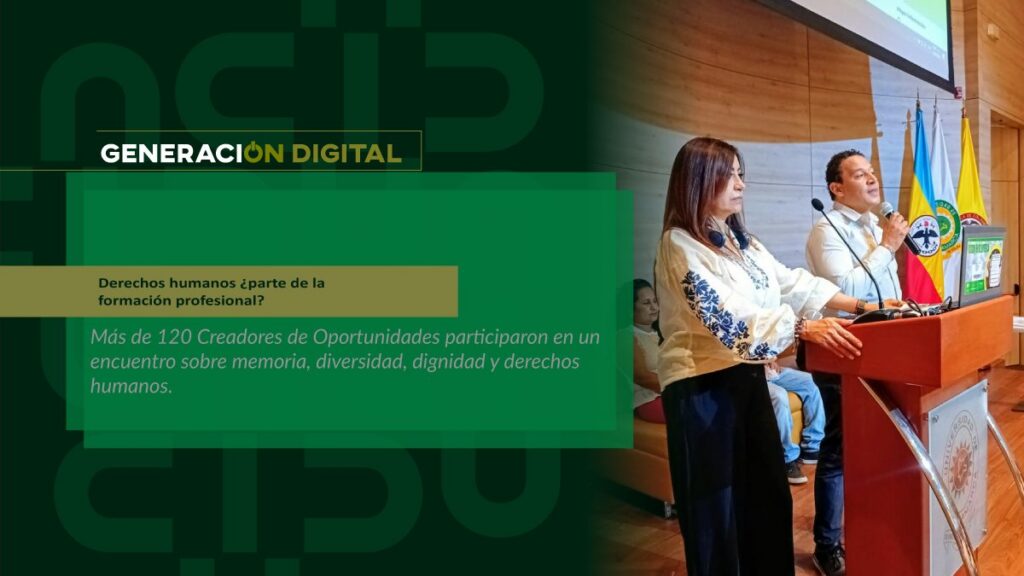
Human rights: part of professional training?
By: Alejandro García Suárez – Advisory Office of Communications
Loading...



I am your virtual assistant, here to help you quickly and easily.
▲ Back to Top
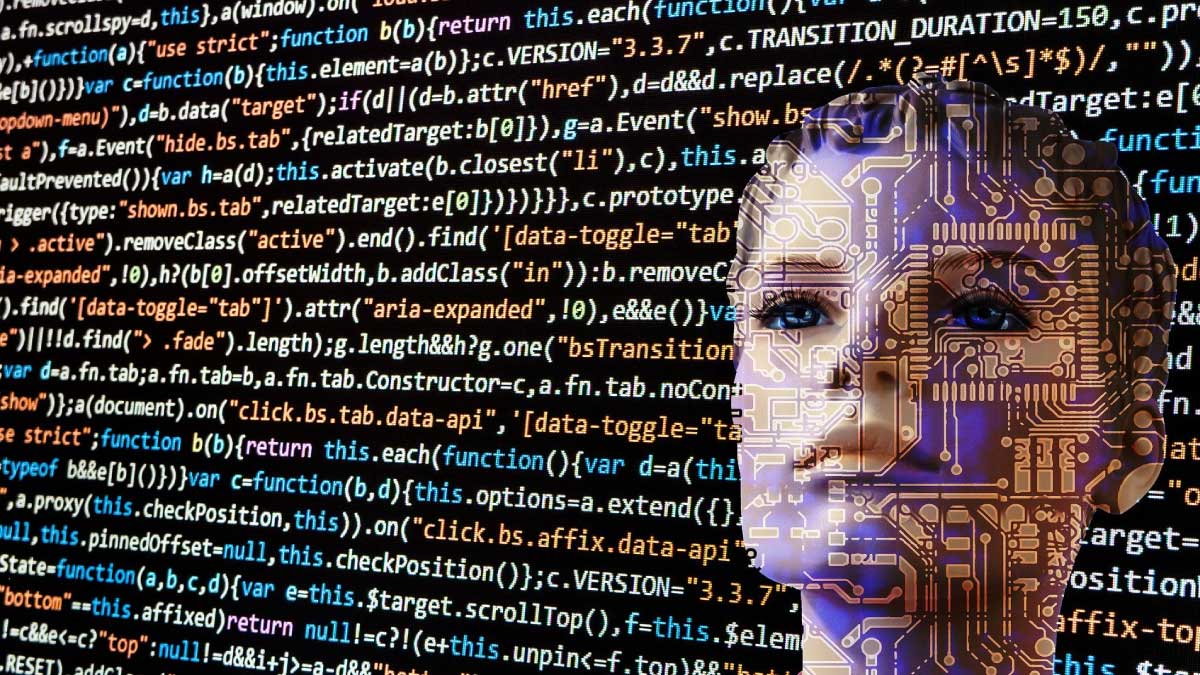
Big Data and Artificial Intelligence Club Launch
The Faculty of Engineering launched the Research and Development Network for Industry 4.0, and the Big Data and Artificial Intelligence Club. Seven specialists participated in the event.
On May 24, the “Big Data and Artificial Intelligence Club” was launched, through which the trends and practices that are revolutionizing engineering in the world were revealed, as well as the experience of specialists in digital transformation, artificial intelligence, innovation and industry 4.0.
In his address, Rector Adriano Muñoz Barrera affirmed that the “Big Data and Artificial Intelligence Club” will be an academic space where students and faculty will reflect on these two important topics within the framework of the Transmodern Digital Educational Model (MEDIT). He also asserted that this is the opportune moment to engage with technology, but from the perspective of MEDIT's call to action—that is, with freedom, and not as a predicament of enslavement to it.
For his part, the Dean of the Faculty of Systems Engineering, Wilson Joven Sarria, affirmed that the Industry 4.0 Research Network is one of the training initiatives within the field of cultural learning and cyberculture, and that this network appropriates, generates, and disseminates projects based on technologies of the Fourth Industrial Revolution, Artificial Intelligence, Big Data, Data Analytics, the Internet of Things, and Blockchain, among others. He also stated that the Big Data Club aims to foster collaborative projects and research with universities, companies, and the government.
“Hacking an artificial intelligence” was the lecture given by engineer Luis Gabriel Rojas, a graduate of UCundinamarca, with a Master's degree in Advanced Information Technologies and who is currently in his final year of doctoral studies in the same field at the University of Castilla (Spain).
Engineer Rojas asserted that hacking artificial intelligence (AI) is indeed possible today, even though it's a difficult concept to believe since it's often assumed that AI never makes mistakes, being a set of technologies designed to emulate characteristics or capabilities unique to the human intellect. In other words, AI is the concept that "machines think like human beings.".
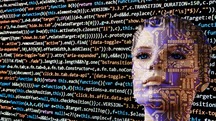
Adversarial attacks are the strategies used to hack AI systems. They involve tricking AI into believing it's seeing one object or reality when, in fact, it's something else—in other words, they confuse it. The seriousness of deceiving AI lies in the fact that it can modify or alter medical diagnoses, traffic signals, or security systems, among many other applications where AI is currently used. These attacks are easy, fast, and there's no clear way to detect them.
Daniel Miranda, an electronics engineer from the Autonomous Metropolitan University of Mexico, explained that Big Data consists of information assets or datasets of large volume, high velocity, and great variety, demanding cost-effective and innovative ways to process them in order to improve understanding, decision-making, and process automation. Regarding the public cloud, he explained that it is a computing infrastructure offered by a service provider, and that currently there are three: Amazon, Google, and Microsoft, which provide network, storage, and computing services.
Aníbal Avendaño, a professional in Finance and International Business, spoke about Blockchain, the internet of value. He explained that blockchain is a public, shared, encrypted, and decentralized database that functions as a ledger where purchase and sale transactions, or any other type of transaction, are recorded.
He indicated that blockchain will change the way business is done in the world and that it is already being used in traceability projects in agricultural projects, certificates of validity of grades and diplomas, land royalties, Cadastre and Commercial Registry, among others.
Systems engineers Alix Rojas and Luis Cobos explained a Big Data application—the EAN's mobile environmental laboratory—which involved placing sensors on different parts of electric vehicles to measure, in real time, temperature, particulate matter in the air, noise, and speed as they travel through the city of Bogotá. The idea is that Big Data will provide precise metrics upon which to base decisions regarding environmental and mobility issues in the city, both now and in the future.
For his part, systems engineer and specialist in Networked Medical Imaging, Erich Karl Kuhne, explained the artificial intelligence project as a support tool for the early detection of pulmonary conditions, specifically COVID-19 cases, in ICUs and emergency rooms of hospitals. The goal is to provide hospitals with the best tools to alleviate the burden of care for symptomatic patients.
“Artificial intelligence is a valuable tool for enabling medical staff to make timely clinical decisions; it also allows for optimizing care times for symptomatic patients and thus reduces functional overload. Ultimately, it paves the way for optimizing healthcare processes such as telemedicine and virtual surgical simulations,” concluded engineer Eric.
The last talk was given by Alexis Guillermo Ortega, an electrical engineer from the University of Zulia (Venezuela), who spoke about massive, distributed and parallel processing with Google Cloud Dataflow 9.
He stated that Cloud Dataflow is a tool managed by Google for developing and running a wide variety of processing patterns on very large datasets, and it allows users to build processing pipelines to extract information and transform data. Furthermore, it allows monitoring of its entire execution from the cloud.
The closing remarks for the event were delivered by engineer Eduar Gutiérrez Rodríguez, coordinator of the Systems Engineering program at the Chía extension.
News
News
News
News