News
2026-09-24
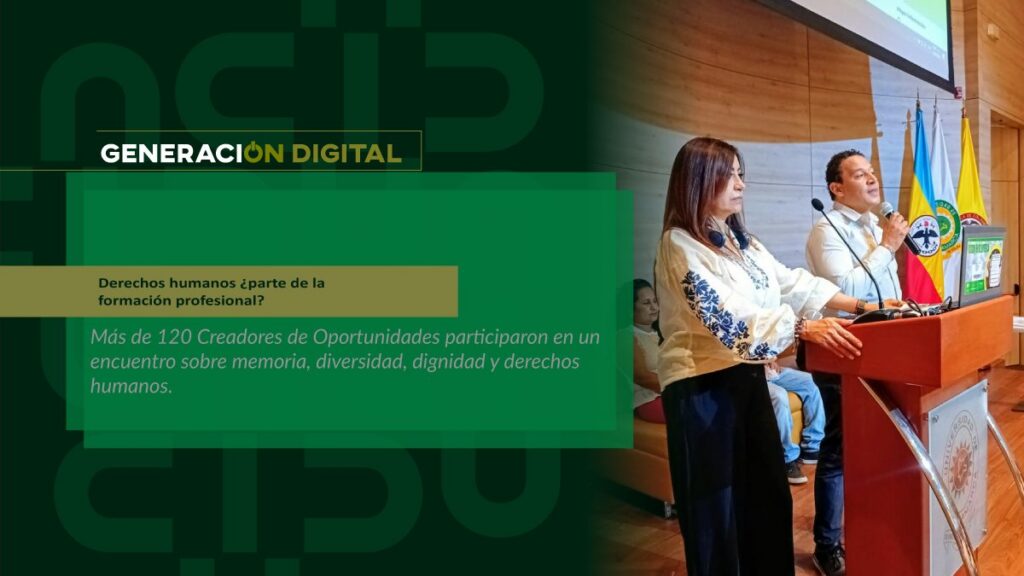
Human rights: part of professional training?
By: Alejandro García Suárez – Advisory Office of Communications


I am your virtual assistant, here to help you quickly and easily.
▲ Back to Top
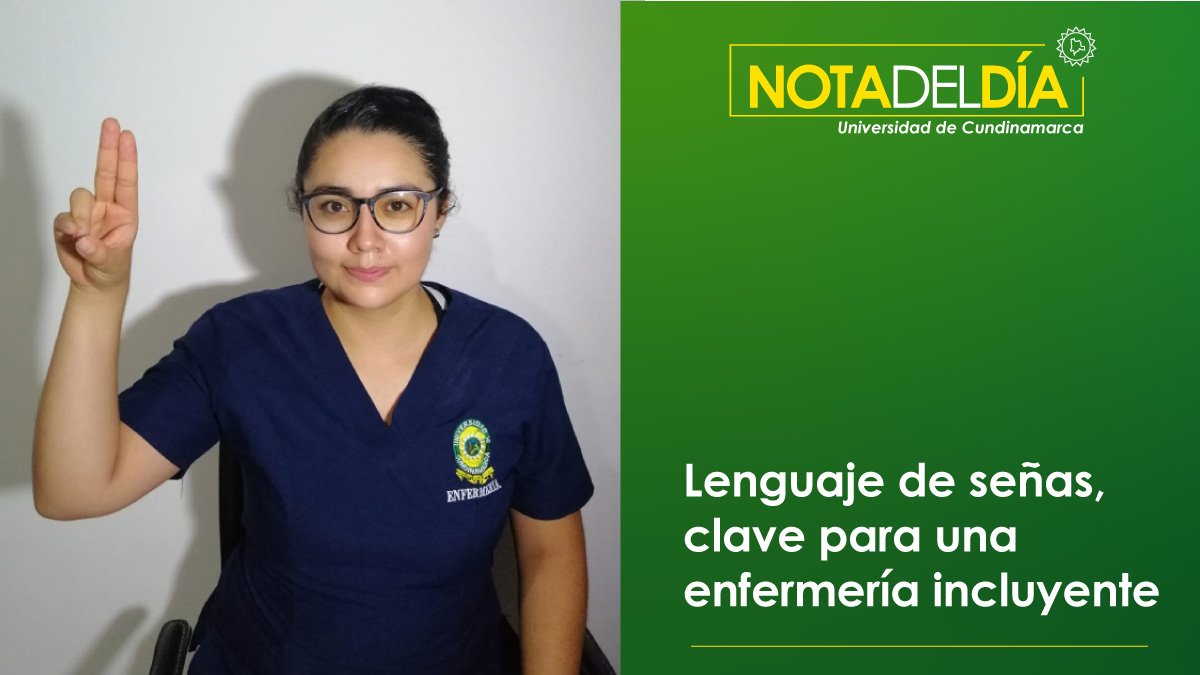
Laura Camila Carvajal, a nursing student at the Girardot campus, has launched a noble and ambitious project. The 23-year-old aims to create a guide for, and in collaboration with, the hearing-impaired population of Girardot. The guide is designed to promote more inclusive treatment and improved communication with patients in healthcare settings.
It is worth clarifying that the booklet, entitled Educational booklet on health assistance designed based on the perception of people with hearing disabilities regarding the care provided by nursing staff Girardot 2021, This has been proposed by the Virtual Classroom Simulation Research Seedbed (SIPAV) of UCundinamarca, which is led by Professor Carolina Díaz, a professional nurse specializing in Educational Informatics Administration and a master in Occupational Health and Safety.
However, aside from pursuing an academic goal, Laura Camila has approached this initiative from her perspective as the daughter of parents with hearing disabilities. “My twelve-year-old sister and I are the only hearing people in the house, which has given us a perspective on the needs and challenges that the community to which my parents and we belong faces daily,” explains the nursing student.
“Furthermore,” Laura says, “it’s always difficult for a hearing-impaired person to receive care in an emergency or during a medical appointment, because very few healthcare professionals know sign language. In fact, what I do with my mother is explain to her which part of her body she should point to, so that when she goes to an appointment, the medical staff knows exactly what she has or what hurts.”.
It was precisely being a bridge of communication between her family and the rest of the world that led her to choose nursing as her profession. “My parents always felt blessed to have a hearing daughter, because from a very young age I could accompany them on errands and errands, and when I got sick, I was the one who had to answer the doctors' questions about my medical history. These experiences made me interested in caring for others and self-care, aspects that my program at UCundinamarca delves deeper into,” says Laura.
But the booklet will not only include their experiences and those of their parents, but also seeks to include the opinion that more patients with hearing disabilities have about the service that is being provided to them in the health institutes of Girardot.
“From the research group, we are also planning to hold a webinar that will give lessons on sign language, because this initiative has really caught the attention of the University, especially since it has been a public sector policy to implement an effective way to communicate with the deaf,” the student adds.
And although her project focuses on Girardot, Laura hopes that it will eventually become a tool for translocalization, so that she can share the findings and results she obtains when she becomes a professional and can pursue her specialization.
“The world has become more inclusive for people with hearing disabilities, because today we see more interpreters in official communications and we also see professionals in high-ranking positions who have this condition. That's why we nurses must also bring this inclusion to our work,” Laura concludes.
International Day of Sign Languages in the Girardot branch
The Girardot branch of UCundinamarca, committed, through MEDIT, to implementing the Institutional Policy of Inclusive Higher Education, which ensures access, permanence, relevance, graduation, attention and respect for difference for the entire university community and populations belonging to priority groups, joined the celebration of the international day of sign languages, last September 23.
This activity was supported by the Nursing program, which carries out research projects proposed by students and professors from SIPAV. These projects aim to positively impact the community and are related to teaching sign language. The celebration of this day also served to raise awareness within the academic community about the challenges faced by people with hearing disabilities and the importance of their ongoing access to nonverbal communication and healthcare professionals who can decode, interpret, and understand their needs.
News
News
News
News