News
2026-09-24
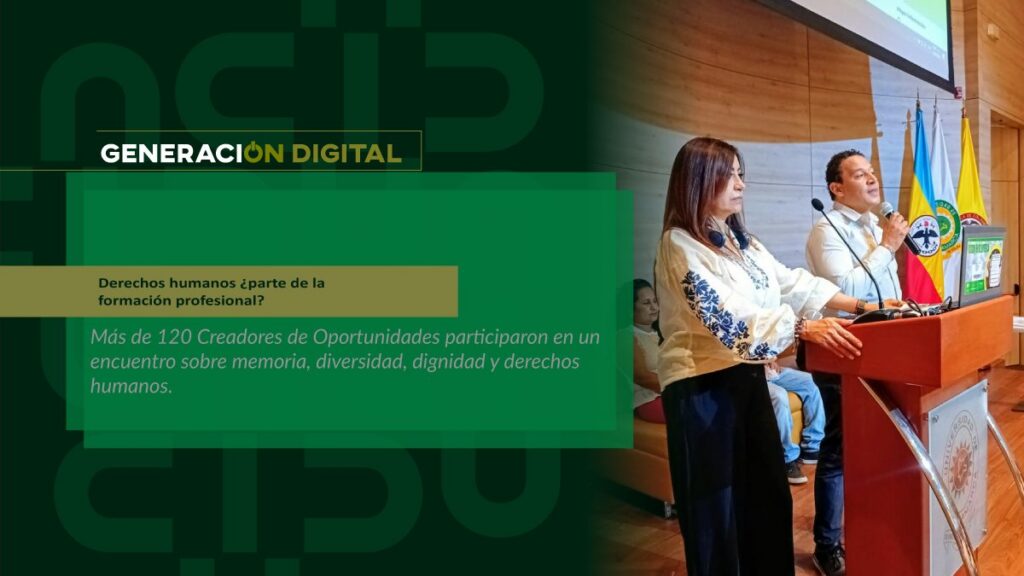
Human rights: part of professional training?
By: Alejandro García Suárez – Advisory Office of Communications



I am your virtual assistant, here to help you quickly and easily.
▲ Back to Top

Within the framework of the international alliances of the University of Cundinamarca and based on the postulates of the Transmodern Digital Educational Model (MEDIT) of training for life, the university community learned about an international analysis with the nurse María Hilda Cárdenas de Fernández, from the Norbert Wiener University of Peru on the humanization of care.
In their presentation to the community, the principles that should be applied today in the care of patients by nurses were revealed, under the premise that there is no family bond to care for a different person every day.
“How do nurses care for someone they don’t know? How can a nurse stay up all night caring for a child who isn’t her own, and yet spend the night awake? Why does she feel connected to him? Because they value care, because they were trained for that; it’s not just the intellectual aspect that must also include that feeling,” the doctor stated from Peru.
The Peruvian nurse and master's degree holder in reproductive health suggests that human beings have a soul and a spirit, both of which require care. Furthermore, human beings are predisposed to care for themselves and others.
“Care includes responsibility, dedication, attention, concern, and interest in others—not in those distant people, but in those close to us. Just as God said, love your neighbor as yourself,” the teacher stated.
These are the key factors that foster a positive nurse-patient relationship:
– To provide individualized nursing care considering values, beliefs and feelings, as a unique indivisible being who lives and responds to illness according to their experiences, knowledge and way of life.
– To be aware of and sensitive to the patient's emotional and mental health, in addition to their physical health.
– Be receptive to the patient's needs and perceptions of them.
– Humanizing care promotes patient adherence to treatments and care.
– Be sensitive to the patient's vulnerability, given their health situation.
– To allow the patient to feel unique and important during the provision of care.
– The humanistic approach to the care process can lead to a more meaningful and enriching professional nursing practice.
– To understand that the sick person is a fragile being who becomes dependent on care.
– Many patients suffer from loneliness; living with the illness alone increases suffering, so it is important to be sensitive to suffering.
– Care for people must transcend the technological aspect of care processes and recover the social, cultural and human dimension.
News
News
News
News