News
2026-09-24
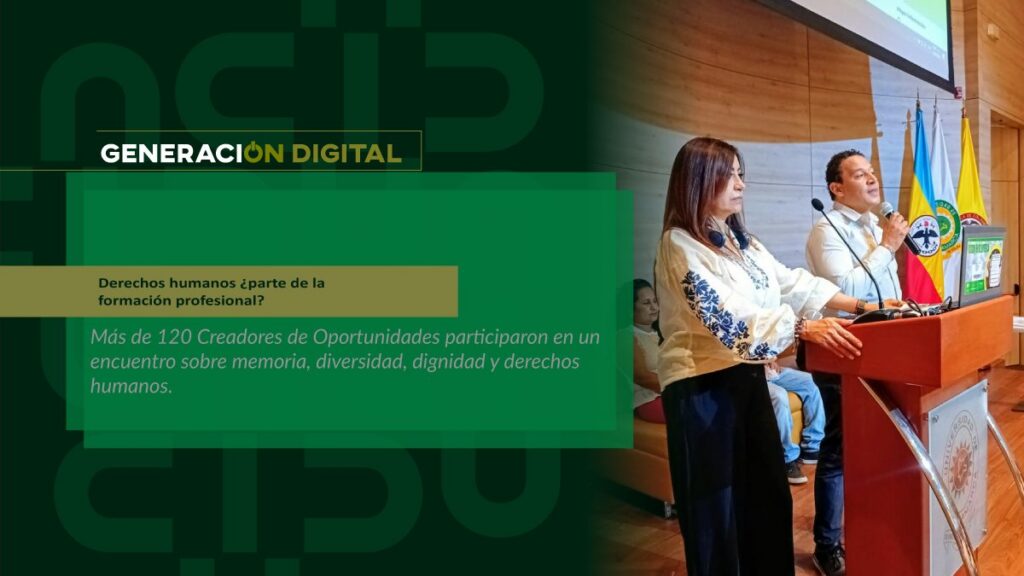
Human rights: part of professional training?
By: Alejandro García Suárez – Advisory Office of Communications



I am your virtual assistant, here to help you quickly and easily.
▲ Back to Top

World Population Day, It is celebrated on July 11th every year and was made possible thanks to Governing Council of the United Nations Development Programme from 1989. Its primary objective is to raise awareness about all the problems that currently affect the world's population.
The World Population Day It was proclaimed in 1989 when the Earth's population exceeded five billion. Earlier, in 1968, world leaders proclaimed that individuals have the basic human right to freely and responsibly determine the number and spacing of their children. Forty years later, modern contraception remains unaffordable for hundreds of millions of women and men.
Enabling people to plan their families means they can plan their lives, overcome poverty, improve the health of mothers and children, achieve greater gender equality, plan to defeat maternal mortality, and support youth.
In 2020, the global celebration of population has focused on the added problems caused by the COVID-19 pandemic. and the crisis unleashed as a consequence. Women are the most vulnerable sector of society in this confinement situation for a number of reasons:
UCundinamarca strives to educate individuals who will transform society and the country in order to defend life, liberty, and human rights, above any ideology. In this global emergency, we call upon families to recognize each other's differences, strengthen themselves, and learn to overcome challenges together.
UCundinamarca spoke with Luis Alfredo Rodríguez (LR), geographer, professor of the degree in social sciences at our institution on the occasion of this celebration and in the context of the pandemic.
LR: The proposal for an indefinite quarantine is unconstitutional, and the consequences and social discontent are already being seen. The decision to impose mandatory confinement as the primary response to the Covid-19 pandemic has economic, psychological, and social consequences for families. On the one hand, production conditions change, forcing people to adapt and strain their living spaces and infrastructure to perform permanent productive functions that were previously carried out elsewhere: factories, offices, and shops.
The management of permanent 24-hour cohabitation (another form of overcrowding due to overuse of space) is delegated to families, without support and without an offer of services to replace other functions, especially those related to urban life, available in the city's urban space, such as parks, theaters, cultural centers, etc., and without psychological support and without taking into account the needs and socioeconomic conditions of the families.
However, the quarantine, like many other policies, lacks a differentiated approach. It fails to consider not only single mothers but also the social and historical burden of children placed on women. The quarantine exacerbates this burden and further interferes with their freedom regarding their own education and access to healthcare, due to conditions such as inadequate housing and difficulties managing cohabitation.
According to the latest United Nations estimates, there are approximately 7.7 billion people in the world, of which 50.931% are women. What happens to women and their rights during this time of confinement?.
Radio Ucundinamarca · Psychologist Karen Angelica Londono Berbeo – Women in quarantine
Radio Ucundinamarca · According to the figures, gender violence increases during crises and periods of confinement.
Radio Ucundinamarca · Economic, educational, and cultural factors are associated with gender-based violence.
Radio Ucundinamarca · Call to the competent authorities to guarantee the rights of victims of violence.
Radio Ucundinamarca · Main support routes in case of being a victim of gender violence.
UCundinamarca strives to educate individuals who will transform society and the country in order to defend life, liberty, and human rights, above any ideology. In this global emergency, we call upon families to recognize each other's differences, strengthen themselves, and learn to overcome challenges together.
News
News
News
News