News
2026-09-24
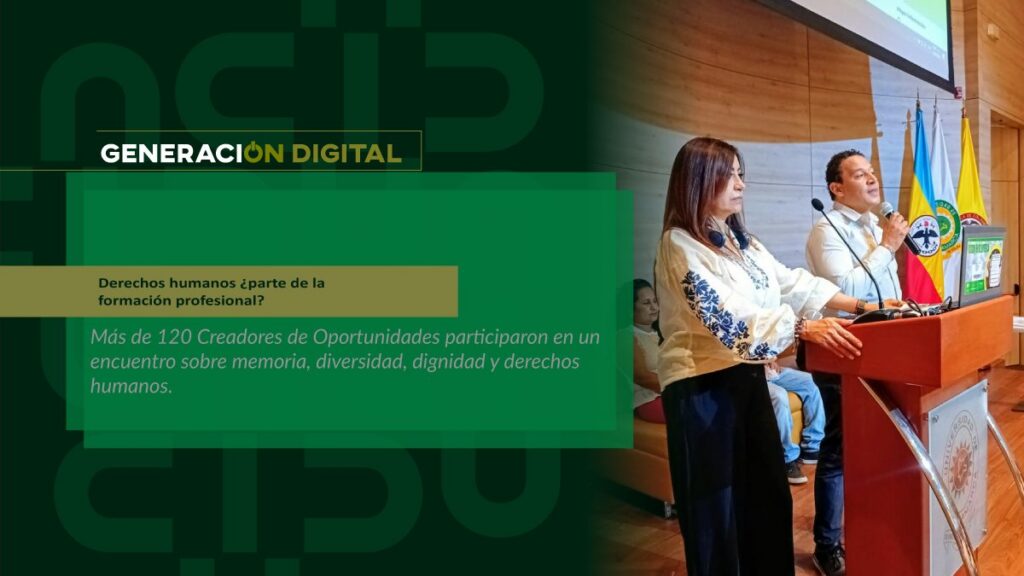
Human rights: part of professional training?
By: Alejandro García Suárez – Advisory Office of Communications



I am your virtual assistant, here to help you quickly and easily.
▲ Back to Top
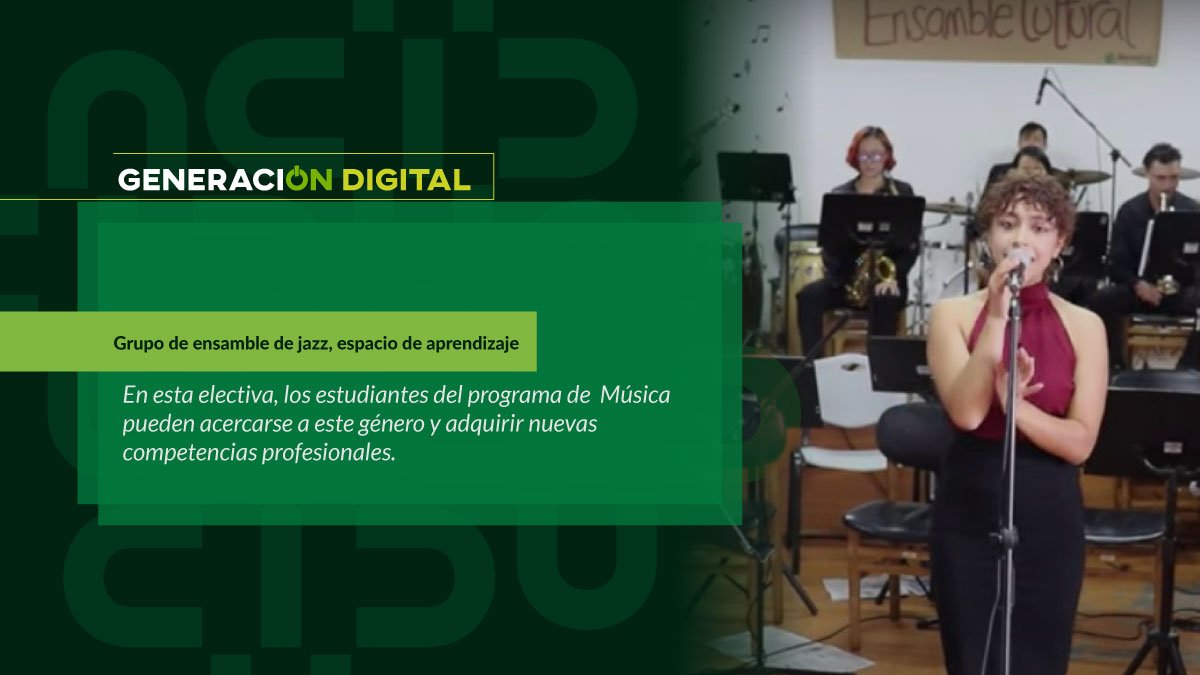
UCundinamarca News spoke with teacher Camilo Vásquez, who directs this learning space, and with student Fernanda Cantor about what this musical training process has contributed to them.
UCundinamarca News: What does this Jazz Ensemble Group consist of?
Camilo Vásquez: It is an elective-type academic space that seeks to give students the opportunity to approach this genre, which has particular characteristics such as improvisation, language and vocabulary, among others.
UCundinamarca News: Why is it important to be part of these types of groups?
Camilo Vásquez: Because the student acquires new skills that will serve them well when they graduate as a professional. This experience helps them overcome stage fright, as they have to get on a platform and interact with the audience, while simultaneously improving their vocal and instrumental performance skills. Last semester we performed for various audiences and participated in the Ibagué Music Festival, which was a very enriching experience.
UCundinamarca News: From which semester can this elective be taken?
Camilo Vásquez: The student can take this elective from the fourth semester and has the possibility of choosing several ensembles such as, for example: big band, llanera music, plucked strings and peasant music.
UCundinamarca News: What is the pedagogical process that is carried out with the students?
Camilo Vásquez: Each semester, eight students arrive, and I begin a process of introducing them to the world of jazz. I then explore what musical concepts I can use, such as arpeggios, and I look for a voice that complements the repertoire well, which might include pieces by Ella Fitzgerald or Louis Armstrong, for example. The important thing is that they learn how to create an ensemble.
UCundinamarca News: What is the grading process for this elective?
The exams in this case are divided into three parts where I evaluate aspects such as staging, punctuality, articulation, sound, among others. I do the arrangement and the production myself. Piano, drums, and guitar are the main instruments I use for this process.
Luisa Fernanda Cantor: “I learned to improve my vocal technique”
Luisa Fernanda Cantor is 23 years old, and her voice is her instrument. She is a mezzo-soprano and is part of this exciting learning process, which is why Noticias UCundinamarca interviewed her to see, from her perspective, how this elective contributes to her training.
UCundinamarca News: Why did you choose this elective?
Luisa Cantor: I chose it when I was in my fourth semester because I liked this music that has African-American roots. This is the second time I've chosen it, and it's been a very good experience.
UCundinamarca News: What have you learned most in this musical training process?
Luisa Cantor: During the pandemic, I had the opportunity to rehearse virtually. In that experience, you would record your vocals and send them over the internet so they could put everything together, but it's not the same as doing it live, since you share with other musicians and rehearse, learn from them, and vice versa. The voice in jazz is handled differently than in other genres. In my case, I improved my vocal technique and lost my stage fright.
In this way, the university reaffirms its Mission, which speaks of being a democratic, autonomous, educational, and transmodern social organization of knowledge for the benefit of a society that seeks to improve its living conditions.
News
News
News
News