News
2026-09-24
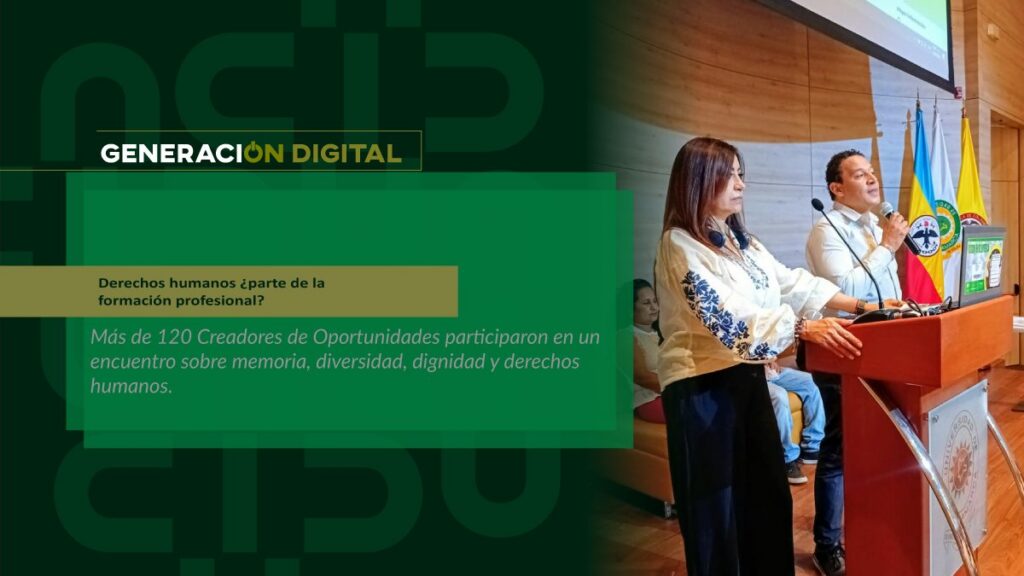
Human rights: part of professional training?
By: Alejandro García Suárez – Advisory Office of Communications



I am your virtual assistant, here to help you quickly and easily.
▲ Back to Top

Taken from El Espectador (January 30, 2018)
In 1995, a rather disturbing image appeared in several scientific journals and newspapers. It was a mouse that had had a human ear transplanted onto its back grown in a laboratory vat. Although it was completely bizarre to see, researchers at the University of Massachusetts Medical Center, in charge of conducting the experiment, warned that this hybrid was the first step towards harvest organs that could be transplanted into humans and that were in short supply.
Today, 22 years later and now under the care of Chinese doctors, this dream is a reality. According to an article published in EBioMedicine, The team of scientists managed to implant five children created ears Using an experimental technology that combines cells grown in the laboratory with the popular 3D printing method, the children who underwent the procedure suffered from microtia, a congenital deformity of the external ear that occurs in one out of every 8,000 births.
Specifically, the team took a type of cartilage cell from each child, known as a chondrocyte, and used it to create new ear-shaped cartilage. They then scanned the children's healthy ear appendages, whose ages ranged from six to nine years old, and created a 3D model that mimicked their ears.
Finally, they placed the model the chondrocytes and let it grow for three months, which gave them a “replacement” ear that was grafted onto the patients in surgery.
By monitoring how the children's ears developed after two and a half years, scientists found normal growth, although they also acknowledge that there was a slight distortion in two of the five cases.
“Tissue engineering is a promising alternative among ear reconstruction options; however, its clinical translation has not yet been achieved,” is the first conclusion the authors reach in the study's discussion. In other words, it means that…It is a treatment that still has a long way to go before it is approved and used regularly in clinics and hospitals. Similarly, the alternatives that will continue to exist for treating children with microtia are two: reconstructive surgeries or implanting plastic ears that are attached to the patient's head with cartilage taken from the ribs.
See the original article here: Chinese researchers create ears using 3D printers
Image: The progression of a child who received a new ear as part of the study. / EBioMedicine
News
News
News
News