News
2026-09-24
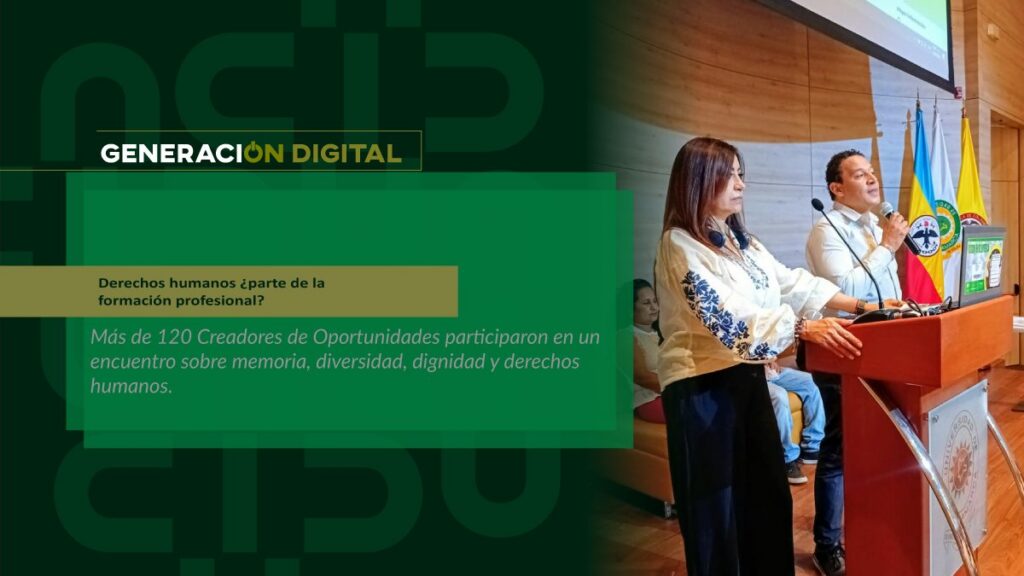
Human rights: part of professional training?
By: Alejandro García Suárez – Advisory Office of Communications



I am your virtual assistant, here to help you quickly and easily.
▲ Back to Top
By: Sonia Pinto
Have you ever wondered what internationalization is and what it's for IN OUR UNIVERSITY?
The Rector's Plan 2015 – 2019, raises the strategic front DIALOGUE WITH THE WORLD, as one of the 6 bets of the 21st Century Generation.
The internationalization of higher education is one of the fundamental tools for the relevant offering of programs, since the exchange of knowledge, the transfer of technology and the harmonization of criteria, both of the programs and of academic life in general, allow compliance with quality standards with a global meaning.
The Organisation for Economic Co-operation and Development (OECD) recently showed that the country with the highest number of international students is the United Kingdom, with 18.31% of its total population, followed by Germany with 7.61%. The only Latin American country to appear in the table "Student Mobility and International Students in Type A Tertiary Education and Advanced Research Programs" is Chile, also with 7.61%. These figures suggest that Colombia has a long way to go to achieve greater international and intercultural presence and visibility through the academic mobility of students, faculty, and researchers.
The University of Cundinamarca's commitment in this regard is significant. From a mobility perspective, considered not only in terms of geographical relocation but also as a genuine exercise in interculturality and multilingualism, it has undertaken actions aimed at positioning itself in a scenario of mandatory technology transfer.
Many actions have historically been undertaken by faculties to fulfill their social commitment to dialogue with other cultures and thus break down the barriers of knowledge. However, with the 2015-2019 Rectoral Plan, the time has come to solidify these goals and structure an institutional policy to guide the internationalization efforts of the university community and support it along the path of academic excellence it has already embarked upon.
This institutional policy is oriented towards the structuring, definition, design and characterization of the internationalization system and the creation of the International Relations Office of the University of Cundinamarca as a cross-cutting mission macro-process, which will have as its primary function the design of the international visibility strategy of the institution, through academic exchange and the establishment of alliances for cooperation in institutional programs and projects.
The policy provides a historical context for the internationalization of higher education worldwide, grounding it in national and institutional contexts. It outlines the policy's scope, reach, and principles, establishing a framework for faculty, administrators, and students to recognize the opportunities offered by the emerging system. It defines the support provided to core processes, taking into account the Development Plan, Action Plan, and the objectives of higher education in Colombia.
The internationalization policy proposes the Student Mobility Program, which develops a translocal perspective that contributes to the development of impactful projects to solve problems affecting humanity.
The Teacher Mobility Program is determined, which in a regulated and intentional manner will allow academic exchange through presentations, international research networks, the stay of our teachers in foreign institutions and that of foreigners in our Alma Mater.
Similarly, guidelines are established for signing agreements. We seek agreements with peer or higher institutions that aim to establish technological transfer capabilities, thereby achieving genuine academic cooperation.
The policy outlines various exchange methodologies such as internationalization at home, which seeks to bring foreign cultures closer together through a dialogue of civilizations, without the need for material mobilization, and therefore, without migratory transfers.
Finally, the policy establishes the structure of the information system for internationalization, which will allow, among other things, online registration for scholarships, courses, and other opportunities, as well as the real-time recording of mobility data. This will enable the university to feed both institutional and national regulatory information systems. This affirmative action further reinforces our commitment to being a 21st-century digital university.
Okay, now the question is: how do you expect to participate in the internationalization policy of the University of Cundinamarca?
News
News
News
News