News
2026-09-24
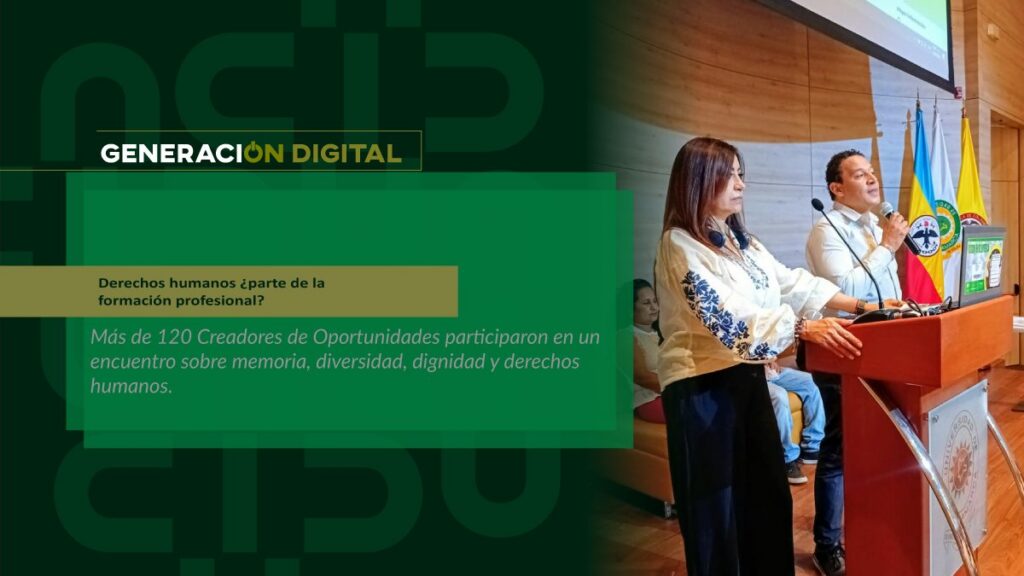
Human rights: part of professional training?
By: Alejandro García Suárez – Advisory Office of Communications



I am your virtual assistant, here to help you quickly and easily.
▲ Back to Top
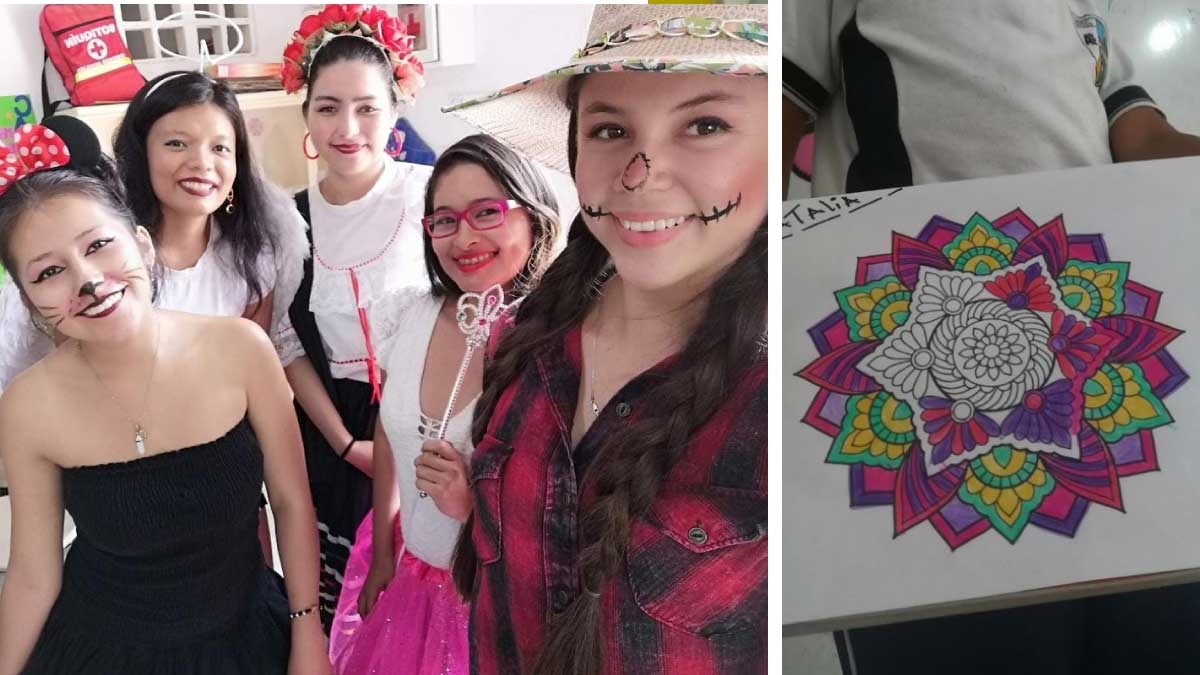
The National Coordination of the RedCOLSI Research Seedbed Network recognized Yulieth Ximena Rincón Manrique, a student in the Bachelor of Basic Education program with an emphasis on languages: Spanish and English, from the Faculty of Education at the University of Cundinamarca, for her excellent performance and results within the “XVIII Regional Meeting of RedCOLSI Research Seedbeds Bogotá – Cundinamarca Node 2020”, where she participated with the research project “Bio-intelligent tools as Pedagogical Strategies to foster an attitude towards Reading”, research that she carried out together with four of her classmates at the Luis Antonio Duque Peña Rural Educational Institution in Girardot.
This research originated in the Teaching Practice course of the 6th semester. The students carried out the research for approximately three months, with a weekly time intensity of 4 hours, and thus decided to work in the Mugali ñi Malokze seedbed led by Yulieth Ximena and made up of Danna Valentina Cárdenas Sánchez, Brintey Julieth Garzón Moreno, Erika Viviana Quintana Niño, Daniela Alexandra Triana Núñez, with the seedbed's leading teacher Juan Alejandro Castiblanco Salas.
“Bio-intelligent tools aid in the holistic learning of children and adults. Based on theory, attitude was observed as a central element for achieving a certain level of reading proficiency. Therefore, through various exercises, interest in reading was sparked, and a meaningful approach to reading was proposed, starting from the harmony between body and mind. This facilitated dialogue, interaction, and sharing, fostering a connection between the theory and practice of these tools with the participants through a pedagogical exercise,” explained Ximena.
For his part, the teacher Juan Alejandro Castiblanco Salas, leader of the research, explained that “the group of students in question, upon identifying the different difficulties in context that arise from the students' attitude to reach a level of reading that makes it possible to break with the chain of injustice and inequality through a conscious didactic exercise among the different members, who in conversation decided to propose a series of original strategies from the biointelligent tools, in order to promote a positive attitude towards reading in the children of the Luis Antonio Duque Peña educational institution, Guabinal Cerro branch.”.
What are bio-intelligent tools and how do they work?
The student teachers at UCundinamarca based their work on the work of French researcher Noemi Paymal, who asserts that “these techniques consider
Man is a holistic being who is a union, integration, and constant interrelation of his physical, mental, emotional, and spiritual body (…) They connect us with our inner wisdom and help us discover ourselves as integral beings with immense potential and qualities (…) These are techniques that interest us because they: stimulate Multiple Intelligences, connect and harmonize the two cerebral hemispheres, develop emotional intelligence, harmonize and balance electromagnetic fields (…). They are based on processes of self-teaching and self-healing, among others…”.
Then, with the children of the Guabinal Cerro school in a classroom where one teacher must teach children from first (6 years old) to fifth (11 years old) and a girl with different learning abilities in the same room, the students of the UCundinamarca Girardot branch carried out the activities and in this way they would verify if the proposed theory was valid.
“We gave them the tools and realized that for them it was a game; the older ones helped the younger ones with the reading activities, yet they were happy and calm,” Ximena explained.
The student clarifies that when talking about bio-intelligent tools, she is referring to other more holistic learning methods. For example, those used in this research were mandalas, music therapy, dance therapy, art therapy, and meditation. These activities stimulate multiple intelligences and allow children to approach reading with more curiosity and interest, thus improving their comprehension.
Research and academia
“The experience was wonderful, very enriching. It wasn't just research and a thesis project; it was a life lesson. These kinds of tools work for children and adults, they're holistic, and they always aim to improve the quality of life and learning. They work in all sciences,” explained Ximena, who at only 22 years old is about to graduate and believes that what she learned will be useful throughout her life.
Just like them, this program is characterized by the quality of its research. “I can tell you that the quality of the research we have been carrying out, not only in the research group but also with the other teachers and students, is of high quality. It is enough to review the history of meritorious and award-winning monographs to corroborate that, indeed, the program, the teachers and their students maintain, despite the adversities, an attitude of interest in quality academia, in the positive impact on the region and, above all, in raising the name of the University through concrete and real contributions to the community,” explained Professor Castiblanco Salas.
The Faculty of Education at UCundinamarca highlights the work done by students and teachers such as Juan Alejandro Castiblanco Salas, José Uriel Leal and
Martha Daza, among others who motivate and support research, stated, “We, as research professors, as leaders of student research groups, as intellectuals, encourage the creative work of our students. We are committed to ensuring that, even though the program is dying, we will do our best to ensure that our students continue to give their best, and that rigorous research remains a source of pride for the program. Finally, it is worth mentioning that this creative potential for solving and researching existing educational problems in the region will be exhausted with the last of our students, since the importance of the program and the University for the cultural, scientific, and economic development of the region was never recognized,” concluded Professor Juan Alejandro.
“It fills me with joy to be able to participate in this research and uphold the name of UCundinamarca. However, I find it very sad that our degree program is no longer offered, and that means that they will not be able to continue such important research as this,” said Ximena, who, as a teacher in training, recognizes how fundamental this degree was to her life. She expressed her hope that research of this type, which enriches academia and strengthens the work of future professionals, can continue to be carried out.
News
News
News
News