News
2026-09-24
Human rights: part of professional training?
By: Alejandro García Suárez – Advisory Office of Communications



I am your virtual assistant, here to help you quickly and easily.
▲ Back to Top
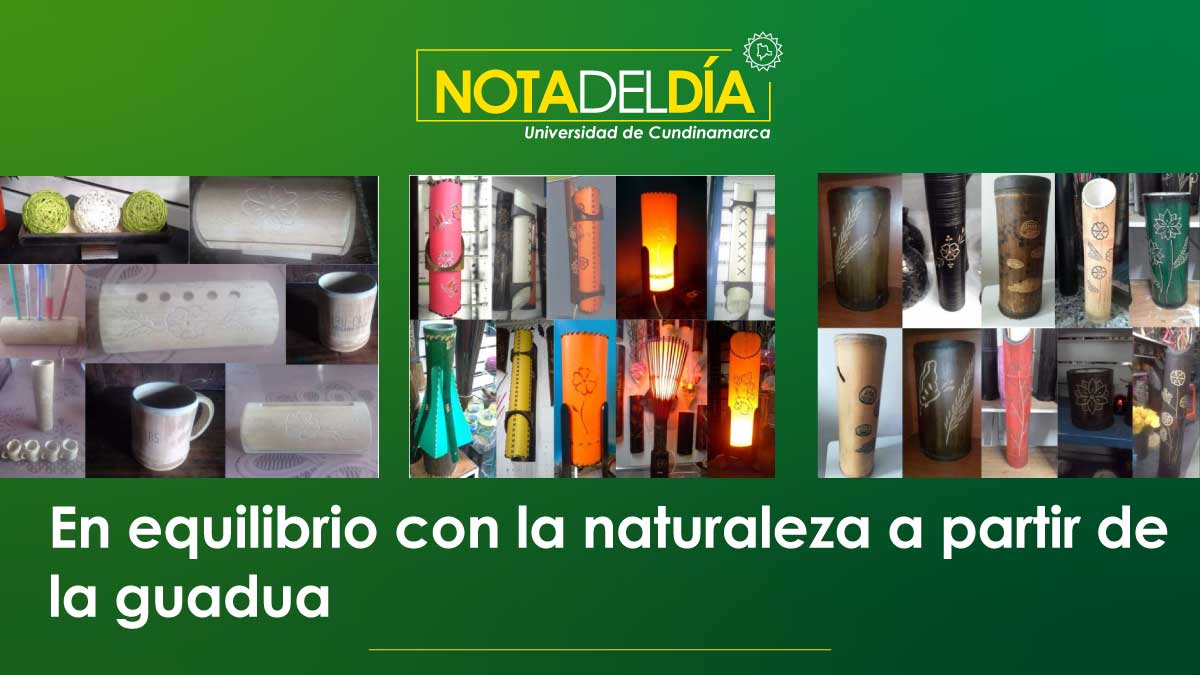
Angie Natalia Fonseca Paipa is a 22-year-old woman, passionate about natural crafts, an entrepreneur who seeks to provide solutions to problems related to the environment, making products that help mitigate environmental impacts from guadua bamboo.
This eighth-semester student of the Industrial Engineering program at UCundinamarca, Soacha Extension, has a technical background at SENA in guadua construction, which provided the necessary knowledge for the handling, creation and cultivation of this natural material.
The project of this Bogota native, currently residing in the municipality of Sibaté, has had the support of her mother, Mrs. Patricia Paipa, who contributes greatly to the production of the products they have made with the entrepreneurial project The Magic Bambudecor.
Angie Natalia points out that people who make products from renewable materials think about improving the environment and people's quality of life.. He points out that guadua is a renewable material and does not affect the ecosystem; on the contrary, its rapid growth helps the most vulnerable population to participate in its use, thus providing economic stability.
The Magic Bambudecor entrepreneurial project has strengthened Angie Natalia's professional focus as an industrial engineer, to contribute to the environment and a better quality of life, beyond the production of vases, construction of furniture, beds, chairs, kitchen utensils, to the construction of houses that with good maintenance can last for many years.
His objective is to make people understand that natural wealth and experience have given him the vision of being in balance with nature through guadua bamboo. He conceives his project as works of art; his creation seeks to dazzle clients to show and teach Colombian culture, as well as exhibit all the richness that exists at the artisanal level.
UC: Where did this entrepreneurial initiative come from? bamboo crafts?
ANFP: The initiative arose from curiosity about the material's usefulness, as there was a need to make vases for various stalls in the Restrepo market in Bogotá. Over time, different products were created, broadening the entrepreneurial vision and opening new avenues for using this material.
UC: What products does The Magic Bambudecor project produce?
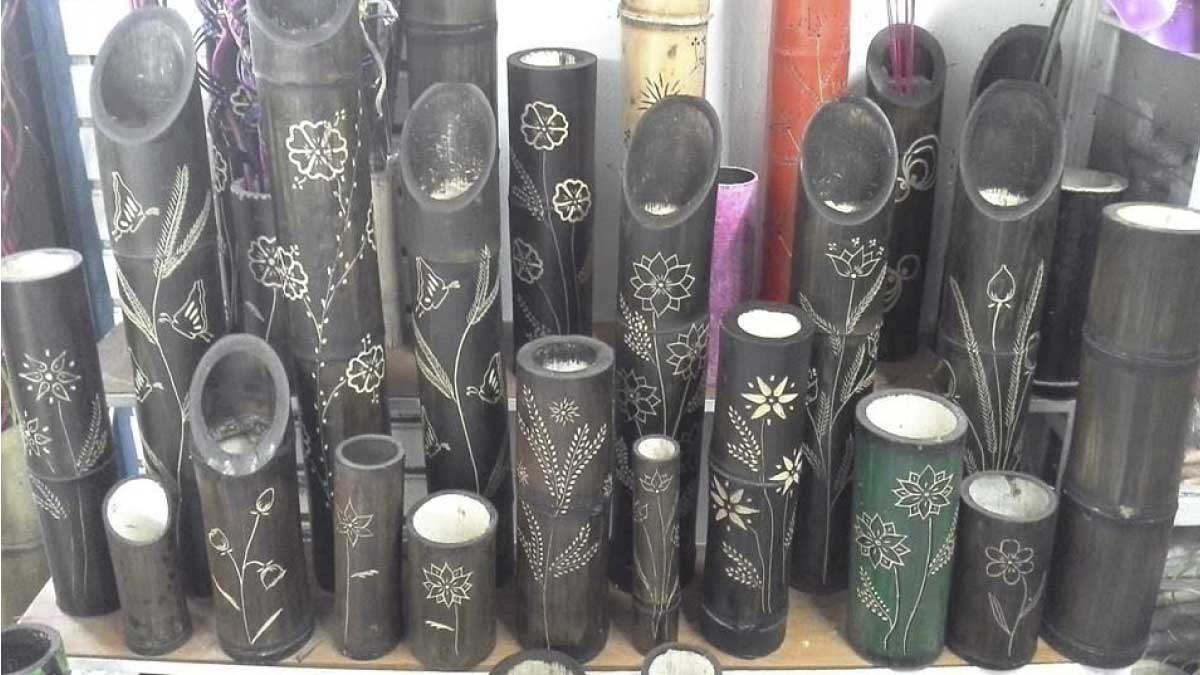
ANFP: We make vases, canoes, lamps, runners, incense burners, pen and card holders, centerpieces, and other home decorations. Vases are our best-sellers.
For example, the artisanal work of a vase begins with cleaning the material with glue, then proceeds to paint with natural pigments and finishes with carving them to the customer's liking.
UC: How did the project begin?
ANFP: It began in a shop in the Restrepo neighborhood square in Bogotá. This was a family business selling crafts and decorations. After the great impact of both the decorations and the making of vases, it was decided to end that business and create a separate company. After this, we located ourselves in our place of residence; the garage was adapted for the need to make the products.
We have hand tools, which greatly contribute to the value of the product, such as a hand saw and gouges.
UC: How much was the capital to start your business and what were the profits?
ANFP: A capital of $2,000,000 was available. The money was invested in the purchase of raw materials, supplies and shipping transport (Armenia – Bogotá), currently there is a profit of 40% with respect to sales.
UC: What type of clients does your business have?
ANFPWholesale distributors to craft shops located in the Restrepo and Paloquemao squares; distribution is also done at fairs, industrial events, and via the internet.
UC: What's the weirdest thing anyone's ever asked you to do?
ANFPThe strangest things they've asked for are carvings of faces, animals, and saints.
UC: What obstacles have you encountered?
ANFPThe obstacles encountered have been in the search for new markets and customer acceptance of new, innovative, eco-friendly products, since although they are quite attractive, people prefer non-renewable items.
UC: What has the university taught you in the area of innovation and entrepreneurship?
ANFPThe university teaches me the different aspects to consider when starting and creating a business, such as keeping accounts, how to establish the organization, and what market I can establish myself in and what public to target.
Thanks to the support of several professors, such as Nicolas Ramirez and Carlos Castro, who have contributed greatly to my business and its evolution, they have taught me how to interact with clients, present products, and make them more appealing to the public. Thanks to them, I have been able to grow my business and expand into different markets.
UC: Has it been difficult to start a business?
ANFPYes, the idea of reaching a new audience by seeking acceptance for handcrafted products is difficult since most people look for industrial perfection. Hand-carving results in a very harmonious process that provides the customer with a unique and unrepeatable piece. Machine production, on the other hand, makes products that are completely identical, which is why these products are more economical and affordable for customers. This means that our product doesn't reach many potential customers.
News
News
News
News