News
2026-09-24
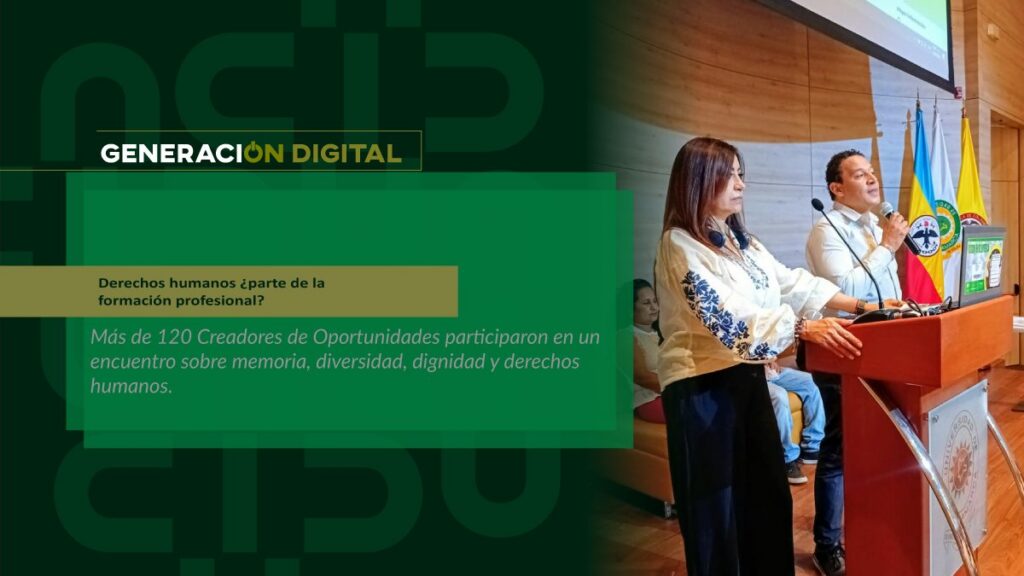
Human rights: part of professional training?
By: Alejandro García Suárez – Advisory Office of Communications



I am your virtual assistant, here to help you quickly and easily.
▲ Back to Top

The National Administrative Department of Statistics (DANE) conducted a survey in the country called Social Pulse (DANE – EPS) which allowed obtaining information on the impact of the situation generated by the covid-19 disease on Colombians; during the analysis, the United Nations Children's Fund (UNICEF) provided support.
According to DANE, the Social Pulse Survey sought to find information on consumer confidence, subjective well-being, household support networks, well-being of households with children and adolescents; and knowledge of and access to national and local policies supporting households.
Within these items, questions were asked about the educational issue at the national level and it was found that in 87.4% of Colombian households, educational or learning activities continued since the schools/colleges were closed due to the pandemic, while in 4.5% these activities did not continue.
Therefore, the National Administrative Department of Statistics (DANE) and the Ministry of Education have addressed the issue of school dropout, and it was found that, according to the SIMAT enrollment system, the number of students who dropped out in August was 102,880, representing 1.1% of the enrollment.
The Ministry, in the conclusions of a survey it conducted a few weeks ago, showed that “nearly 70% of public Higher Education Institutions (HEIs) in the country do not perceive a decrease in their undergraduate enrollments, and even 45% recognize a growth in their enrollment for this second semester.”.
The survey was led by the Vice Ministry of Higher Education, with the participation of 233 HEIs, which represent 86% of the total institutions that report enrollment in the country and which account for 95% of the total enrollment of higher education students in the national territory.
According to the survey results, “institutions anticipate significantly lower effects on higher education indicators for the second half of 2020 (registrations, enrollment, dropout rates and inter-semester absences) than those expected at the start of the pandemic.”.
At the regional level, at the University of Cundinamarca, a dropout is defined as a student who has not participated in any academic activities for two or more consecutive semesters. Accordingly, the institution's latest analysis of student dropout rates for the past year identified that 13,133 students enrolled in undergraduate and graduate programs in the first semester, while 13,353 enrolled in the second semester.
With these figures, the dropout rate for the year 2019 at the university was analyzed and it was identified that in the first semester the index was 8.4 % and in the second, it rose to 10.8 %.
At the national level, the Ministry of Education indicated that the latest measurement of intra-annual dropout rates in 2019 was calculated at 2.99 %.
The University of Cundinamarca, based on MEDIT, advocates an education for life, not professionalizing and based on competencies, and therefore ensures that students complete their studies and achieve proper development in society.
For example, in the university library there is a thesis entitled: Documentary study on student dropout at the University of Cundinamarca, Soacha extension, in the Sports Science and Physical Education program.
It was concluded that the main causes of dropout are early decision-making, bad decisions that lead the student to lose their initial direction regarding professional life, social and cultural factors, and the economic factor.
The above relates to the DANE survey, since some of the reasons given by respondents for dropping out of education were that they did not have money, that they had to work to support their families, or that they did not have internet access.
View desertion report

News
News
News
News