News
2026-09-24
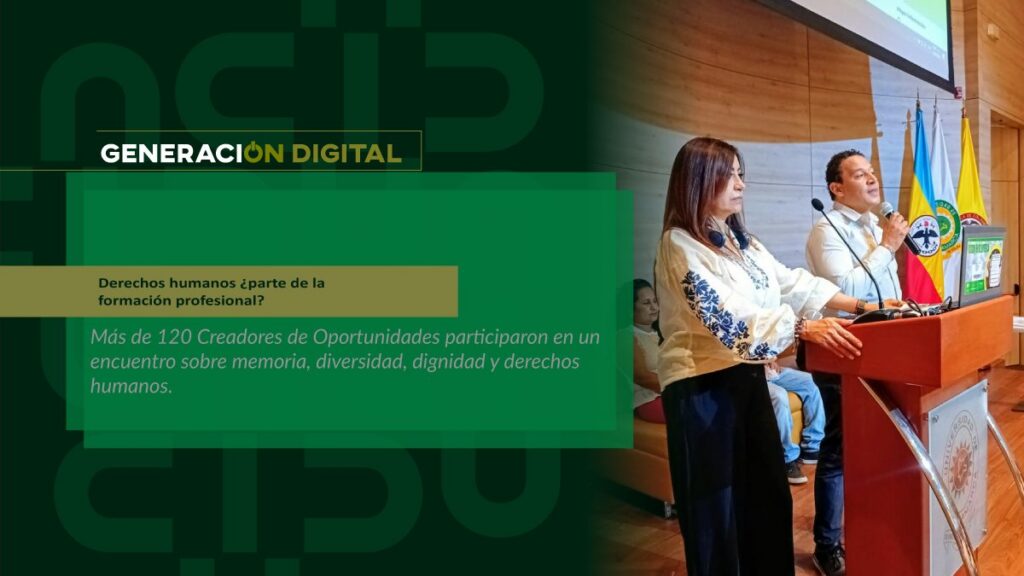
Human rights: part of professional training?
By: Alejandro García Suárez – Advisory Office of Communications



I am your virtual assistant, here to help you quickly and easily.
▲ Back to Top
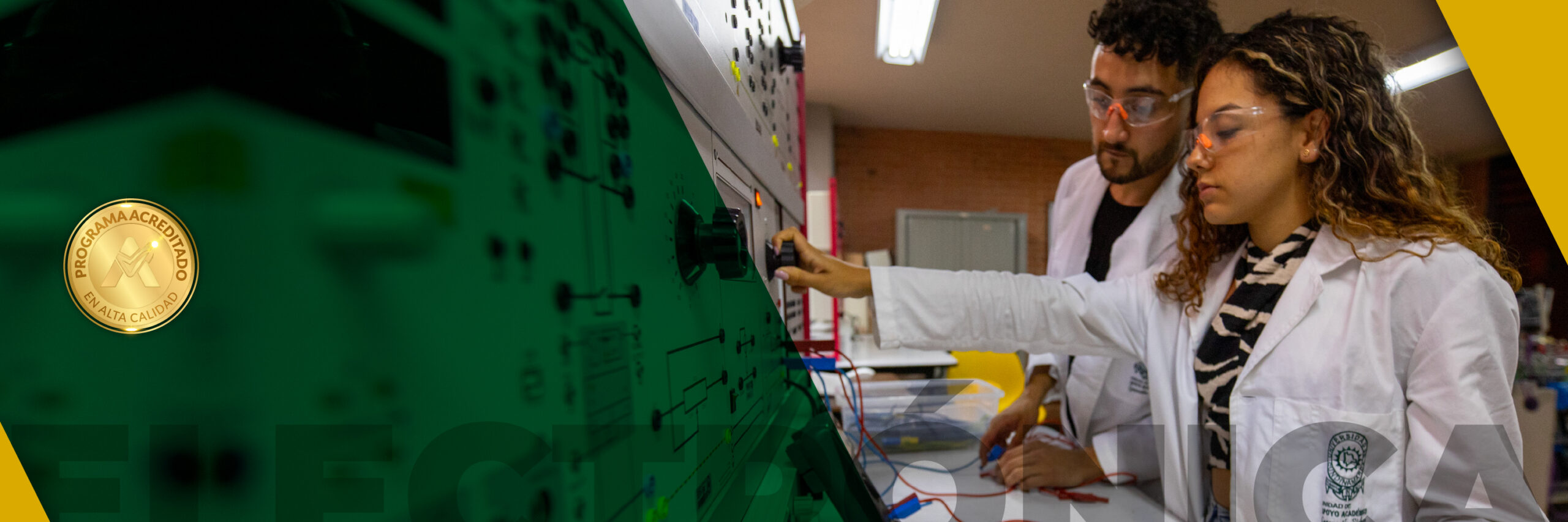
Luis Emiro Ramírez Gómez, a professional in Electronic Engineering from the University of Cundinamarca and a teacher at the Rural Educational Institution Avenida El Caraño in Florencia (Caquetá), is nominated for the Global Teacher Prize along with 49 other teachers who reached the final after being selected from more than 10,000 teachers from 179 countries.
The award known as the “Nobel Prize for Education,” which made its debut in 2015 thanks to the Varkey Foundation, It highlights the teachers' ability to innovate with projects that benefit education, social development, and their impact on communities.
Ramírez Gómez, Master of Science in Education from the University of the Amazon and tenured professor at the EDR Avenida El Caraño Institution, carried out the Agromática project through the scientific method, an initiative that provides solutions to the problems of the countryside through the use of technology.
There at the school located 15 kilometers from the national highway, surrounded by mountains and the Caquetá, Hacha and Bodeguero rivers, the young teacher guides areas of technology, computer science and mathematics from sixth to eleventh grade, nurturing knowledge and experience to about 470 students.
“The most important role of the teacher is to teach students how to ask questions because they have forgotten the power of questions. Silly questions are the only ones that can be answered scientifically; for example, the color of the sky, the color of leaves, the reason for life—these are questions that cannot be answered logically; we have to turn to science to answer them.”, he stated.
The achievements Ramírez Gómez has earned at the national level demonstrate his passion for engineering and teaching. He recently won the award for best teacher in Caquetá with the project “Agromatica”, achieved first place in the “Night of Excellence” as the best pedagogical practice in the Amazon, Best Teacher in the Night of the Best as best practice for the use and appropriation of ICTs.
Furthermore, she has participated in municipal, departmental, and national science fairs through the Colciencias Waves program. Internationally, she has achieved top rankings in technology fairs in Brazil, Korea, Colombia, and other Latin American countries.
“I like being a teacher because of the gratitude young people show, and even more so when, in a couple of years, these students will tell you: ”Thank you, teacher, for what you taught me. Thanks to you, I have a cell phone repair business or some other kind of technology-related company.’ That is very rewarding for me. I prefer to stay behind the scenes as a teacher who educates for life and seeks to change and contribute to the country.”, express.
The professor explains that this project was born while he was at school after analyzing his group of rural characterization students to whom he transmitted his knowledge in inquiry and research activities with the scientific method so that they could make use of technology in the agricultural and environmental setting, thus giving rise to Agromatics.
The 36-year-old teacher, empowered in his profession and passionate about engineering, is originally from the municipality of Doncello. He dreams of growing old, and like most scientists, his hair will be disheveled from his constant work of innovation and creation through science to improve and change the world.
UCundinamarca: Why did you decide to study Electronic Engineering at the University of Cundinamarca?
Luis Emiro Ramírez Gómez: My first contact with technology was with a 13-volume encyclopedia called "I Know Everything." My mother saw a lot of potential in me; I was the first in the municipality to have a desktop computer, at that time I was 11 years old. I think that magical moment with the computer catapulted me forward. Later I began to learn about the internet, but the person to whom I owe my love and passion for technology and everything else is my mother.
My reasons for studying Electronic Engineering were to apply to the National and District Universities, but I didn't get in due to my first-year mistakes. Then someone told me about UDEC, I enrolled at the main campus in Fusagasugá, and after many years I think I made the right choice.
UCundinamarca: What did the University teach you?
LERG: He taught me about communications and analog electronics, but I still have weaknesses in programming. However, I now have a multidisciplinary team and I'm improving. Thanks to the academic strengths I gained at the university, I now work in communications. I have my own open network company in rural areas of the municipality. The major operators don't offer coverage there, which is an advantage for me.
UCundinamarca: Do you believe that the education you received at the University has contributed to your professional development?
LERG: The training I received did contribute to my development, and I'd like to take this opportunity to make a point. The University has had a significant shortage of full-time professors, and this difficulty hinders the consolidation of research models. The Electronic Engineering program should aim to be among the best in the country, based on research using the scientific method. I experienced this shortage firsthand, and if I had had a stronger research background, I would be a better academic today; I started my research process late.
I'm currently starting some very robust research projects with the University of the Amazon. I'm working with several mathematicians; I'm the only electronics engineer. In this process, we developed a chlorophyll meter for plants and began our research by measuring wavelengths. Colciencias has supported us in this endeavor, and then we focused on creating a leaf pulse meter.
We also conduct research, and for us, it's becoming cutting-edge because the chlorophyll meter didn't exist anywhere else in the world. Now we're working on seismic irrigation in the mountains, and we're also analyzing the tree's unique waveform to find what the children and young people call "the feeling of the plant," and so on.
“The new paradigm of education is about investigating, solving, and learning collaboratively, because the teacher is also a student within that classroom; the walls go aside, the mind opens to nature, to our environment,”, He pointed out.
UCundinamarca: What advice would you give to young students who see you as a role model at a professional level?
LERG: Science has many branches, and electronics is one of the most important branches for a country's development. It's a branch of formal sciences, and electronics allows us to move from one branch to another. Physics transforms territories and can transform a country, and we, as electronic engineers from UDEC, must prepare ourselves from within the university for a new world, for what South Koreans call Fourth Generation, what Europeans call the Digital Age. We must be ready to recognize that electronics is simply the tool, but it's not a mission in itself, nor is it about pursuing competitiveness.
UCundinamarca: You are nominated for the Global Teacher Prize, an award considered the Nobel Prize for teachers. What does this nomination mean to you?
LERG: For me, the Global Teacher Prize is the most important moment of my life because it allowed us to showcase our work internationally. For a brief moment, attention turned to Caquetá, presenting me with a challenge that once pained me, but which my colleagues now applaud. I remember a speech given by the president of Fecode himself, who said, and I quote, "What can an electronics engineer contribute to education?" He said that so sarcastically that this nomination silences him. The nomination opens doors because it recognizes the work we've been doing, which fills me with pride.
UCundinamarca: Can you describe the “applied agriculture” project called Agromática?
LERG: Agromatics is the way to bring technology to the countryside to solve problems that young people identify in their work as farmers or rural residents of the region. Simply put, it's the implementation of technologies in agricultural practices.
The beneficiaries of the project are all the students of the educational institution, as well as having a positive impact at the local and regional levels. We manage 10 productive educational projects, including a highly relevant one: the Systems Biolaboratory at the rural educational institution. This initiative incorporates the management of fish, chickens, pigs, earthworms, and a home garden.
“For me, education is the most important tool humanity has ever had to make known what exists, what is coming, and what is expected. Education is not about locking young people up in four walls; rather, education will be the pillar for changing paradigms and becoming critical and active citizens in a society as battered as Colombia's,” he emphasized.
The winner, who will receive a prize of one million dollars, will be announced on March 24 in Dubai, United Arab Emirates.
Don't forget to rate our news
News
News
News
News