News
2026-09-24
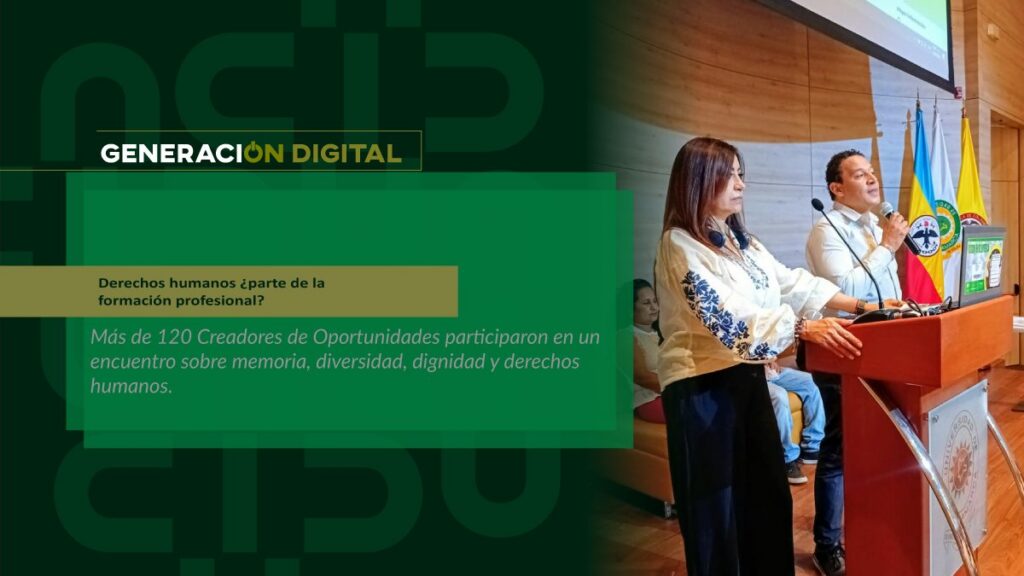
Human rights: part of professional training?
By: Alejandro García Suárez – Advisory Office of Communications



I am your virtual assistant, here to help you quickly and easily.
▲ Back to Top
By Juan Carlos Monzón – Communications Advisory Office
As a child, he always accompanied his parents to Nuevo Colón, Boyacá, to plant crops, spray pesticides, and weed. He remembers that his older brother had an old guitar that he would occasionally play off-key. "He was very strict and wouldn't lend it to me, so every time he went to work, I would take it and practice in secret.".
Until one day at school, the music teacher held auditions for a children's band, and that's where one of his brothers auditioned and got in. "I always went with him to the classes and watched what they were teaching him, until one time one of the kids didn't show up and they told me to replace him, and I stayed on as just another member. That's where I learned for the first time how to place my fingers on the fretboard of a guitar," he recalls nostalgically.
Performances at the carranguera music school, at various events, and also outside gave this young man the necessary tools to develop as a self-taught musician, like most in that region who play rumbas, torbellinos, and pasillos by ear. “My friends and I started going to competitions and we won several of them. That's how I gained more experience.”.
Then, with his family, he decided to pack his belongings and move to Tocancipá. He left behind the small farm and the memories of the coal stove where they brewed strong coffee and the ox-drawn plow his parents used to plow the fields for potatoes. “I arrived there already as an adult. It was then that I decided to submit a proposal to the mayor's office to create a school of carranga music for the town, and the mayor at the time supported me,” he says.
But there was something he felt was missing every time he faced the students. He had the practice that makes the master, but he lacked the theory. “That’s why I decided to apply to the University of Cundinamarca to study music, since that program offered courses in tiple and requinto. I took my theoretical and practical exams and did well on both, but only so-so on the ear test, because carranga music is based on oral tradition, but that was enough to get me in.”.
There in the university classrooms, knowledge came to him like a kind of epiphany, revealing a world he knew, but only in fragments. “I thought my whole degree would focus on the requinto and the tiple, but no. I started studying music from the Baroque period, the Renaissance, and also pedagogy, and so on. Then I had four semesters of piano, and when I went to class for the first time, the professor asked me, ‘What do you know about the piano?’ to which I replied, ‘I only know it has black and white keys,’” he says, laughing mischievously.
That's how it all began, and little by little he started to name everything he had previously done empirically. "I realized that what I was doing in one song was a harmony, that in another song there was an augmented chord, or that my friends and I would perform a three-part chorale. For me, that was incredible.".
However, his work as director of the carranguera music groups at the Tocancipá School of Artistic Training and as a student soon led him to consider abandoning everything. “It was becoming too much for me, but the teachers kept challenging me. ”Juan Fernando, is this going to be too much for you?’ they would ask, to which I would reply no, but I was suffering inside. Today I thank them for everything they did for me, for motivating me so I could finish.”.
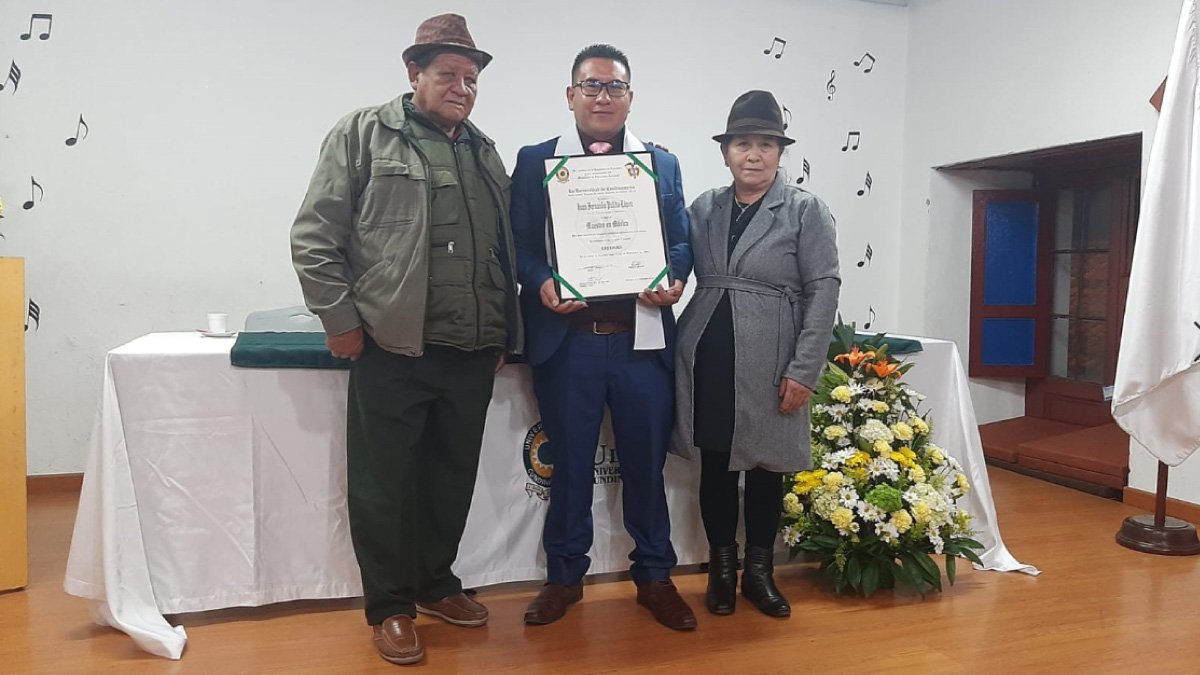
And yes, this man, who started his studies as they say in his hometown, finished with a thesis and received an honorable mention. “I saw that there was nothing written about teaching my genre, so I created a methodological proposal for teaching and performing carranguera music, which has been very well received where I work, and I've even been asked to use it in other places. There, the children learn with special guides.”.
Looking back on his journey, he's amazed. From the boy who first played a requinto guitar in school with those chubby hands to who he is now, a lot of water has flowed under the bridge. “The world of knowledge that the University of Cundinamarca showed me was incredible. So much so that it allowed me to represent the country at the Festival of Colombian Culture in New York. I will be eternally grateful to the institution for everything I learned there,” he says proudly.
News
News
News
News