News
2026-09-24
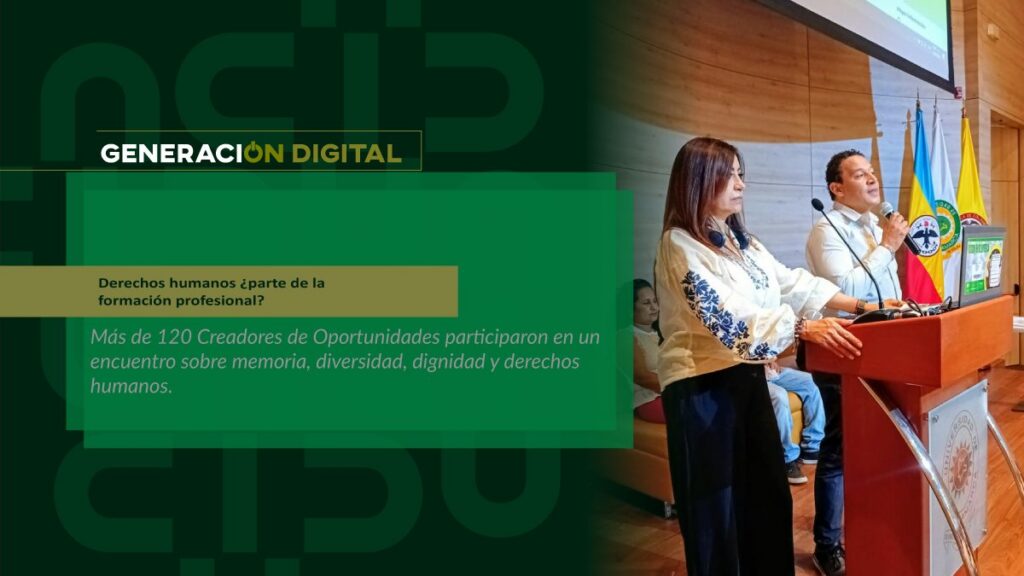
Human rights: part of professional training?
By: Alejandro García Suárez – Advisory Office of Communications



I am your virtual assistant, here to help you quickly and easily.
▲ Back to Top

The University of Cundinamarca remains committed to caring for the environment, which is related to the Transmodern Digital Educational Model (MEDIT) led by Dr. Adriano Muñoz Barrera, rector of UDEC.
With this premise, during the Environmental and Ancestral Week in Balance with Nature organized by the institution, the importance of recyclers and their formalization was discussed.
William Velásquez, management advisor for the Recyclers' Guild Association (Ora Marianis ESP), was invited to the event and described the formalization process for those who handle recycling.
The sector includes thousands of people from Bogotá and Soacha, most of whom are in the process of formalizing their employment. It is estimated that there are over 20,000 workers in the sector in Bogotá and over 5,000 in Soacha.
“The economy of this type of population is boosted in two ways: first, by generating resources for the recovery of materials that return to industry, and second, by collecting the public cleaning service fee,” said engineer William.
Currently, most recyclers operate informally, so it's necessary to provide them with tools to strengthen their businesses, such as supporting them with technology to process materials quickly. This would create a circular economy and potentially lower the sanitation fees charged to citizens, as there would be fewer processes at landfills.
“It is more expensive for everyone to pay for what is done in the landfill, than what a recycler does who takes us back into the production cycle,” he explained.
Phases of the progressive organization of recyclers
Phase 1 – Zero Moment: Single Registry of Providers.
Phase 2 – First month: The service area is defined, registration of tons transported, registration of tons in the service area, registration of tons utilized, registration of marketing invoice of usable material, registration of classification and utilization stations (ECAS) and registration of vehicles for transport.
Phase 3 – Second month: Uniform conditions of the public cleaning service.
Phase 4 – Month twelve: Service portfolio, business strengthening plan, user database and website.
The expert indicated that informal recyclers must strengthen their administrative, financial, and operational network so that they can become a formal public service company that will generate profits for them in the long term.
Furthermore, academia should generate more research on the provision of public services and the consumption habits of each population.
News
News
News
News