News
2026-09-24
Human rights: part of professional training?
By: Alejandro García Suárez – Advisory Office of Communications



I am your virtual assistant, here to help you quickly and easily.
▲ Back to Top
By: Alejandro García Suárez – Communications Advisory Office
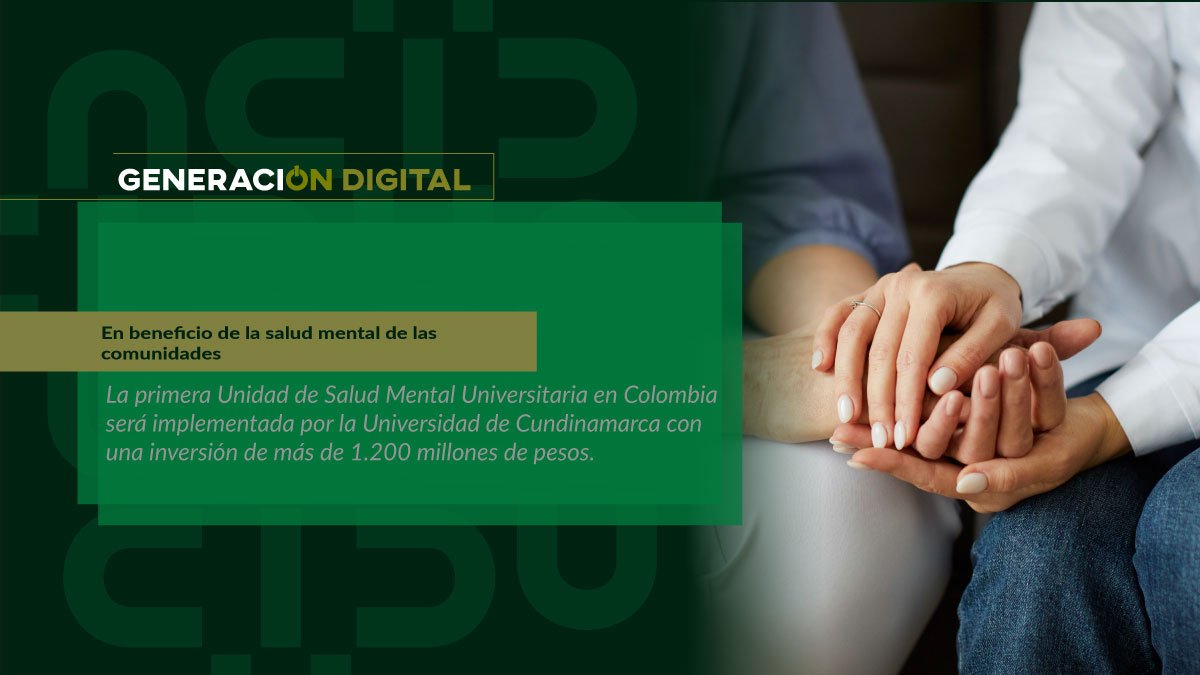
With the aim of training competent, critical, and reflective professionals in the field of psychology who are committed to the social development of their communities, the Faculty of Health Sciences and the Psychology program at the University of Cundinamarca have made a significant investment of 1.266 billion pesos in the country's first Mobile University Mental Health Unit. This unit will offer psychological support services to students and contribute to improving mental health in the region.
According to the latest report from the Ministry of Health, the state of mental health in the country is alarming. The document reveals that 17.41% of the adult population suffers from some type of mental disorder, the most common being depression, anxiety, and post-traumatic stress disorder. The report also indicates that suicide is the second leading cause of death among young people aged 15 to 29, and that the use of psychoactive substances has increased in recent years.
The Faculty of Health Sciences, led by Dr. María Nancy Garzón Soche, plans to deliver the Mental Health Unit by mid-2024. “This initiative arises as a response to the law that requires Psychology students to complete clinical rotations in this field. The Mobile Unit will not only benefit university students, but will also offer mental health screening and training services to the department's community, following the translocality principle that characterizes the institution's Transmodern Digital Educational Model.”.
It is worth noting that the Mobile Unit consists of three examination rooms with desks, ample space to attend to patients, restrooms designed according to regulations for accessibility for people with mobility difficulties, and a tent for patients to wait their turn. This unit can be moved to the different regional units where the institution operates and will facilitate access for people with disabilities. Before beginning healthcare services, the necessary licenses and permits will be obtained, the official explained.
She added, “The investment project consists of two phases. The first involves purchasing the vehicle and chassis on which the mobile unit will be installed. This unit will be appropriately sized to access hard-to-reach rural areas. The second phase involves the internal adaptation of the mobile unit and the outfitting of the clinical spaces to serve the population. In addition, there will be a service-learning area. It is expected that the mobile unit will initially begin operating in the city of Facatativá and benefit the entire Western Savannah Province,” the dean concluded.
Mental health in the educational community
“Most of today’s problems are related to anxiety and stress.” These two factors are due to “the overload of work and academic activities and the excessive use of information and communication technologies, which can create difficulties in coping with them,” says Rafael Cortés Lugo, Coordinator of the Psychology Program at the Facatativá campus.
However, it's important to distinguish between a problem and a disorder, depending on the degree to which they affect people's lives, the professional emphasized. He also indicated that "some situations push us to our limits and we feel overwhelmed. At that moment, it's important to know how to react and seek support.".
“According to mental health studies and figures released by the Ministry of Health and the World Health Organization, the main problems affecting the population are anxiety and stress. These disorders have increased due to the current situation,” the official stated.
He added that “a Mental Health Unit can contribute to both addressing and preventing these problems by offering individual and group psychological support services, health promotion and prevention workshops, awareness campaigns, self-care and wellness spaces, peer support networks, and referrals to other professionals when necessary. Furthermore, it can monitor and assess the mental health of the university community and generate recommendations to improve conditions that foster the holistic development of individuals.”.
To safeguard our mental health, Dr. Cortés Lugo recommends avoiding overwork, seeking assertive solutions to workplace conflicts, keeping personal and professional issues separate, and asking for help when needed, rather than letting situations escalate. He also encourages the community to work as a team and take advantage of the wellness services the institution offers to students, administrative staff, and knowledge and learning managers.
News
News
News
News