Fusagasugá Branch
2026-09-24
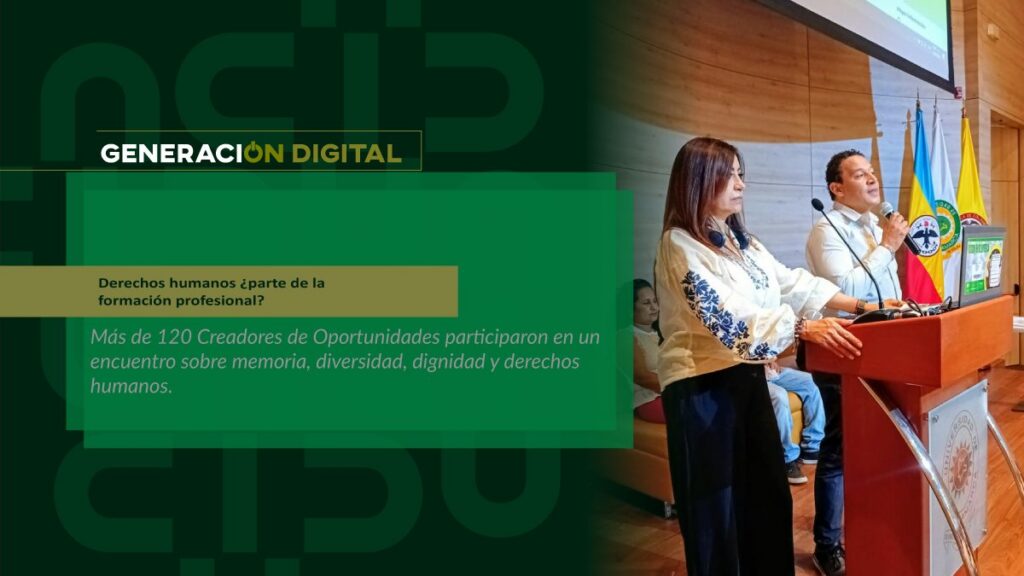
Human rights: part of professional training?
By: Alejandro García Suárez – Advisory Office of Communications


I am your virtual assistant, here to help you quickly and easily.
▲ Back to Top
By Lorena Chacón
Advisory Office of Communications
Currently, participation in various sports, recreational activities, and physical exercise, along with the promotion of healthy lifestyles, is a global trend. More and more people are aware of the importance of exercise for health, quality of life, and well-being. Consequently, participation in sports and physical activity has increased significantly in different contexts.
The fitness and sports megatrend presents a great opportunity for professionals linked to the sports field to pursue postgraduate studies and specialize in this area of knowledge, contributing to the promotion of sports practices in their territories.
This is how the University of Cundinamarca, a pioneer in higher education in the department and always at the forefront of innovation and educational trends, offers within its postgraduate academic offer, the Specialization in Pedagogical Processes of Sports Training, which seeks professional qualification in the development of skills that allow sports professionals to guide the development of athletes and participants in physical and recreational activities with a multidisciplinary perspective.
“Sport and physical exercise allow us to establish and maintain healthy lifestyle habits, creating and maintaining routines integrated with proper nutrition, with breaks, adequate rest, and regenerative and relaxing physical activities to maintain and improve physical condition, thus responding to work, social, and personal self-care demands,” says Gloria Cristina Cárdenas González, coordinator of the Specialization in Pedagogical Processes of Sports Training at the University of Cundinamarca.
UCundinamarca: Why is it important to exercise and be physically active?
Gloria Cárdenas (GC): Physical activity is important for maintaining optimal health, preserving vitality, functionality, and the constant adaptation of the different bodily systems, which also has emotional and psychosocial implications. Exercise, being a more rigorous activity, is important because it allows for the initial assessment of individuals' psychophysical conditions. This assessment helps determine specific methods and techniques for developing and maintaining physical capacities and qualities individually and/or in groups, using different equipment and in various environments. It also takes into account the diverse needs of the population, considering their movement possibilities and limitations, as well as their cognitive development.
Movement is a vital need in the human body and is accentuated at different stages of the life cycle. It involves free and playful physical activity, allowing for the recognition of qualities and values in others. Having a similar body enables the transmission of values, the expression of feelings, sensations, fears, and preferences. It facilitates gestural communication and the establishment of codes for speech, providing the opportunity to maintain contact with the surrounding environment and, through exercise and physical activity, to reach places with different characteristics, climatic conditions, and social environments.
UCundinamarca: What are the health benefits of exercising?
(GC): Within the great diversity of benefits generated by the practice of exercise and taking psychology as a reference, the constant exercise of a being immersed in a group allows him to improve a large number of social skills among which stand out saying no and/or cutting off interactions, making requests, defending one's own rights, expressing anger or disagreement, initiating positive interactions with the opposite sex, etc.
This is in accordance with Cárdenas, G. (2018), who states that it is positive to establish a Pedagogical proposal to work on social interaction within the framework of the back to school program, an investigative process that identified a change in the social relationships of students in cycle three and cycle four of an educational institution in the city of Bogotá; after being participants in sports and recreational activities with emphasis on the reinforcement of basic social skills in physical education classes during the school year, allowing a reduction in aggressive actions and behavior among the students in the program.
From the various fields of sports science, an improvement in body organization is identified through the refinement, alternation, and coordination of body movements specific to different sports modalities, in different natural environments, and at different rhythms; allowing for enjoyment, recreation, and the management of agonizing sensations, tension, and relaxation to respond to stimuli in the shortest possible time and thus make decisions with an increasing degree of assertiveness and energy efficiency, thereby regulating human behavior and facilitating the release of tensions from daily life.
UCundinamarca: What is the importance of exercise and physical activity during times of confinement?
(GC): It is of vital importance because it promotes the activation and release of hormones such as somatropin, which stimulates body growth and cell regeneration. This is vitally important for children and the elderly.
When performing exercise and physical activity, work intensities must be established. This increases the activity of cytokines (a group of proteins that mediate interactions between inflammatory and hematopoietic cells), which are responsible for the differentiation and maturation of immune system cells, facilitate communication between these cells, control antibody secretion, and other functions. "The study of these changes induced by physical stress can have a significant impact on the understanding and prevention of some diseases involving the immune system response, such as allergies, infections, immunodeficiencies, and cancer." Aguilar et al. (2006, p. 1).
A fundamental aspect of exercise and physical activity is the feeling of well-being generated by the production of endorphins in the prefrontal areas of the brain, which act as an antidepressant. “The effects of exercise can be comparable to psychological counseling and conventional psychotherapy techniques in the treatment of moderate clinical depression. In fact, 11 out of 12 psychiatric patients randomly assigned and treated with sports therapy for 12 months became asymptomatic, while half of the patients who had received traditional psychotherapy had to return to treatment.” Fominaya, J. & Orozco, M. (1988, p. 39).
Another important hormone, especially for healthy lifestyle habits and reducing weight-related diseases, is leptin. Leptin is responsible for regulating hunger and satiety signals in the body, which promotes the metabolic and caloric expenditure of the food we consume. This facilitates gradual and controlled weight loss, achieved through proper planning and dosage of exercise and physical activity tailored to different population groups.
UCundinamarca: What role does a sports coach play today and what impact does it have?
(GC): Today's sports coach has taken on the role of facilitator in physical activity, using digital media to advise and demonstrate their adaptability by integrating athletic movements with current musical rhythms such as reggaeton, salsa, and electronic music. This involves leading modern rhythmic exercise routines in group sessions where the focus is on exercising with a group and/or following the rhythm. The instructor explains the exercises step by step, their variations, and encourages increasing intensity. The key is to experience the joy of exercising and the support of the person on the other side of the screen.
There is also another role, that of the trainer in the fitness context, where the trainer demonstrates their sculpted and enhanced physique, serving as an example of strength and the results of rigorous, high-intensity training. They explain the proper technique for exercises and utilize gym equipment and the latest trends in sports training. The focus here is on increasing muscle mass, developing physical endurance, and achieving a physique recognized for its athletic prowess.
Finally, we found the coaches who develop webinars and/or seminars where they share specific knowledge about sports training, about a particular sport, about new trends in sports training, about nutrition and sports supplements.
UCundinamarca: Why is it important that more professionals related to physical education become interested in the field of sports training at the postgraduate level?
(GC): From the virtualization of bodily practices, physical activity, and sports training, it is important to disseminate this specialization to increase interest among professionals. This helps reduce the proliferation of sports influencers who propose routines without technical and theoretical knowledge of sports science and training, generating a large number of serious injuries and myths among their followers regarding sports training and the indiscriminate use of energy drinks and stimulants, as well as substances that increase athletic performance but can cause serious harm to the body if not properly dosed, such as creatine, vitamins, minerals, and anabolic steroids.
Also because the planning of routines, plans and programs of sports training requires specific and technical knowledge in integration with the sciences of sports and pedagogy, to reduce the risk of injuries and/or sudden deaths in the performance of physical activity especially on weekends and sports training due to the inadequate application of loads and intensities in physical work and the inadequate use of everyday items as sports equipment (e.g. lifting tires, throwing medicine balls, performing jumps on boxes for plyometrics, etc.).
To enable health professionals who are part of interdisciplinary groups at different levels of the sports organization to understand and adopt the different planning models in order to make their intervention with the groups and delegations under their charge more efficient, effective and timely.
This training aims to help coaches understand the different physical characteristics and body types of athletes at various stages of development, enabling them to properly select and identify sporting talent, and to identify any deficiencies in athletes with disabilities. These aspects will qualify them to respond more effectively to the vast job opportunities available to coaches in Colombia and to the increasing prevalence of work-related and social illnesses and pathologies.
UCundinamarca: Why is pursuing a specialization related to Sports Training relevant today?
(GC): From the basic and secondary education sector, teachers require the appropriation of teaching techniques and sports training to meet the needs of the school sports population and thus be able to advance in the teaching ranks.
From the university education sector, this is relevant because it provides undergraduate professors with the opportunity to further their qualifications specifically in aspects of sports training, enabling them to join faculties related to sports and physical education. For university coaches, it offers a chance to improve the athletic performance of the groups they coach and to advance within their institutions.
For trainers in the fitness sector and those interested in new trends in sports training, this is an opportunity to improve their knowledge of training planning, dosage, control, and evaluation, and thus offer a personalized service with better qualifications, allowing them to improve their income and expand their job opportunities.
For sports institutes, clubs, sports schools and sports organizations, it is an opportunity to improve their training processes for the future presentation of sporting talents and thus achieve greater social and sporting recognition.
Because from the new perspective of occupational safety and health regulations, planned and controlled physical activity is becoming increasingly important to reduce work absences, work-related stress, illnesses related to poor healthy lifestyle habits, and due to the obligation to implement, control, and evaluate activities that generate well-being for the working population.
Because people with disabilities have the right, and it is a social and sporting responsibility, to provide them with activities suited to their abilities, it is important to offer specialized sports training programs that include thematic modules related to sports training for this population. In Bogotá, only two programs currently cover these thematic modules: one at the CENDA educational institution and the other at UCundinamarca.
UCundinamarca: Why pursue this specialization at UCundinamarca?
(GC): Because the University of Cundinamarca has great national recognition and especially because it provides training opportunities to a large number of residents from different municipalities in Cundinamarca and nearby towns.
When reviewing the curriculum in relation to other institutions at the national level, it is the only specialization that integrates into its curriculum the training in pedagogy, planning, sports training laboratory and the elective in methodology of sports training in populations with disabilities; giving the specialist a better qualification and appropriation of skills and knowledge from a broader view of sports training preparing them not only for conventional sport but to adapt to Paralympic sport and in the implementation of diverse pedagogical and sports planning strategies with different population types.
UCundinamarca: What differentiates the Specialization in Pedagogical Processes of Sports Training from other similar postgraduate programs at other universities?
(GC): This specialization differs from others because, from the first semester, the future specialist acquires basic skills for developing research processes related to sports and sports training. This is achieved through the research module II, which identifies the importance of pedagogical research in sports training, standards for citations and references, basic guidelines for presenting scientific documents, and the identification of different research approaches and types. Students also have the option of choosing between an elective in training and/or physical activity planning for individuals with disabilities, taking into account their specific training needs and the demands of the workplace.
In the second semester, future specialists demonstrate the knowledge and skills acquired in research through the formulation, presentation, and defense of their academic work (review article). This allows for the integration of knowledge acquired in the core area of biostatistics, in which the concepts of descriptive statistics, statistical inference, and the use of basic computer tools with statistical applications for data management and processing are applied. This knowledge is necessary to carry out an adequate verification of the treatment and handling of the data obtained in the different stages of planning.
Another noteworthy aspect is the faculty of this specialization, who possess extensive experience in sports training, including experience as coaches, methodologists, and interdisciplinary professionals in high-performance sports. The faculty also includes instructors with broad experience as coaches, trainers, and teachers in sports training programs at various levels of the education sector; university teaching experience; postgraduate training; and experience in project development and research in the fields of sports training and adapted sports.
UCundinamarca: Where are the lines of research related to sports training headed?
(GC): Taking into account the opinions of students regarding their tastes and needs in the work sector in which they work, which is generally sports training in training schools, sports institutes and gyms, it is identified that currently the lines of research to be established in the specialization are related to:
UCundinamarca: What fields of action does a sports coach have in Colombia and at an international level?
(GC): The national-level sports coach has the following areas of expertise:
REFERENCES
Aguilar, C., Zuluaga, N., Pablo, J., & Caraballo, D. (2006, p. 1). Exercise and the immune system: A review article. Faculty of Medicine, University of Antioquia. Retrieved http://www.scielo.org.co/scielo.php?script=sci_arttext&pid=S0121 07932006000200007
Cárdenas, G. (2008, p.148). Pedagogical proposal to work on social interaction from physical education within the framework of the back to school program at the Carlos Arango Vélez Educational Institution. Master's thesis in Education. Antonio Nariño University.
FOMINAYA, J., OROZCO, M. (1988, p. 39). Psychosomatic effects of exercise. Apunts. Medicina de l'Esport, 25:37-47. Retrieved from https://www.apunts.org/index.php?p=revista&tipo=pdf-simple&pii=X021337178805005X
News
News
News
News