News
2026-09-24
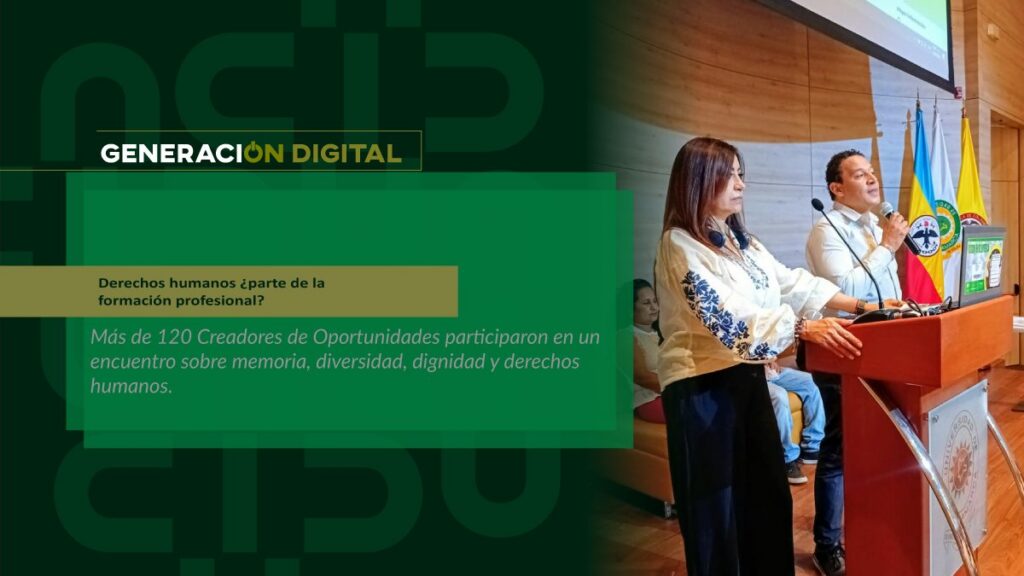
Human rights: part of professional training?
By: Alejandro García Suárez – Advisory Office of Communications



I am your virtual assistant, here to help you quickly and easily.
▲ Back to Top
Victor Eligio Espinosa Galán, Professor of Social Sciences, University of Cundinamarca, Director of the National Institute for Social Research and Innovation.
At the beginning of December 2019, a new coronavirus pneumonia called COVID-19 was first identified in the city of Wuhan (China). It quickly spread throughout China; as of today – March 28, 2020 – there are more than 615,000 cases, more than 27,000 deaths, and it has even reached 188 countries, and in Colombia it is growing by leaps and bounds.
This pandemic has the entire world in lockdown due to its human-to-human transmission, ease of contagion, and the virus's longevity in the environment. This unprecedented situation in recent human history is comparable only to other epidemics, such as the Black Death in Europe (1320), smallpox in the Americas (1520), the plague in France (1720), cholera (1820), and the Spanish flu (1920). This scenario presents us with enormous ethical dilemmas related to economic, political, and scientific values, which will be analyzed in this paper.
The public health context is bringing into question the ways in which a society can deal with crises and regulate the market; also, the influence that the State has on the economy and on the regulation of the lives of its citizens.
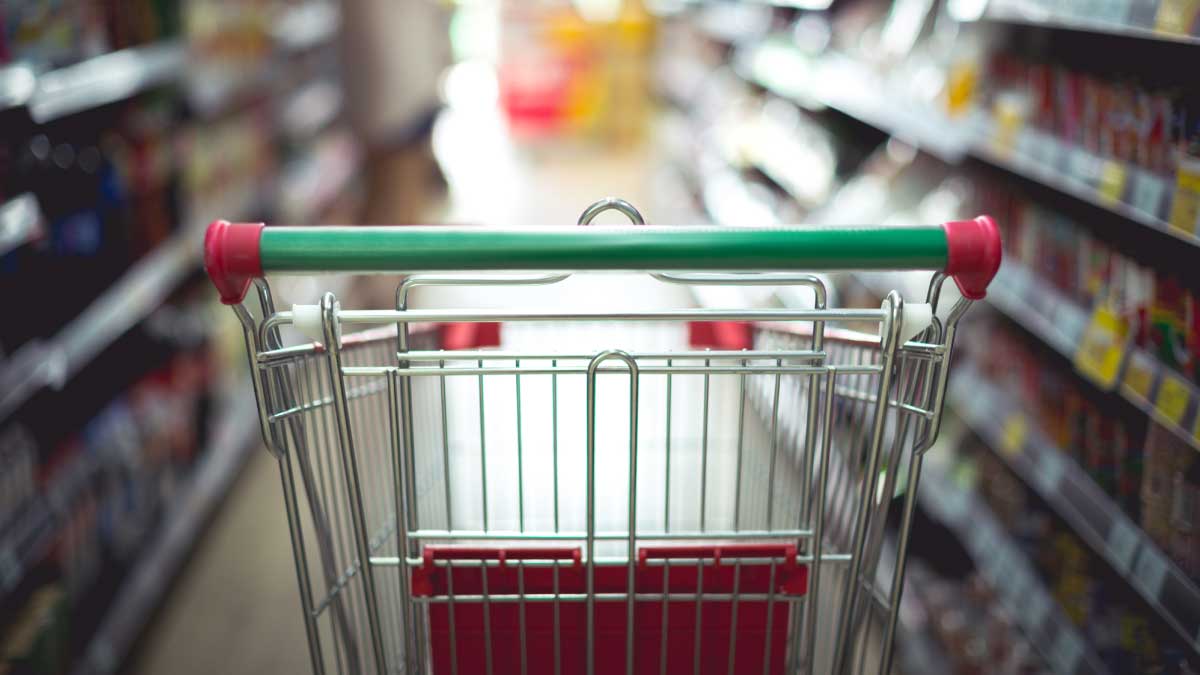
For example, at the beginning of the outbreaks in Colombia, newspaper headlines appeared such as: “The rush to stock up drove up prices in markets” (El Tiempo, March 21, 2020); this situation —which seems inconsiderate and inhumane to a society in which there are more than 9.6 million Colombians in poverty and a middle class that is increasingly poor and indebted to the financial sector— does not seem to have any moral justification and for this reason, perhaps, no one would defend someone who abusively raises prices.
The need for social isolation and the confinement of families has led to an increase in food sales, especially in neighborhood stores, as well as in large supermarket chains. One might think: if the neighbor who owns a corner store raises prices by a few cents, it's not so bad; but for a supermarket chain to raise prices is unthinkable. Generally, a crisis causes product prices to rise due to transportation difficulties, health risks for employees, and many other reasons; hence, the question: How far will people's greed go?
In this regard, the Government established a sanctions plan for commercial establishments that excessively raise prices, which can lead to the closure of the establishments, among other infractions; since we all consider that the law of the market of supply and demand should be regulated by the fair price, which for many economists —such as Thomas Sowell (cited by Sandel, M., 2011, p. 15)— is only a desirable but senseless situation —from an economic point of view— since, prices are not fixed and vary according to the circumstances of the market.
This occurs even in a situation as unfortunate as a pandemic, as value would be altered by the relationship that sellers and buyers wish to establish. Some free-market advocates have gone so far as to claim: “It is not abusive to charge as much as the market can bear” (Jeff Jacoboy, cited by Sandel, M., 2011, p. 40), but this provokes anger in many of us, and it is here that the State cannot remain indifferent, since the lives of the poorest and most vulnerable families, who survive in the informal sector and whose resources are scarce, depend on fair trade.
On the other side of this ethical and economic debate are those who defend price control laws that would help minimize the suffering of the poorest in times of social emergency, since the market is not free in an absolute sense; to which I could point out: “how far should greed go in the human heart of some who intend to take advantage of those who are suffering” (Sandel, M., 2011, p. 16).
Basing market relations on fair pricing in difficult times can be considered an argument of justice for those whose survival would be at risk without regulation; thus, fair pricing decisions are a virtue, and the opposite is greed, a vice understood as a bad way of acting that does not help a society, in adverse times, to move forward together and whose moral cost is incalculable.
A reasonably decent society cultivates in its citizens the character necessary to avoid or minimize suffering and, at the same time, to point out which virtues are worthy of honor and which behaviors deserve repudiation and indignation; for an idea of justice is based on a reflection on the most desirable way of living.
In times of human catastrophe, we are surprised by gestures of profound generosity from those who possess enormous fortunes. For example, Mark Zuckerberg, the founder of Facebook, donated $20 million to the COVID-19 Solidarity Response Fund and the U.S. Centers for Disease Control and Prevention to support research seeking a cure. Similarly, Rihanna [singer, businesswoman, model, and designer] contributed $5 million to help during this pandemic. In Colombia, business leaders have also made contributions; amidst this financial crisis, some have supported their employees or made large donations to various municipalities.
These types of initiatives are expected, but to date there is enormous controversy about why the richest man in Colombia and the continent has not provided any help and, on the contrary, has invited the employees of one of his companies [El Tiempo] to donate three days of their vacation; a businessman who has more than 110,000 workers in Colombia and Latin America.
This reignites the ethical debate about whether the wealthy should help the poor or show solidarity in times of calamity; something that, at first glance and immediately, we might consider most desirable since, in general, those who have built fortunes with the labor of thousands of workers should share their wealth. But the matter is not as simple as our common sense suggests.
In a free society, people could choose the human virtues they wish to develop; this idea is based on a libertarian theory of society that rejects laws that impose taxes, considering the redistribution of wealth as desirable.
In this regard, we agree and even praise the fact that the most privileged members of society help those who require greater protection, as this is the basis of the welfare state; however, this idea has also been questioned by some economists (Hayek, F., 1992; Friedman, M. and Friedman R., 2006) who point out that redistribution goes against the principles of a free society and that, moreover, the State cannot impose laws on businesses that regulate the distribution of their wealth, since if this wealth has been built up in good ways—by complying with tax obligations and paying their employees fairly—there would be no reason to impose an idea of redistributive justice (cf. Nozick, R., 1974).
It is clear that, for the most disadvantaged in society, their situation is not a choice: living in rented accommodation, being street vendors, working by the hour, and performing countless low-paying jobs is simply due to the social inequalities that have arisen, in part, due to the concentration of wealth; in a decent society, no one would choose to live in the worst conditions.
But if the rich don't want to donate part of their wealth, or if, for some reason, they can't even enjoy it—in the worst-case scenario—can we enter their warehouses, their chain stores, and loot the groceries of food, appliances, and clothing?—in true Robin Hood style—then a large majority would justify stealing a bag of milk to quell the hunger of a child or an elderly person, especially in times of hardship. But none of these ways of living allows us to build human virtues that harmonize life in society, because too much wealth in the hands of a few leads to widening the gap of social inequality.
On March 7, 2020, the Zaandam cruise ship departed with 1,829 people on board (1,243 guests and 586 crew members). It was adrift in South America, having been closed to maritime traffic by many countries because, apparently, some passengers were exhibiting flu-like symptoms. It was impossible to determine for certain whether these symptoms were related to COVID-19, as there was no testing available on board. The ship was expected to arrive in Florida, USA, on March 30. Most of its crew members were identified as Americans.
Given this situation, in the hypothetical case that the ship failed to find a port of call, its supplies would have quickly run out and nearly two thousand people would have died. However, if those exhibiting flu-like symptoms did not test positive for the virus, the South American countries would have committed an injustice by preventing them from disembarking based on an unconfirmed hypothesis. But if they were indeed infected, a considerable number of lives would have been lost by not providing necessary assistance to healthy people. After this pandemic, the world will not be the same. We cannot build a new humanity on inhumanity, on injustice.
At the peak of this pandemic in Italy, people over 80 were left to die because the healthcare system collapsed; by March 28, 2020, the country had recorded 92,472 infections and more than 10,000 deaths, surpassing China. A similar situation occurred in Spain: doctors were forced to let elderly patients die in order to provide ventilators for younger ones. Thus, the lack of medical equipment led to a choice between one life and another.
Added to the difficult and undesirable moral dilemma of choosing who lives and who dies is the utilitarian principle of maximizing happiness for the greatest number and avoiding suffering. In these cases, life is reduced to social costs and benefits because, in this logic of necessary cruelty, the benefits must outweigh the costs; this departs from Kantian ethical principles, which treat human beings as ends in themselves and not merely as means to an end.
In the dilemma of 'letting the elderly die' lies a notion of utilitarian justice in which "the morality of an act depends only on its consequences" (Sandel, M., 2011, p. 44), as long as these generate less harm and are the least painful; although, in a situation like the one we are living through we cannot decide 'with certainty' what is less or more painful: whether to save the life of a man or that of a woman or that of an elderly person who produces less utility and whose lifespan and happiness are shorter, then, the lives of the younger are privileged even though they have a greater possibility of living.
If we add to this the benefits that the death of the elderly brings to the State's finances, such as: the release of their pensions and the saving of health resources; well, the elderly are the population that most requires medical attention and has expensive treatments.
Therefore, the problem with a moral and political decision based on consequences [costs/benefits] is that it overlooks the existence of duties, rights, and principles of human dignity that are fundamental and independent of circumstances. It is inhumane—most argue—to base human life on monetary value, but in a situation like the one we are experiencing: How do we know what something is and what makes it fundamental?
The ethics of social distancing is an ethics of caring for others that tests our principles of community and self-preservation; it is an ethics of the face of the other. In times of global health crisis, the face is not known, but rather revealed and fragile (Mauer, M., 2009, p. 260): “The skin of the face is what remains most naked, most unprotected” (Lévinas, E., 2000, p. 71); it is in the face of the face, in its mortality, in its physical vulnerability, that the ethical principle of “thou shalt not let die” is shattered—in times of pandemic—if it is within our power to preserve life.
In the face of human devastation like that of our time, obedience to a universal moral code is insufficient; rather, decision-making is based on the recognition of our species' vulnerability. No moral code can soothe our conscience in situations we would rather not be in, but in which, unfortunately, we find ourselves; and being ethical here is nothing other than choosing the least suffering and acknowledging that we are not as good as we would like to be.
What can we learn from this experience?
In the midst of an era of scientific and technological development, hyperconnectivity, the strengthening of the market economy, and political liberalism, the world has been confronted with its fragility. The epidemic has struck at the heart of the global economy (capitalism). What seemed solid just days ago has begun to decline: the financial sector, which appeared unstoppable and which the State has now had to bail out—didn't it save enough?
In the first five months of 2019, banks and other financial institutions in Colombia reported profits of approximately 9 trillion pesos, according to the Financial Superintendency. Now, they need government assistance to provide some relief to their clients and to support them through the crisis with loans.
The virus doesn't discriminate between rich and poor. It sends us all into lockdown. But we don't all experience confinement in the same way. The poor have to lock themselves in their rented homes, with overdue mortgages, in relatives' houses, in those small spaces where internet access is a privilege and, in many cases, utilities are cut off. Because it's not the same to be confined with a full kitchen for several days as it is to be confined with few supplies. Therein lies the injustice of confinement, because confinement with hunger fractures family relationships.
But what can we learn from this devastating experience? 1That neoliberalism has sacrificed healthcare systems in almost every country. That healthcare in the hands of private entities causes more deaths than the diseases themselves. Democratizing access to healthcare is necessary, and the State must guarantee this right; 2That the world is more fragile than we might think and that we are not eternal. A virus like COVID-19 demonstrates that no human lives, markets, or global economy can withstand it.
Just as it attacks the center of life (the ability to breathe), it also attacks the very center of the market economy, which until now was considered the guarantee of social order and the development of human life in all its dimensions; 3) that in the global village we are all vulnerable, that only through cooperation, the exchange of information and data, global strategies and solidarity between States will it be possible to counteract the effects of this pandemic so that it is as undevastating as possible; 4) that life in community depends on how much we want to take care of each other and that the principle of all morality lies in collective well-being.
For there is no individual existence but a common destiny; 5) that a practice, as simple and important as washing your hands with soap, can save our lives and the lives of many others; 6) that nationalism, in the best style of modern states, is always present when it comes to closing borders; 7) that it is evident that we find it difficult to take care of ourselves and that is why we are desperately asking the State to lock us up, to not let us go out, to restrict our freedoms — in order to avoid contagion.
Something that can save our lives; 8) that States must base their decisions on scientific evidence and citizens must place their trust in science to preserve our health and as an antidote against authoritarianism and populism of the left or right.
Proof of this is the amount of applause that millions of citizens around the world offered every night from their balconies to the health personnel; 9The Colombian state higher education system is not only underfunded, but also lags significantly behind in online and distance learning. Furthermore, in this age of connectivity, not all students have internet access, and many lack their own computer.
We can emerge from this disease as if nothing had happened, which is impossible, and we have gained a wealth of knowledge about what governments and society in general should prioritize. It would be an affront to our best qualities if the death of so many human beings did not provide us with the lessons and insights to live differently. Because the world, as we know it, will not be the same. It taught us—in the worst possible way—that there is no economic development without people, who took their work home, turning their bedrooms, studies, or living rooms into their offices.
And today, from their homes—in the privacy of their families—they are keeping many businesses afloat amidst the crisis. This demonstrates the need for profound changes in labor relations and that the capitalist consumer model—the foundation of contemporary society—is destroying healthy life on the planet. Finally—and with the optimism of a hopeful response—the questions remain: What will our lives be like when all this is over? Where will our political, educational, scientific, and economic priorities shift? What do we need to build a global order based on the principles of an ethics and a politics of care?
Bibliographic references
Espinosa, V. (2019). Teaching ethics 11. Problems of applied ethics. Bogotá: National Institute of Social Research and Innovation.
El Tiempo. (March 21, 2020). The rush to stock up drove up prices in markets. El Tiempo Newspaper. Retrieved from https://www.eltiempo.com/economia/sectores/coronavirus-en-colombia-aumentan-precios-de-alimentos-por-demanda-de-compra-475732
Friedman, M. and Friedman, R. (2006). Freedom to choose. Madrid, Spain: Ed. Grijalbo.
Hayek, F. (1992). Fatal arrogance. The errors of socialism. Madrid, Spain: Unión Editorial.
Levinas, E. (2000). Ethics and Infinity. Translated by Jesús María Ayuso Díez. Madrid, Spain: Machado Libros.
Mauer, M. (2009). Between the Greek and the Jewish. A rereading of Levinas's work. Journal of Philosophy and Political Theory No. 40, pp 91-114. Retrieved from http://www.fuentesmemoria.fahce.unlp.edu.ar/art_revistas/pr.3909/pr.3909.pdf
Nozick, R. (1974). Anarchy, State and Utopia. Madrid, Spain: Innisfree.
Sandel, M. (2011). Justice: Are we doing what we should? Madrid, Spain: New Pocket Editions.
News
News
News
News