Fusagasugá Branch
2026-09-24
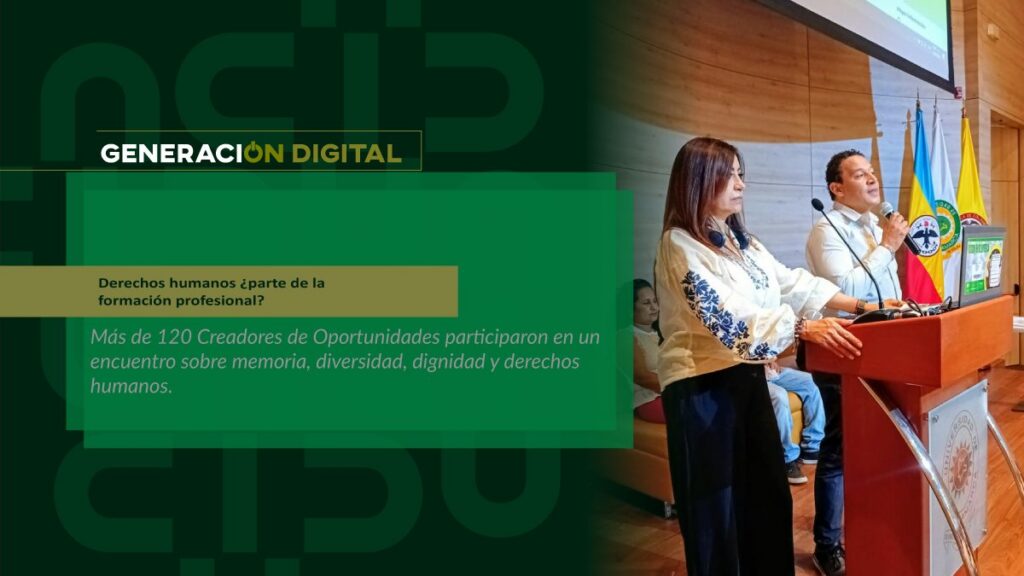
Human rights: part of professional training?
By: Alejandro García Suárez – Advisory Office of Communications



I am your virtual assistant, here to help you quickly and easily.
▲ Back to Top
The University contributes resilience strategies to climate variability in the agroecological family farming as a preponderant factor in respecting biodiversity and improving the quality of life in territories affected by human intervention in production, based on the project called: “Evaluating ecosystem services provision under criteria of financial sustainability and environmental sustainability to help mitigate the effects of climate change in the Sumapaz region, Department of Cundinamarca.”.
The objective of the research has been to identify strategies to improve the relationship between agroecosystems and agroecological practices in order to contribute to the sustainable conservation of production systems.
The results of the project are evidenced in the characterization of the 80 agro-ecosystems in the municipalities of Cabrera, Pasca, San Bernardo and Granada, water inventory, cattle, crops and forest trees; inventory of ecosystem services provision, evaluation of ecosystem services provision in the province, and evaluation of the sustainability of the agro-ecosystems.
“The farms evaluated harbor great biodiversity and offer a wide range of benefits and services to rural producers. However, the expansion of conventional agricultural techniques (monoculture, use of and dependence on agrochemicals) is causing an intense environmental crisis. Therefore, the University of Cundinamarca, through these studies, proposes productive development using agricultural management methods to improve the transition from traditional to agroecological practices. Because there is a close relationship between production methods, productivity, and ecological stability, the causes of deterioration in production systems can be reversed by preventing and conserving existing natural capital,” stated Nelson Fonseca, lead researcher of the project.
The valued agroecosystems contain great biodiversity. However, the expansion of conventional agricultural techniques (monoculture, The use and dependence on agrochemicals is generating a disastrous environmental impact, a situation that is being analyzed by the University and project leaders (teachers and students), who are not seeking to replace one chemical package with another ecological one; on the contrary, the project proposes to generate adaptations or practices resilient, both in the design, redesign or management of agroecosystems that strengthen the ecological alternatives offered by biodiversity versus the efficiency of production systems.
The project aims to transform production systems into competitive systems through a change in the way production is carried out, with respect to the management of human activities and the adaptation of agroecological practices, which generates positive changes in land use, animal welfare, water resource efficiency, reforestation of wooded areas, integration of habitats and environmental dynamics.
In the case of the Sumapaz province, most agroecosystems have as their central purpose the satisfaction of needs and, at the same time, are a consumption unit, whose purpose is to sell the surplus of their products to safeguard their economic stability.
The project developed by the Faculty of Administrative, Economic and Accounting Sciences, Public Accounting program (TEMCON and PROCEM Group, led by professors Manuel Ricardo González Moreno and Luis Hernando López) is at 90% of execution. Among the outstanding results are: The diagnosis of peasant agroecosystems in the Sumapaz region, characterization of the ecosystem services provided in peasant agroecosystems in the area; vulnerability analysis of the agroecosystems and environmental services (water supply and productivity) supported by the environmental cost analysis.
Another contribution of the project is to propose alternatives to generate good practices that mitigate the effects of climate change in the region; in addition to identifying the relationship between the generation of ecosystem services and the degree of sustainability in peasant agroecosystems in the Sumapaz province.
Furthermore, it is relevant to mention that, having reviewed the literature from primary and secondary (bibliographic) sources, no studies have been conducted regarding the measurement of ecosystem services. It is worth noting that the Regional Autonomous Corporation (CAR) and the University of Cundinamarca are leading the studies of environmental assessment and ecosystem services.
It is worth noting that the project is aligned with the Millennium Development Goals, Resolution 70/1 of 2015, the 2030 Agenda approved by the United Nations General Assembly, and the Colombian Sustainable Development Policy in the CONPES 3918 of 2018.
With this project, the University of Cundinamarca contributes to achieving the proposed goal for 2030, providing resilience strategies for the Sumapaz province, based on the "Generation 21st Century" master plan, strategic fronts: Education for life, democratic values, civility and freedom, and Science, technology, research and innovation.
News
News
News
News