News
2026-09-24
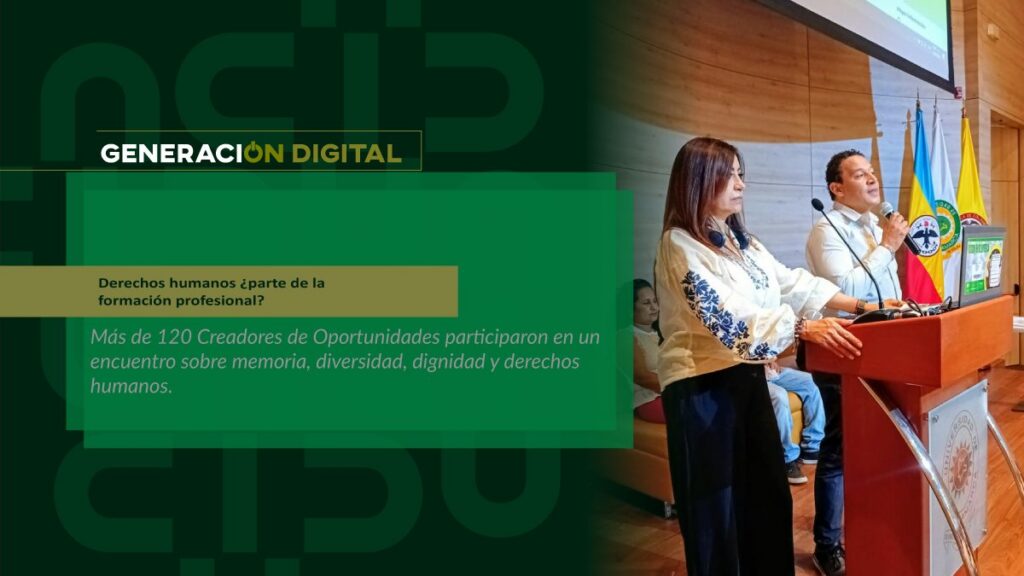
Human rights: part of professional training?
By: Alejandro García Suárez – Advisory Office of Communications



I am your virtual assistant, here to help you quickly and easily.
▲ Back to Top
By: Juan Carlos Monzón - Communications Advisory Office
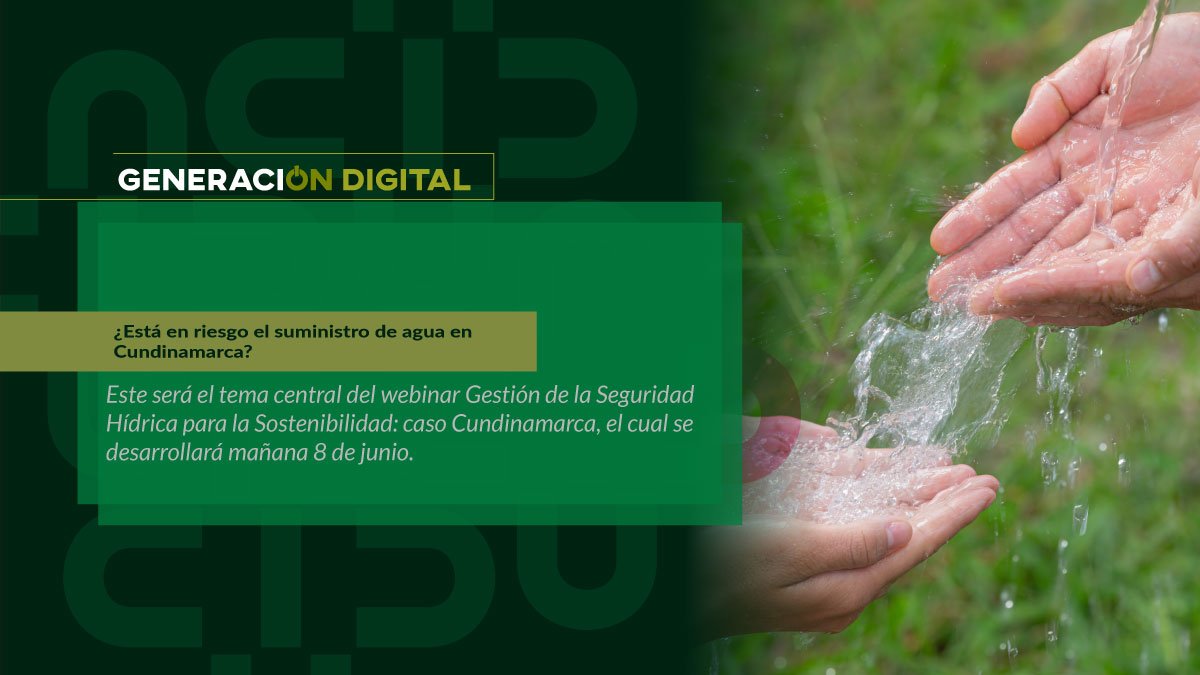
The event, which will be broadcast at 10:00 a.m. via Facebook Live, is led by the Institute of Postgraduate Studies and the Master's Program in Environmental Sciences. During the event, leading experts in the field will shed light on this issue.
UCundinamarca News interviewed its organizer and moderator, teacher Tatiana Jiménez, who provided important insights on this reality.
UCundinamarca News: What is the objective of the event?
Tatiana Jiménez Patiño. The objective is to understand and expand upon the conceptual and structural foundations of the water security plan for the central region, which was signed by the departments of Cundinamarca, Huila, and Bogotá, in order to strengthen it. It is important to emphasize that the well-being of the communities depends on this resource. Therefore, this entire dialogue will take place within the framework established by the Ministry of the Environment, which, along with international cooperation organizations, is working to reduce the risk of water loss.
UCundinamarca News: Which experts will be present at this academic event?
Tatiana Jiménez Patiño: We will have Dr. Diego Olarte, the UN Director of Sustainability for Colombia, who is recognized for his planning processes, such as the one for the central region, a key topic of this discussion. We will also be joined by Dr. Alba Natalia Flórez, the coordinator of the sustainability program for the Special Planning Administrative Region, who will share information about the water security plan being implemented there. Another guest is Juan Camilo Moreno, a graduate of our university, who will speak about the success stories of this water security plan.
UCundinamarca News: How is water resource management in the department?
Tatiana Jiménez Patiño: At this event, we're going to address this issue because there's a major problem with access and quality, since we still lack the infrastructure and management strategies to meet the demand for this resource, given population dynamics. For this reason, a future plan is necessary to guarantee access. Government policies are key, as is the involvement of academia to ensure that the right decisions are made.
UCundinamarca News: Cundinamarca has the Sumapaz Páramo, which is a water factory. Does that help mitigate this problem?
Tatiana Jiménez Patiño: Yes, but there is already a progressive population growth that requires reconfiguration of the water supply and maintenance of the conditions in those ecosystems. Cundinamarca does face a risk of water loss due to climate phenomena, and this was stated in the Third National Communication on Climate Change.
UCundinamarca News: What are the water threats looming over the department?
Tatiana Jiménez Patiño: There are several risks caused by humans, such as deforestation; the lack of environmental controls in these areas; the expansion of illegal mining; the lack of basic sanitation in rural areas, which leads to the discharge of sewage into water sources; and the expansion of the agricultural frontier. To this we must add climate change, which generates droughts and produces water stress.
UCundinamarca News: Is there a public policy for water resource management?
Tatiana Jiménez Patiño: Now, this public policy needs updating, as it was in effect until 2020. In that regard, academia must play a very important role in its modernization, integrating, for example, the topic of the circular economy.
UCundinamarca News: Many international analysts say that the next wars will be fought over water. What is your opinion on this?
Tatiana Jiménez Patiño: Yes, it's real. There are already theorists who say that the economy is becoming increasingly dependent on water. Given this, the possibility of war is very real.
News
News
News
News