News
2026-09-24
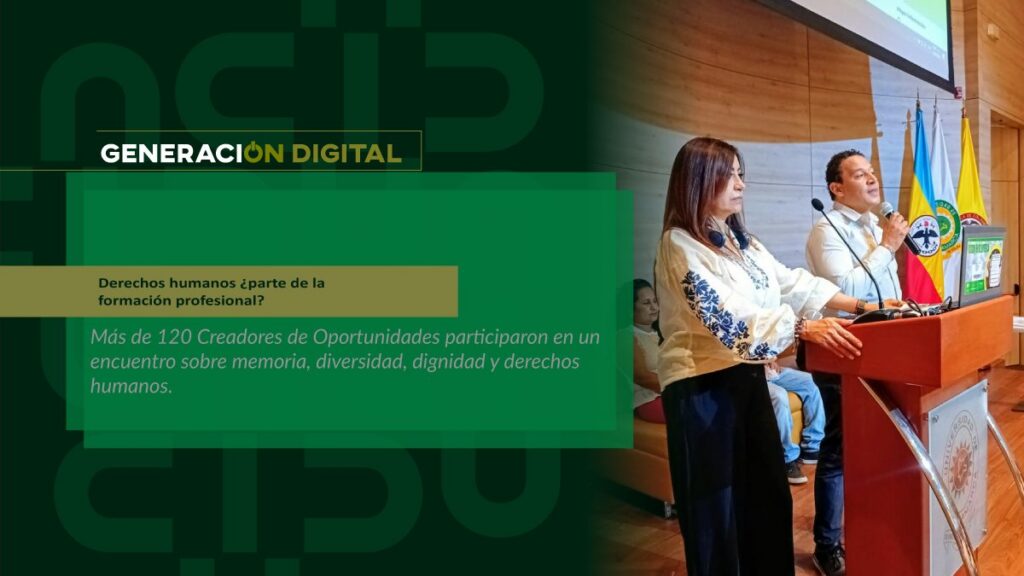
Human rights: part of professional training?
By: Alejandro García Suárez – Advisory Office of Communications



I am your virtual assistant, here to help you quickly and easily.
▲ Back to Top

The University of Cundinamarca faces the challenge of implementing the Environmental Management System, framed within the first objective: “To ensure an institutional environmental culture within the framework of its commitment to formative education for life, democratic values, civility and freedom”, The Soacha extension, through a tree-planting day, reaffirmed its commitment to raise awareness among the entire academic and administrative community to participate in the beautification of the university campus.
The event encompassed the entire university campus and promoted environmental awareness, as well as the beautification of the lawns in commemoration of Earth and Tree Day. The activity involved planting a wide variety of species, including carnations, samphire, marten, blue dot, and double coral tree, among others contributed by students, faculty, and staff.
This experience highlighted the commitment of the community, who donated and planted several plants, demonstrating good teamwork among the event attendees, and identifying both opportunities for operational improvement and economic savings.
Environmental Management Policy Statement
“The University of Cundinamarca is an institution dedicated to the development of knowledge, democratic values, civic responsibility, and freedom. Its strategy and operations are grounded in entrepreneurial principles, high-quality programs, and a commitment to fostering a culture of peace. This commitment is reflected in the 2016-2026 strategic plan, "Designing the University We Want," and is based on a translocal and transmodern 21st-century university model. The university prioritizes science, technology, and innovation, applied knowledge, and the resolution of problems in the natural, social, and environmental spheres. From its highest levels of management, the University is committed to the conservation and preservation of the environment through continuous improvement and efficiency in its processes, activities, and services. This commitment includes preventing, mitigating, improving, and promoting a responsible culture in energy use, material use, water use, and waste management. These efforts are integrated across all departments through the University Environmental Project (PRAU) to raise awareness, promote ownership, and encourage the active participation of the 21st-century generation within the framework of the PIGA (Integrated Environmental Management Plan). (Institutional Environmental Management Plan), thus complying with the institutional, legal and voluntary requirements that regulate its management, in order to achieve institutional and regional sustainable development.“
(Resolution 000155 of 2018, Article 2).
News
News
News
News