Fusagasugá Branch
2026-09-24
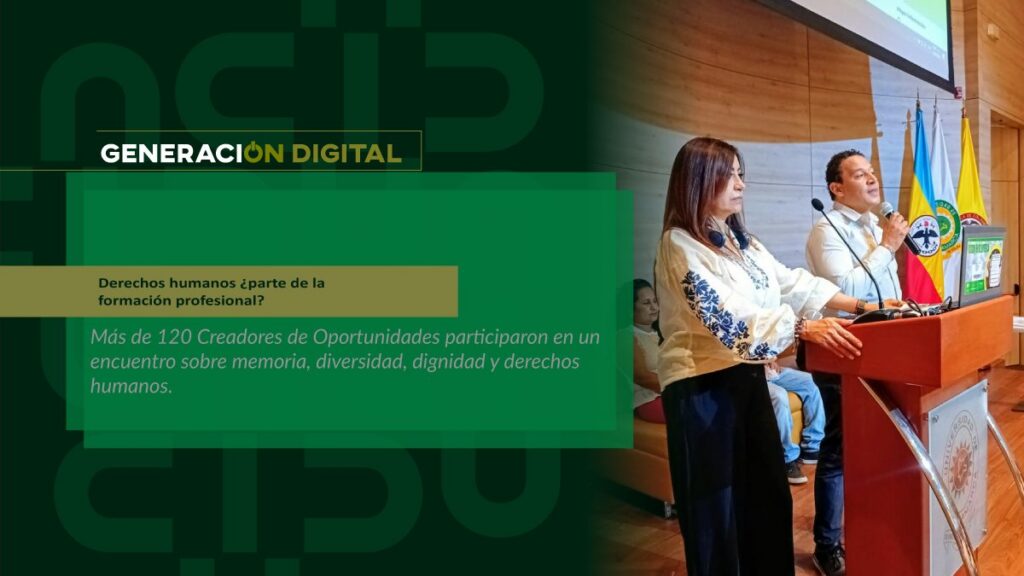
Human rights: part of professional training?
By: Alejandro García Suárez – Advisory Office of Communications


I am your virtual assistant, here to help you quickly and easily.
▲ Back to Top
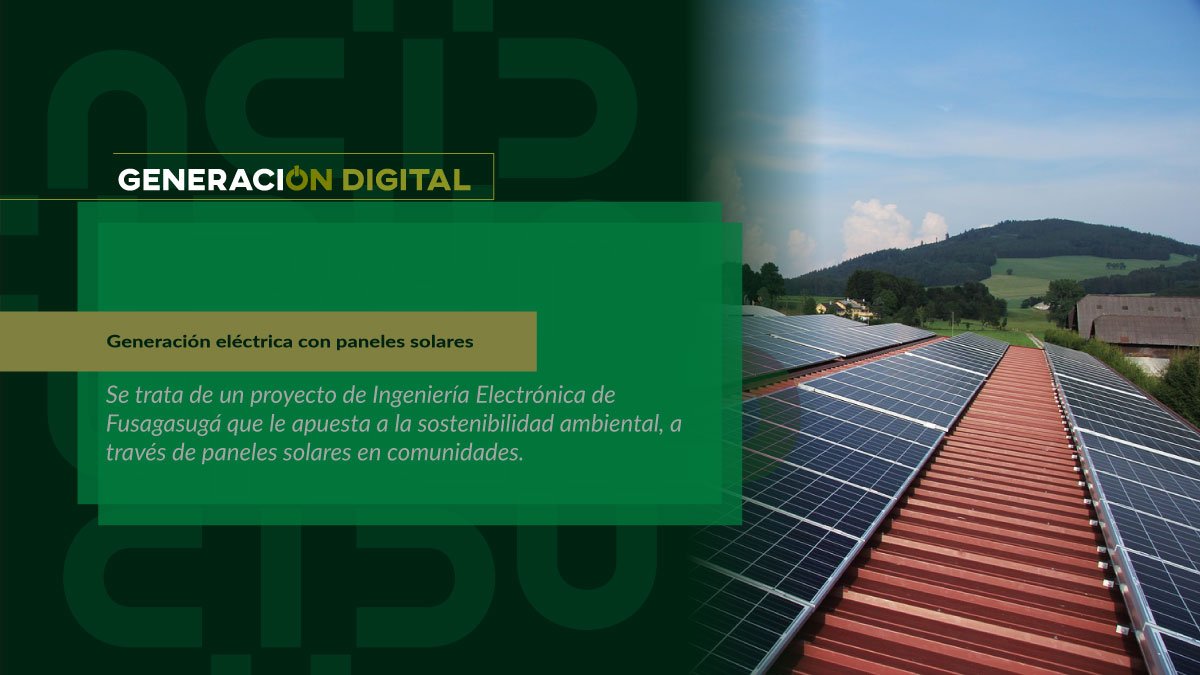
The initiative is called Knowledge Transfer for Environmental Sustainability of the Communities of the Sumapaz Region Phase II. This academic and service proposal was part of the 2022-II Social Project Bank, led by the Academic Vice-Rector's Office and the Directorate of University Social Interaction, which seeks to generate academic products and social appropriation of knowledge to promote and strengthen the dialogue of knowledge with other communities.
UCundinamarca News interviewed Engineer Cesar Augusto Quintero Obando, professor of the Electronic Engineering program and leader of the project, who launched this proposal along with his colleagues Arley Fernando Hernández and Richard Benigno Ducón.
UCundinamarca News: What is the main objective of this project?
Cesar Augusto Quintero Obando: The goal is to extend the knowledge generated by the program to the local community in a practical way, enabling people to implement solutions that benefit themselves. To this end, training will be provided on alternative energy sources, where the program will teach the community how to implement solar panel electricity generation systems for use in their homes, farms, and other spaces. Additionally, a functional prototype in the area of alternative energy will be created, along with two online resources focused on environmental sustainability, and a user manual for disseminating and configuring the tools.
UCundinamarca News: What resources and skills has this team needed to carry out the project?
Cesar Augusto Quintero Obando: In terms of training, the most important thing was having experts on the subject, which involved teachers and students who are already applying this knowledge and who can contribute from their experience.
UCundinamarca News: What are the main challenges or associated risks you encountered in this project?
Cesar Augusto Quintero Obando: One of the most important challenges was to involve actors who are interested in taking the training in order to put it into practice in their lives or so that they can see a practical application for themselves.
UCundinamarca News: How will the project's success be measured?
Cesar Augusto Quintero Obando: It will be through a survey that allows the beneficiaries to evaluate the knowledge acquired from their own point of view and how this can impact their own lives.
UCundinamarca News: What prior experience or knowledge was necessary to participate in this project?
Cesar Augusto Quintero Obando: For the community, practically no prior knowledge was necessary, but rather the desire to learn something new, with the desire to implement it in their home or work.
UCundinamarca News: How have you managed to overcome unforeseen events during the execution of the project?
Cesar Augusto Quintero Obando: We have tried to reach agreements with the stakeholders on alternative solutions when unforeseen events have arisen.
UCundinamarca News: What has impressed you most about the project?
Cesar Augusto Quintero Obando: The motivation of all actors in the development of the project, both of the knowledge managers, as well as the community in general, turns out to be the most relevant aspect in the development of the initiative.
With this work, the university reaffirms its Mission, which speaks of being a democratic, autonomous, educational, and transmodern social organization of knowledge for the benefit of a society that seeks to improve its living conditions.
News
News
News
News