Fusagasugá Branch
2026-09-24
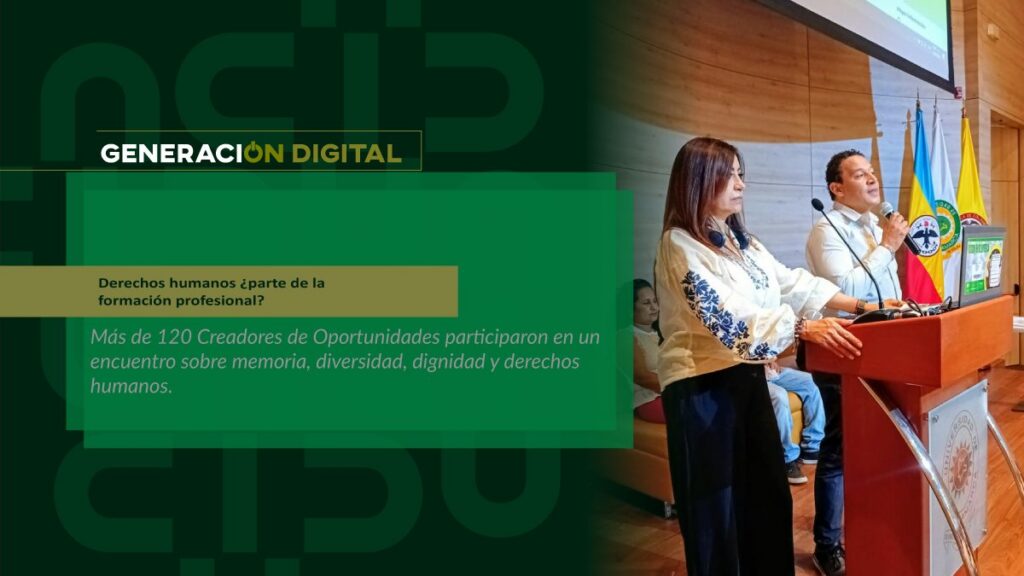
Human rights: part of professional training?
By: Alejandro García Suárez – Advisory Office of Communications



I am your virtual assistant, here to help you quickly and easily.
▲ Back to Top
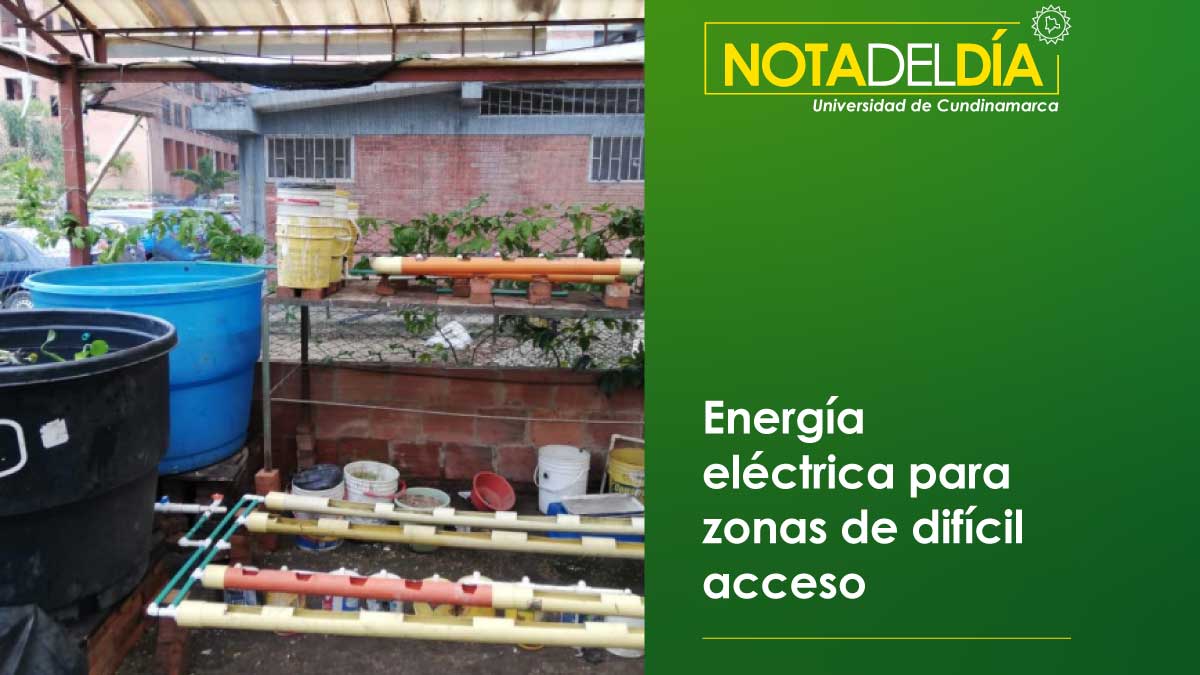
The project designed by students Karen Alejandra Venegas Cárdenas and Daniela Alejandra Marles Caicedo from the Electronic Engineering program proposes a hybrid system between photovoltaic solar energy and the electrical grid and proposes to supply the energy demand of an aquaponics system.
The aquaponics system located at the Fusagasugá Headquarters proposes to optimize water resources without using chemicals, fertilizers, pesticides, and dangerous insecticides. The method aims to reuse as much water as possible by recirculating it throughout the system, minimizing waste and returning it to the environment without contaminants.
“Overall, the proposed system is a very promising method. It promotes the use of clean energy and guarantees a 24-hour electrical supply for the aquaponics system, a technique that allows for obtaining higher-quality organic products because fertilizers and pesticides are not used in the food. Furthermore, it can be guaranteed that it presents no risk when consumed by humans. The recirculating aquaponics system allows for water savings of up to 801 TP3T,” explains student Karen Alejandra Venegas Cárdenas.
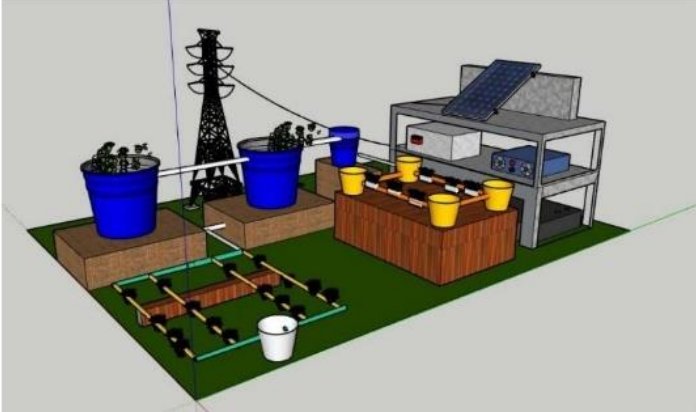
During the first phase, information was collected related to the use of hybrid and photovoltaic systems, the analysis of the state of the art and the regulations governing the use of renewable energies in Colombia.
In the following stages, researcher Karen Alejandra used programs to evaluate the operating characteristics, performed the simulation of the hybrid system using the software: Pvsyst, PVSOL and Calculation Solar; she also carried out the design of the hybrid and aquaponic systems in three dimensions 3D in the sketchUp 2020 software, and the development of a mobile application to size basic photovoltaic systems.
The application called SolarUDEC allows the sizing of small and medium-sized photovoltaic systems with linear loads. It does not require internet access and has its own database. The tool relies on NASA solar radiation maps, and the user can select their location from 10 cities in Colombia.
The mobile application has a very user-friendly interface and allows anyone with an Android device to size their photovoltaic system, which is very useful and helps promote the development of projects involving the use of clean energy.
The researchers emphasize that the designed system will have a useful life cycle of approximately 12 years and relate the importance of conducting a preliminary study and the respective simulation of the system to guarantee the proper functioning of the hybrid electrical power generation system – SHGEE. They also indicate the need to implement the project in hard-to-reach areas where energy is intermittent or nonexistent to contribute to the development and growth of small and medium-sized agricultural producers.
News
News
News
News