News
2026-09-24
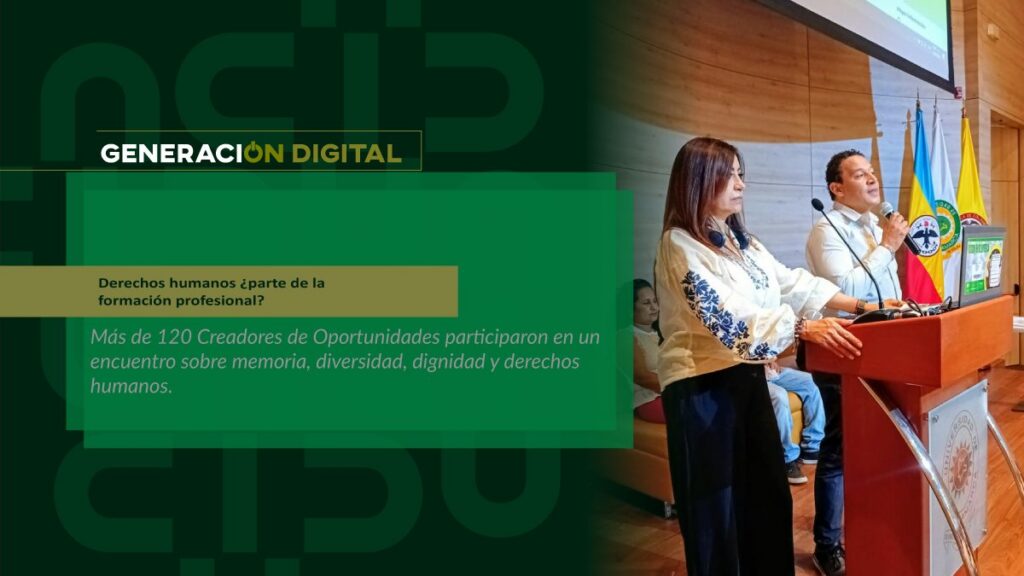
Human rights: part of professional training?
By: Alejandro García Suárez – Advisory Office of Communications



I am your virtual assistant, here to help you quickly and easily.
▲ Back to Top

A specter is haunting the world: the specter of transhumanism. And it is no small debate for humanity.
In 2003, a report entitled 'The Convergence of Technologies Aimed at Enhancing Human Performance: Nanotechnologies, Biotechnologies, information technologies and cognitive sciences', which he enthusiastically recommended investing money in.
In 2008, Google created Singularity University and then, in 2013, a subsidiary—Calico—whose goal is to increase human lifespan and combat aging and death. In April 2015, Chinese geneticists conducted an experiment with 83 human embryos to "repair" and even "perfect" cells.
“"The advances of technoscience in this field have an unimaginable scope and speed; they are silent, they do not attract the attention of politicians, and barely of a few media outlets, so that they occur behind the backs of ordinary mortals and are not subject to minimally coercive regulation.".
The words are from the French philosopher Luc Ferry (1951) and are in his most recent book in Spanish, 'The Transhumanist Revolution' (Alianza), whose subtitle sheds light on what we are talking about: "How technoscience and the uberization of the world are going to transform our lives.".
A clear goal
“Transhumanists, supported by considerable scientific and material resources, advocate for new technologies "And the intensive use of stem cells, reproductive cloning, human/machine hybridization, genetic engineering and germline manipulations, which could irreversibly modify our species, all with the aim of improving the human condition," writes the former Minister of Education of his country.
The first thing Ferry does in his book is to warn that this is not science fiction. And he laments that many people still think so and don't give it the attention they do, for example, to climate change or genetically modified foods.
“They have never had the time to see what is happening in eastern China and Silicon Valley, which allows Gafa (Google, Apple, Facebook and Amazon) can develop quietly without anyone bothering them.”.
“Even so,” he adds, “the transhumanist movement has gained considerable importance in the United States and has generated thousands of publications, passionate debates with leading thinkers such as Francis Fukuyama, Michael Sandel, and Jürgen Habermas.”.
“The fundamental project of transhumanism – Ferry continues – is to move from a therapeutic medicine, whose purpose has been, for thousands of years, to heal, to 'repair', to the model of increasing human potential.
It's not just about improving the species through drugs or surgery, but about modifying the species in the same way that genetically modified corn kernels are produced.”.
And one of the first objectives "is not only to combat aging, but to extend our lives to 200 years, or more, by resorting to technomedicine and even genetic engineering.".
Why does your book link transhumanism and the so-called '‘collaborative economy’?
Transhumanism and the applications of the collaborative economy – such as Uber, Airbnb, BlaBlaCar, etc. – are the greatest expressions of the same technological platform, that of the third industrial revolution.
To be clear: without the computer processing of 'big data' and, above all, without the artificial intelligence, There would be no sequencing of the human genome, no genetic engineering, and no sharing economy. But there's more: transhumanism and the sharing economy are philosophically related projects. They represent a shift from a predetermined fate to freedom of choice, from heteronomy to autonomy.
With Uber or Airbnb, individuals intend to manage things among themselves, without intermediaries whom they perceive as parasites. The same applies to transhumanism, and its founding slogan is eloquent: 'From chance to choice,' which, put another way, means: 'from the blind and unfair genetic lottery to mastering one's genome.'.
The philosopher emphasizes that transhumanism is not pure technique, that behind it there is thought, ideas, even political commitment.
It is, he says, “moving from absurd chance to informed choice”, choosing one's own destiny, correcting the inequalities linked to genetic fate “which unfairly and blindly distributes advantages and disadvantages”.
That's why Ferry puts himself above sympathies and partisanship. "Talking about the transhumanist nightmare is as profoundly stupid as talking about transhumanist salvation," he notes in his book.
Moreover, when asked about Francis Fukuyama's criticisms of transhumanism, who believes it threatens equality among human beings, Ferry says: “He is among the defenders, believers or not, of a sacralization and exaltation of human nature (of the human genome), because he thinks that "To initiate the modification of human nature will ruin universal morality. For traditionalists, this morality could only take root in the natural characteristics common to humanity.".
For Ferry, that is not a humanist position: “The argument can only convince naturalists, those who think that morality is rooted in the biological nature of the human species.
All humanists, from Pico della Mirandola to Sartre, including Kant, Condorcet, and Rousseau, think the opposite: that man is, par excellence, the only being capable of rebelling against nature, of fighting it and correcting it. From a humanist's point of view, Fukuyama's argument makes no sense whatsoever.
The new world is not, as some believe, anti-humanist. “Transhumanism is a hyperhumanism that is rooted in the Enlightenment tradition, in the ideas of Condorcet, Kant, and Voltaire,” says Ferry. “"It's about working towards the improvement of humanity, about moving forward in the direction of progress.".
“Of course,” the philosopher adds, “the possibilities offered by biotechnologies could also allow for monstrosities.
But we cannot forget that these monstrosities have already been committed by humans, regardless of new technologies.
World War I killed 20 million people; World War II, 60 million; Maoism, 70 million; not counting the massacre of Armenians, Tutsis, Cambodians, etc. The problem is not technology, it is human evil, which sometimes borders on the demonic…”.
According to Ferry, transhumanism hides the worst and the best at the same time: for example, the creation of chimeras, of hybrid monsters, but also the fight against inequalities not only social but also natural, or the eradication of deadly genetic diseases from the embryo.
That is why he advocates rethinking political regulation: “We are going to have to completely renew it for three main reasons: the world of technology is very fast, it is difficult to understand and it is globalized, so that it largely escapes the possibilities of political leaders and public opinion; in addition, national regulations are practically meaningless.
What is the point of prohibiting in Paris what is legal in Brussels or London?”
“Genome sequencing and the ability to cut and paste pieces of DNA They open up potentially unlimited possibilities for genetic manipulation.”, “This is what compels us to reflect today on the ethical and political regulation of transhumanism,” he warns.
New conflicts
“The situation is tragic, not because it is dire, but because we face conflicts in which we will be forced to choose between two valid paths, not between one good and one bad. Just as in Greek tragedies, where, for example, an individual must choose between following the law of man or the law of the gods.”.
“With the collaborative economy and transhumanism we are going to experience these kinds of conflicts. For example, private individuals are right to tell hotel owners, 'don't bother us, let us organize ourselves.'.
And hotel owners are right to say that they have employees, pay social security contributions, comply with safety regulations, etc. The same applies to transhumanism: in the name of what can we prohibit parents from modifying their child's genome on the day it becomes possible to live longer? Clearly, the issue of regulation will be difficult.”.
Source: The Weather
News
News
News
News