News
2026-09-24
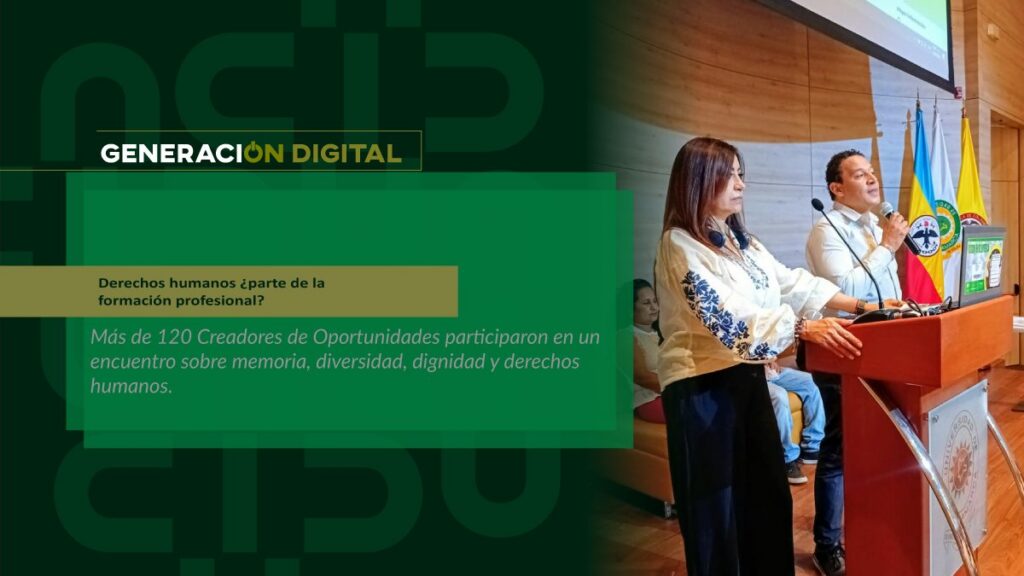
Human rights: part of professional training?
By: Alejandro García Suárez – Advisory Office of Communications



I am your virtual assistant, here to help you quickly and easily.
▲ Back to Top
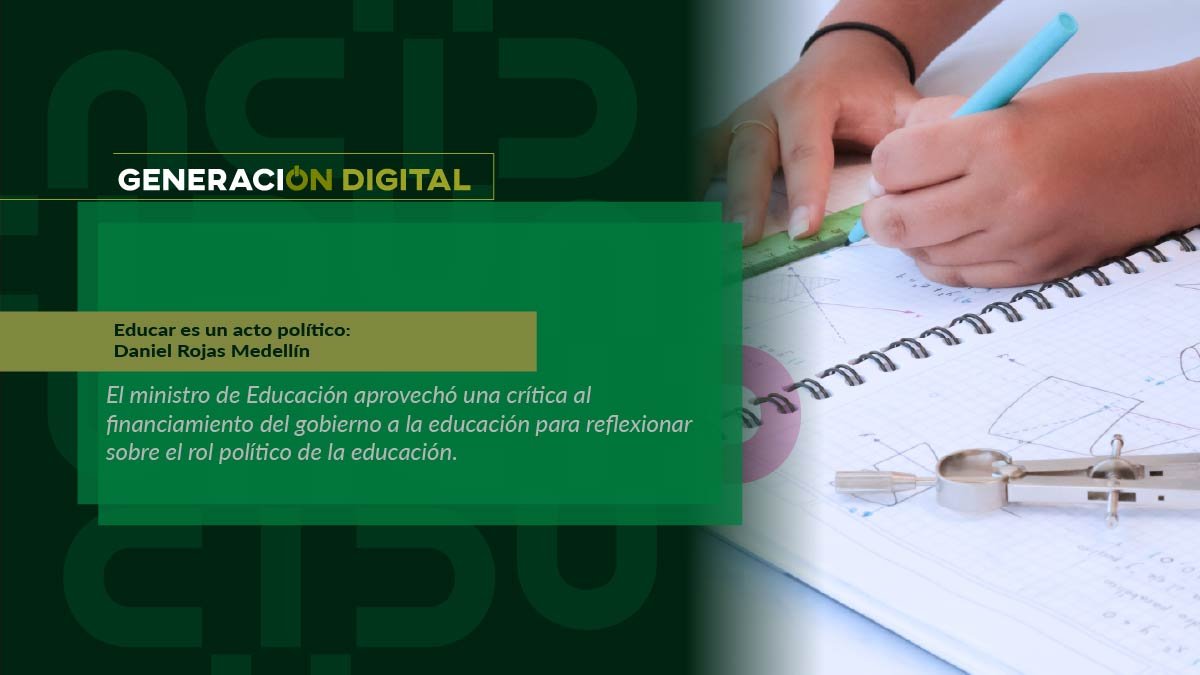
Education is a powerful tool, either to transcend the ethical and political horizon of society or to maintain its status quo. To speak of education is to speak of power. For this reason, it is not surprising that the transformations promoted by the Government of Change in the last three years in the field of education have caused unease among certain sectors that for decades have benefited from a profoundly unequal and exclusionary system, always at the service of the interests of the few. However, despite the criticism that has arisen in the public debate, the results are driven by an unwavering commitment to the country and supported by solid and transparent evidence.
Love is in the budget. During the first three years of this administration (2023–2025), the education budget has increased, in real terms, by 13.4% compared to the amount allocated by the previous administration during its first three years. Therefore, to claim that an equivalent increase of 25.7 trillion within the first three years of government (an average of 8.6 trillion annually) constitutes underfunding is not an opinion: it's a lie. Lying is also a political act.
In the case of early childhood education, while only 5.1 trillion pesos were allocated nationally in 2022, between 2023 and 2025 the allocation has averaged 8.26 trillion pesos annually; that is, the budget increase has resulted in a growth of 144.1 trillion pesos. This is not merely a technical undertaking; it is a political and profoundly human act stemming from this government's commitment to the education of young children, aimed at promoting their holistic development through meaningful learning experiences.
La misión no es solo educar en el saber, sino en el ser. Por esta razón, en el marco de la educación básica, una de las más ambiciosas apuestas consiste en el fortalecimiento de la educación integral en el proceso de formación de los niños, niñas y adolescentes por de lo menos 5.000 establecimientos educativos oficiales, mediante centros de interés y el programa de educación CRESE —Ciudadano, por la reconciliación, antirracista, socioemocional y para el cambio climático—.
Faltando todavía un año de gobierno, ya se ha alcanzado el 84 % de esta meta. Adicionalmente, esta administración ha actualizado las pautas curriculares para la enseñanza de la Historia de manera que se garantice la construcción colectiva con enfoque diferencial, territorial, de género y antirracial, en armonía con los lineamientos de la JEP y la Comisión de la verdad para la construcción de paz en nuestro país.
Along the same lines, we have made progress in strengthening the School Feeding Program (PAE), reaching 80.3% of our coverage target between 2022 and 2024. This has been achieved thanks to a real increase of 18.2% in national resources allocated to the program, equivalent to an additional one trillion pesos. There is no room for cold (or lukewarm) technicalities here: feeding a child is enabling them to learn and stay in school. Collante et al. (2022) estimate that students benefiting from the PAE have a 10% lower probability of being absent or dropping out and a 6% reduction in grade repetition, which translates into better academic performance and greater school retention.
However, it is in the field of higher education where the dispute has been most fiercely waged. For years, embodied by ICETEX, we have been sold the false idea that student loans are an instrument of social mobility. This is why, adhering to the principle of the right to education as an act, the Government has promoted the creation of 135,666 new places in the public and free higher education system. This puts into perspective the estimated reduction from 50,000 student debtors to 10,000 by 2025.
On the other hand, the demand-side subsidy model—presented as a neutral tool—has exacerbated and perpetuated the exclusion of the most vulnerable populations from the higher education system. These schemes, instead of strengthening the public supply, have ended up privileging students with greater financial or geographic means, or young people from less privileged backgrounds in remote areas or with lower educational aspirations. As ECLAC (2020) warned, “demand-side subsidies tend to reinforce inequalities by primarily benefiting sectors of the population that already have access to the best educational options.”.
Today, from the Government of Change, we firmly affirm: guaranteeing the right to education cannot depend on the market. Educational justice demands an accessible public system with a territorial focus.
As proof of this, within the framework of the "University in your Territory" strategy, in March of this year the San Miguel Campus of the University of Valle was delivered in the municipality of Suárez, intended to offer training and peacebuilding opportunities to 4,000 young students from different municipalities in northern Cauca, thanks to the investment of around 52 billion pesos by the Government of Change.
The Immediate Transition to Higher Education Program (PTIES), for its part, embodies the need for a genuine approach to local communities to build equity. In this way, public universities have been encouraged to engage with students in their tenth and eleventh grades in high schools, in order to guarantee their access to university education. This involves, on the one hand, cultivating the skills of young people who have historically had limited opportunities and, therefore, limited expectations of accessing higher education, and on the other hand, enhancing their existing capabilities.
These transformations go beyond public policy: they represent a medium- and long-term legacy made possible by concerted efforts to fund public education. It is the unprecedented assertion that education should not reproduce privileges, but rather dismantle them. Critics will continue to speak of “efficiency,” “sustainability,” and “quality,” emptying these words of meaning to defend a model that has never adequately met the needs of the country's children and youth. To these criticisms, we respond with conviction: education is a political act, a collective tool for transformation. And in Colombia, today more than ever, it is also an act of historical redress.
Source: University.edu.co
News
News
News
News