News
2026-09-24
Human rights: part of professional training?
By: Alejandro García Suárez – Advisory Office of Communications


I am your virtual assistant, here to help you quickly and easily.
▲ Back to Top
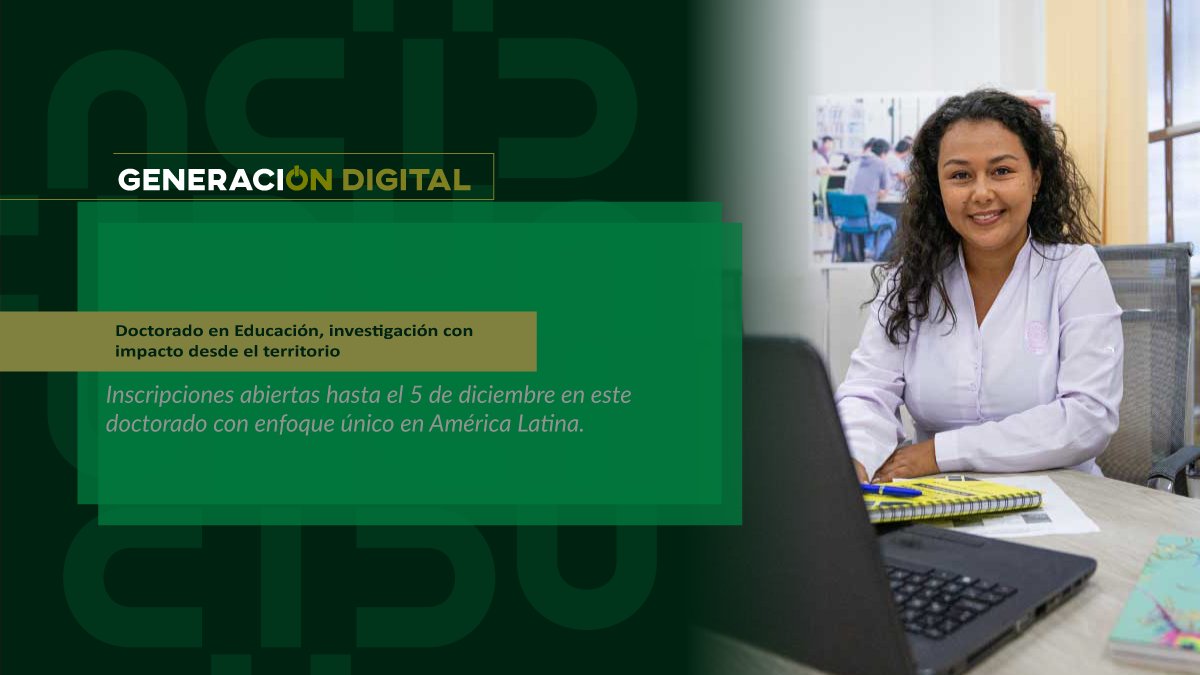
Training doctoral students is not just about completing an academic process. At the University of Cundinamarca, the Doctorate in Educational Sciences is conceived as a space for teachers, administrators, and professionals in the social sector to become researchers capable of understanding their communities, identifying real problems, and proposing fundamental transformations in the educational system and in the lives of their communities.
This is the first doctoral program at the University of Cundinamarca and, to date, the only one offered by a public higher education institution in the region. The program focuses on advanced training that integrates education, local context, and knowledge, with the aim of contributing to human development and strengthening the quality of education from Cundinamarca to the rest of the country.
The Doctoral Program in Educational Sciences is offered in person at the Fusagasugá campus. It has an estimated duration of three to five years (between six and ten semesters) and a total of 80 academic credits. Classes are held on Fridays, from 1:00 pm to 10:00 pm, and Saturdays, from 8:00 am to 6:00 pm, allowing students to maintain their work and family responsibilities while progressing through seminars, writing their dissertations, and conducting fieldwork.
The lines of research engage with specific problems in the country: pedagogical knowledge, environmental education, learning for peace and resilient populations, educational assessment and quality, as well as reflection on teacher training and community practices. Each doctoral project stems from questions that arise in schools, higher education institutions, social organizations, or public entities seeking to rethink their methods of educating, supporting, and managing knowledge.
The program is framed within the perspective of transmodern education and is integrated with academic networks. This translates into a curriculum that combines theoretical seminars, thesis workshops, advanced electives, participation in national and international academic communities, internships, and research output, all aimed at helping doctoral students develop their own unique voice in the field of Educational Sciences.
The doctoral graduate is an independent researcher, capable of identifying problems, designing solutions, and proposing transformations in the educational and social fields. This training opens doors to leadership positions in schools and universities, consulting roles in public and private sector entities, project management in education, environment, and peace, as well as the creation of new institutions, programs, and pedagogical proposals.
In this sense, doctoral theses don't just sit on shelves. The program promotes the transformation of research results into books, articles, intervention models, public policy recommendations, curriculum adjustments, or community work strategies that contribute to improving the quality of education and strengthening local communities.
The images accompanying this content often illustrate precisely this duality: on the one hand, academic sessions where theories, methodologies, and results are discussed; on the other, encounters with rural schools, ethnic communities, youth groups, or local initiatives seeking new ways of learning and inhabiting the land. There, one sees how research intertwines with people's daily lives.
In terms of investment, the program establishes a value of $12,812,000 per semester for the first two years and $8,541,000 per semester from the third year onward. The University of Cundinamarca also offers a 20% discount for its graduates and an additional 10% discount with a voter registration certificate; these benefits are cumulative under current conditions, with the aim of facilitating access to this level of advanced training.
Those interested in learning more about the Doctorate in Educational Sciences can contact the Graduate Institute of the University of Cundinamarca through its official channels. WhatsApp is also available at +57 317 401 5845, where you can get answers to your questions about requirements, the admissions process, registration dates, and financing options to begin this doctoral program aimed at transforming education at the local level.
News
News
News
News