News
2026-09-24
Human rights: part of professional training?
By: Alejandro García Suárez – Advisory Office of Communications



I am your virtual assistant, here to help you quickly and easily.
▲ Back to Top
By: Alejandro García Suárez – Advisory Office of Communications
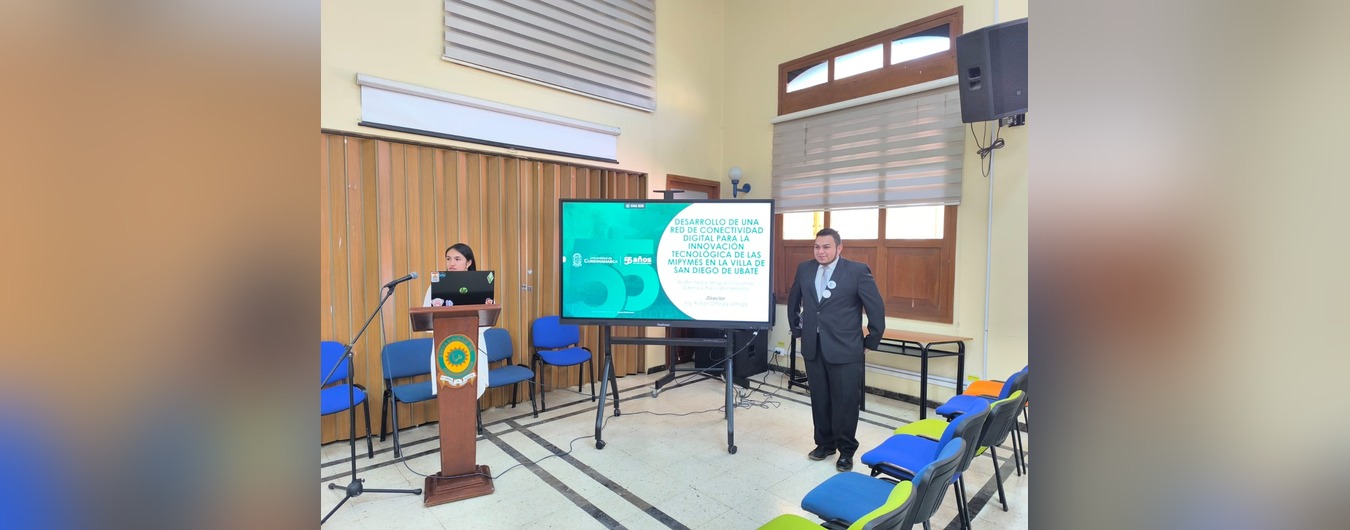
In Ubaté, where micro, small, and medium-sized enterprises (MSMEs) sustain a large part of the local economy, an academic project is beginning to pave the way for digital innovation. This project, the “Digital Connectivity Network for Technological Innovation in MSMEs,” was created by students of the Systems and Computer Engineering program at the Ubaté campus, in conjunction with the international macro-project led by Knowledge and Learning Manager, engineer Rafael Ortega Ortega, in partnership with the Polytechnic University of Puebla in Mexico.
Participants Walter Felipe Mogollón Guzmán and Danna Sofía Suárez Herrera, ninth-semester students and members of the CREINNG research group, explained that the project's main objective is to provide SMEs with a comprehensive platform that facilitates their transition to the digital economy. The solution incorporates administrative management tools, e-commerce, virtual training, technological support, and a collaborative ecosystem that strengthens regional competitiveness.
The project, currently in its launch phase and awaiting defense as a thesis, is aimed at businesses that make up the largest percentage of the economic fabric in the town of San Diego de Ubaté. These organizations, mostly family-owned, face digital divides that limit their growth and ability to compete in broader markets. With this proposal, business owners and entrepreneurs will be able to access affordable technologies, specialized training, and resources that will boost their productivity and digital presence. In turn, consumers in the region will benefit from having access to products and services through digital platforms.
According to the students, the initiative is considered innovative because it integrates a complete ecosystem of solutions tailored to the real needs of SMEs. It is not an isolated tool, but rather an interconnected model designed according to universal accessibility criteria and agile methodologies that promote co-creation with local entrepreneurs. Its international scope, focus on technological inclusion, and scalability potential solidify it as a project with social, economic, and educational impact for the region.
News
News
News
News