Fusagasugá Branch
2026-09-24
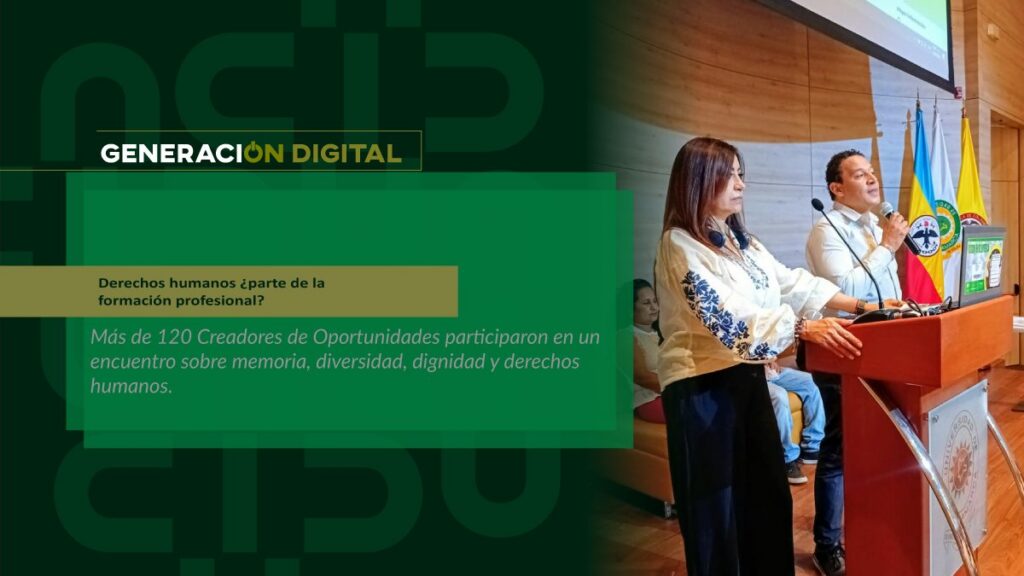
Human rights: part of professional training?
By: Alejandro García Suárez – Advisory Office of Communications



I am your virtual assistant, here to help you quickly and easily.
▲ Back to Top
Would you be interested in the Bogotá Book Fair 201: what to see
The celebration of Language Day focused on the Neurolinguistic Programming Conference and the message of the work Adonai. Professors of Communication I and II, Jackeline Varón from the Faculty of Administrative, Economic, and Accounting Sciences, and Santiago Andrés Cadena from the Faculty of Sports Sciences and the Faculty of Social Sciences, Humanities, and Political Science, led the activity, which aimed to encourage reading within the academic community.
Read: Neurolinguistics and Literature
Is dreaming and doing the same thing? With that question, Isidro Torres Castro, a specialist in Psychoneuro-immunotherapy, began his lecture on neurolinguistic programming, a science that gives physical and mental value to language and the power of the words that people use.
“The quality of your life is determined by the quality of your communication,” Torres Castro pointed out. Neurolinguistics is a technique based on the premise that behavior is composed of a structure, which can be modeled., learned, taught and reprogrammed.
Isidro urged the students to pursue their projects, dreams, and aspirations through this technique, which, as the saying goes, involves reprogramming the brain's "chip." Because dreaming and doing are the same thing; if you dreamed about your project, simply do it.
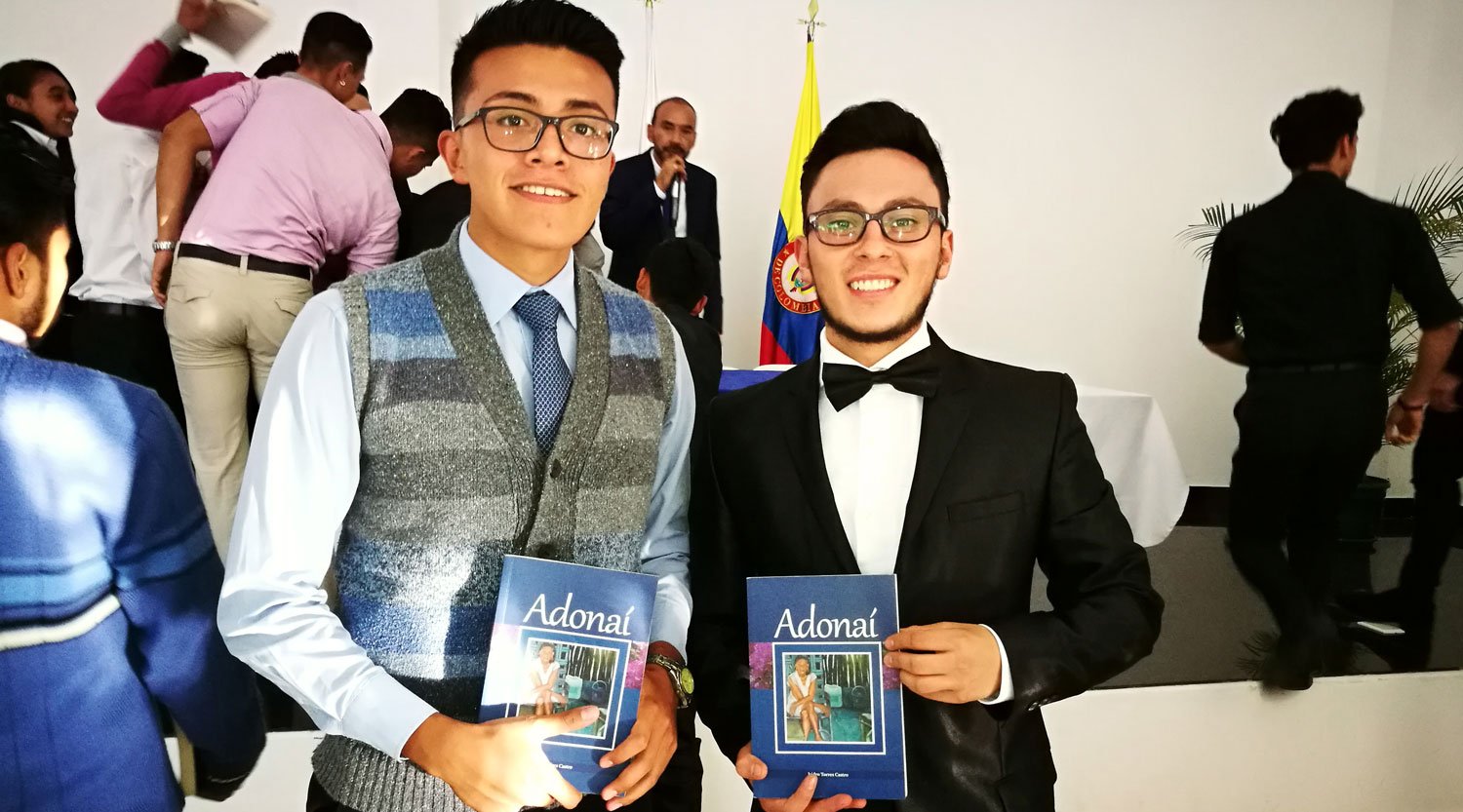
Later in the conference, the themes and message of the book Adonaí were discussed; a work chosen for its Colombian cultural narrative. The students read, captivated by the sound of the words, entering the minds of each character, bringing them to life, and experiencing every detail described. "That's what it means to read with all your senses. These days, everything has become digital, but the ability to savor a book is truly magical, its very reason for being. And even more so, experiencing a Caribbean story is extraordinary," said Santiago Andrés Cadena, a teacher.
You might be interested in reading: Chat 'rejuvenates', but poses risks to the language
Adonai is a young man's life story that narrates the intertwining of families, their struggles, and their desire to move forward. It's a story that uplifts you and makes you reflect on forgiveness within the family, noted Santiago Andrés Cadena, a communications professor.
The doctor-writer describes Adonaí as my grandmother; that's my conflict. I understood that Adonaí is the story of the faceless woman. The stories told there are the stories of my grandmother and my aunts. My grandmother told me One Hundred Years of Solitude as her own experience when I was barely five years old. My aunts went to the circus and paid 10 cents to touch the ice. My grandmother also told me that she had a beautiful cousin who killed men. García Márquez tells the same story, the boy who was born with a pig's tail. The story of Adonaí was written in my head from the age of five, recalls Isidro Torres Castro.
Isidro began writing Adonaí in 1999, when he was preparing to write his thesis for his specialization in administration. He recounts that at that time he wrote all the chapter titles, saved them in his email, and then in 2004 began writing the chapter stories over two months. However, 12 years later, upon his return to Colombia, he finally finished writing Adonaí, which had 400 pages, and reduced it to 300.
"It's significant for me that the students at the University of Cundinamarca have read my book, because this is a personal achievement. When I looked for a publisher, they rejected me, so I decided to publish the work myself, and I told myself that if just one person reads my book, I'll be happy," Isidro Torres Castro emphasized.
The work Adonaí narrates fantastical and unusual events from the Caribbean coast, portrays its characters, and captures moments characteristic of the region's culture and idiosyncrasies. The work's style is rooted in magical realism.
Read: Spanish: from the language of Cervantes to that of García Márquez
News
News
News
News