News
2026-09-24
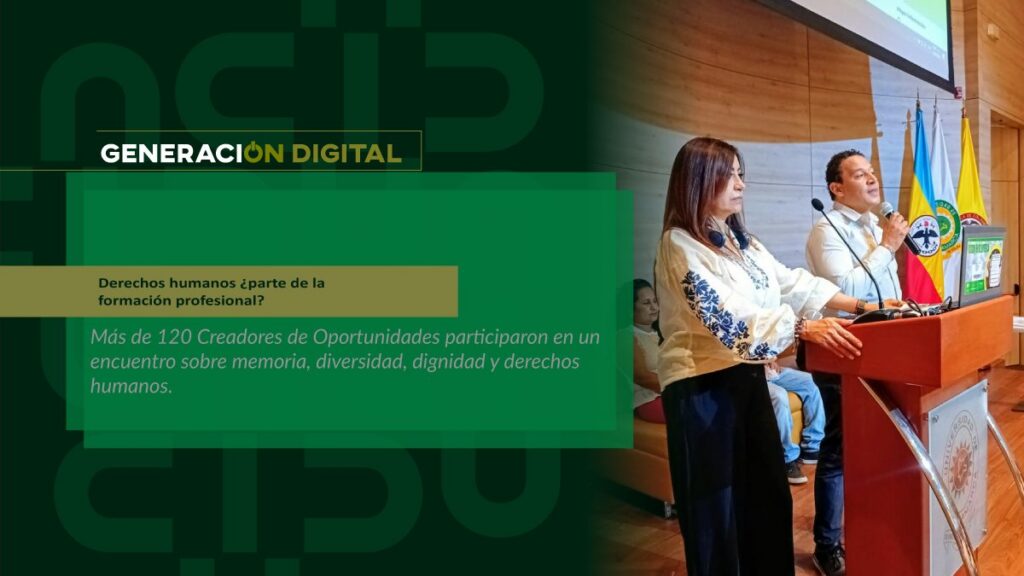
Human rights: part of professional training?
By: Alejandro García Suárez – Advisory Office of Communications



I am your virtual assistant, here to help you quickly and easily.
▲ Back to Top
Entering the heart and soul of the communities, the participants are excited about this new experience in Sumapaz and Alto Magdalena, which will allow them to plant a seed that supports the well-being of these rural areas.
“I have high expectations of learning from the community we visited, which works with the calabash tree and transforms this natural resource into a product that generates well-being for society,” said Eric Osorio, a participant in the IDDS 2017, who in turn, is part of the Faculty of Agricultural Engineering of UCundinamarca.
It's interesting to see how the Creative Hands Association of Girardot works with the calabash, creating various items for the kitchen and home decor. “I've come across a woman who works with the calabash using a jigsaw without safety glasses because she has a very steady hand. She also removes the pulp with a spoon and knife, practices that pose health risks due to constant pain in her hands and overall body,” says Natalia Barrera, an anthropology student at the National University of Colombia.
“This journey, which begins with harvesting and ends with production, has been very enriching, as it allows us to identify some problems within the communities that they have not noticed or have not given importance to,” adds Barrera, who considers this visit very important within the framework of the IDDS because it allows them, as an interdisciplinary group, to have several perspectives for solving the problems.
In Sumapaz
For his part, Robinson Garzón, an agronomist at Finca Tierra Libre, which is also a School Farm in the Sumapaz region, highlights the purpose of this space for sustainable organic agriculture, where the exchange of knowledge with the peasant culture has strengthened the territory.
“In this field of organic agriculture we do not use inputs that depend on petroleum and we carry out exercises for soil conservation, for this reason, we consider the development of efficient technologies, that is, at low economic cost and for the environment, oriented towards the adaptation to climate change, to be of great importance,” Garzón adds.
“Visiting the Farm School allowed us to identify the organizational dynamics and production processes in detail, which will allow us to propose some solutions,” said Sandra Milena Melo, a research professor at the UCundinamarca.
News
News
News
News